
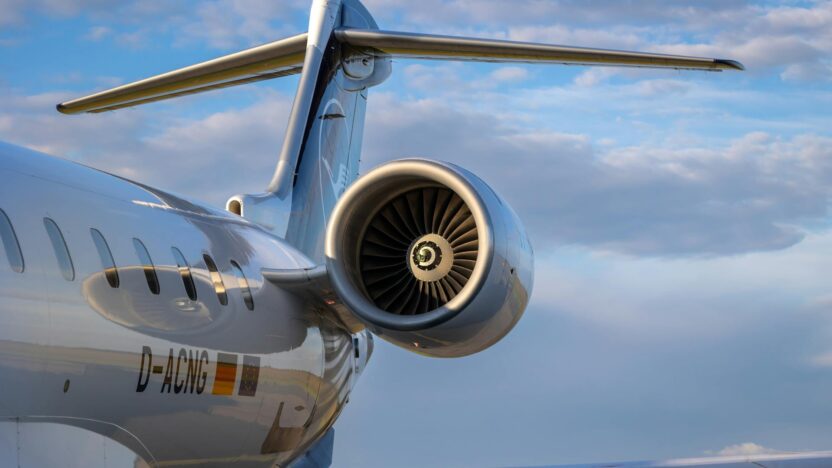
You’re sitting at the gate watching planes taxi past the terminal window. Some have those massive round engines hanging under the wings. Others sport smaller engines with visible propellers spinning at the front. A fighter jet screams overhead during an airshow, its scream entirely different from the background hum of commercial traffic.
They’re all jet engines, technically speaking. But the differences between a turbofan, turboprop, and turbojet determine everything from how fast that plane can fly to how much fuel it burns to whether your ears will be ringing when you land.
Turbojet Engines Are the Original Design That Started It All
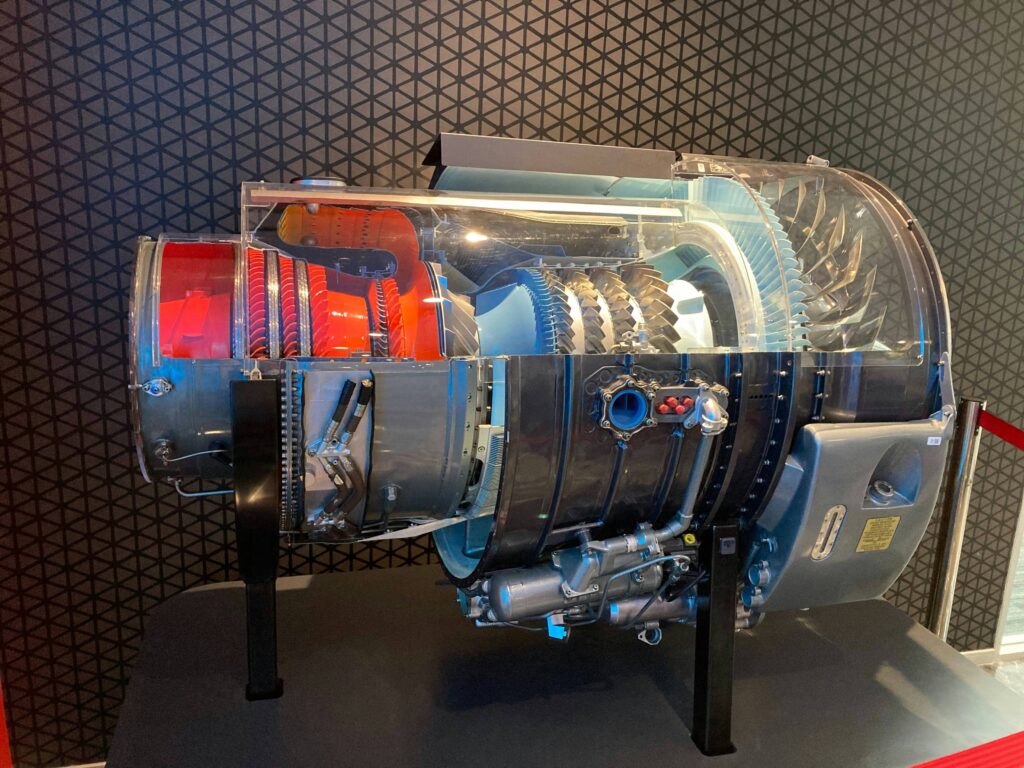 Photo by : Faizan Bashir / Unsplash
Let’s start with the grandfather of them all. The turbojet is the simplest jet engine design.
Air rushes into the front intake and gets squeezed by spinning compressor blades. The compressed air mixes with jet fuel in the combustion chamber and ignites. This creates incredibly hot, rapidly expanding gas that shoots out the back through a nozzle.
Every bit of thrust comes from that exhaust blast. There’s no bypass air, no propeller, just pure jet propulsion.
The beauty of turbojets is their simplicity and raw power at high speeds. That’s why you’ll still find them on military fighters. When you need to punch through the sound barrier, the turbojet delivers.
But simple doesn’t mean efficient. Turbojets are gas guzzlers compared to modern alternatives. They’re also incredibly loud, which is why noise restrictions basically killed turbojets for civilian use.
Turbofan Engines Power Nearly Every Commercial Flight Today
Walk up to a Boeing 737 or Airbus A320 and you’ll see those iconic big round engines. That’s a turbofan, and it’s what powers nearly every commercial jet flying today.
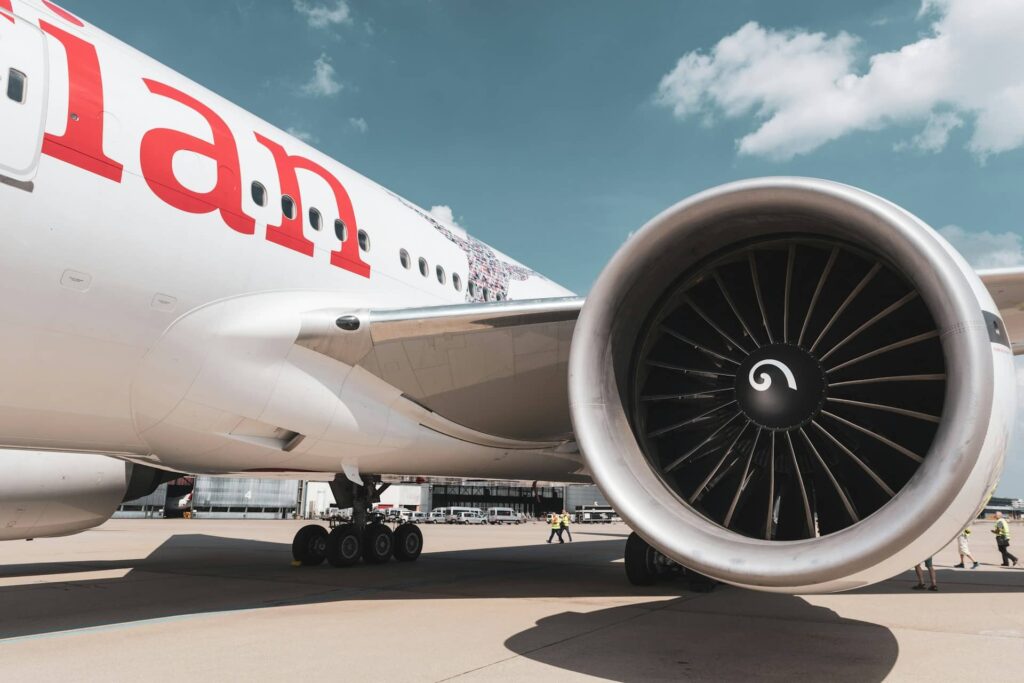 Photo by : Jacek Dylag / Unsplash
Here’s where things get clever. A turbofan is essentially a turbojet with a massive fan attached to the front and a cowling (that smooth outer shell) surrounding it. The fan looks like a giant set of blades, and it spins courtesy of the turbine stages inside the core engine.
Now here’s the key part: most of the air that enters a turbofan engine never goes through the combustion chamber. Instead, it gets pushed around the outside of the core engine in what’s called the bypass stream. This bypass air eventually mixes with the hot exhaust from the core, but it never gets burned.
The ratio between bypass air and core air is called the bypass ratio, and it matters enormously. Modern commercial turbofans can have bypass ratios of 12:1, meaning for every kilogram of air going through the hot core, twelve kilograms flow around it. Some of the latest engines like the GE9X on the Boeing 777X push that even higher.
Why does this matter? Physics. Moving a large mass of air slowly requires less energy than moving a small mass of air very quickly to produce the same thrust. It’s the difference between pushing a refrigerator gently versus throwing a baseball at 100 mph. Both can exert force, but one is way more efficient.
Turbofans are quieter because that cool bypass air surrounds and muffles the hot, noisy core exhaust. They’re more fuel efficient at typical cruising speeds (around 500-550 mph). And they produce plenty of thrust without the screaming ear-splitting noise of turbojets.
Pretty much every airliner you’ve flown on in the past 30 years has turbofan engines: the 737, A320, 787, A350, even the massive A380. They’re the sweet spot for commercial aviation.
Turboprop Engines Combine Jet Technology With Propeller Efficiency
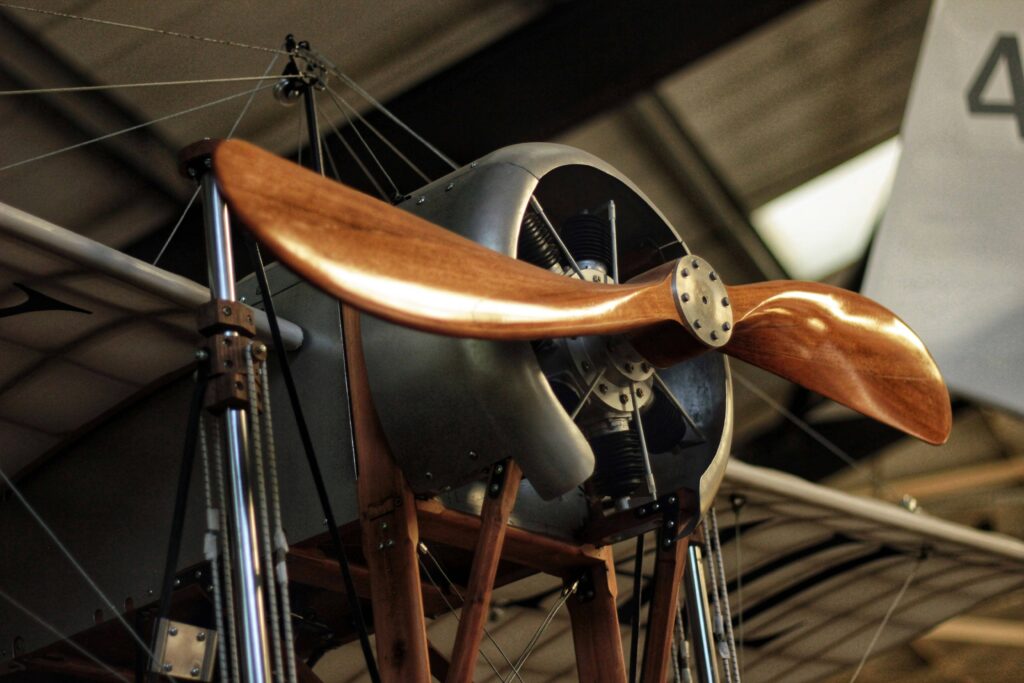 Photo by : Metin Ozer / Unsplash
Now we get to the turboprop, which confuses people because it has a propeller like grandpa’s old Cessna but makes jet engine sounds.
A turboprop uses a gas turbine engine (basically a small jet engine) but instead of using the exhaust for thrust, it extracts almost all the power from the turbine to spin a propeller through a reduction gearbox. The propeller does the heavy lifting of producing thrust, with maybe 10-15% coming from the exhaust.
Think of it as a jet engine that’s been repurposed as a propeller motor. The Pratt & Whitney PT6 turboprop, which powers everything from King Airs to Pilatus PC-12s, is one of the most successful engines ever built with over 51,000 produced.
Turboprops excel at lower speeds and altitudes. They’re incredibly fuel efficient when cruising below 300-400 mph, which is why you’ll see them on regional airlines like Horizon Air flying Bombardier Q400s or ATR 72s shuttling passengers between smaller cities.
The limiting factor is the propeller itself. As plane speed increases, the tips of the propeller blades start approaching the speed of sound. Once they go supersonic, efficiency tanks and noise skyrockets. That’s why turboprops top out around 400-450 mph in practice, even though some like the Tu-95 bomber can push faster.
Regional carriers love turboprops because short routes rarely need the speed of a jet, and the fuel savings are substantial. A 200-mile hop is perfect turboprop territory.
Speed Differences Separate These Three Engine Types
If you’re measuring by top speed capability, the turbojet wins. Military jets with turbojets or low bypass turbofans can exceed Mach 2.
Turbofans cruise efficiently at Mach 0.75 to 0.85, translating to about 500-550 mph at altitude. That’s the speed commercial aviation has settled on as the economic sweet spot.
Turboprops typically cruise at 250-350 mph. But calling them slow misses the point. They’re optimized for a different mission.
Fuel Efficiency Depends Entirely on the Mission Profile
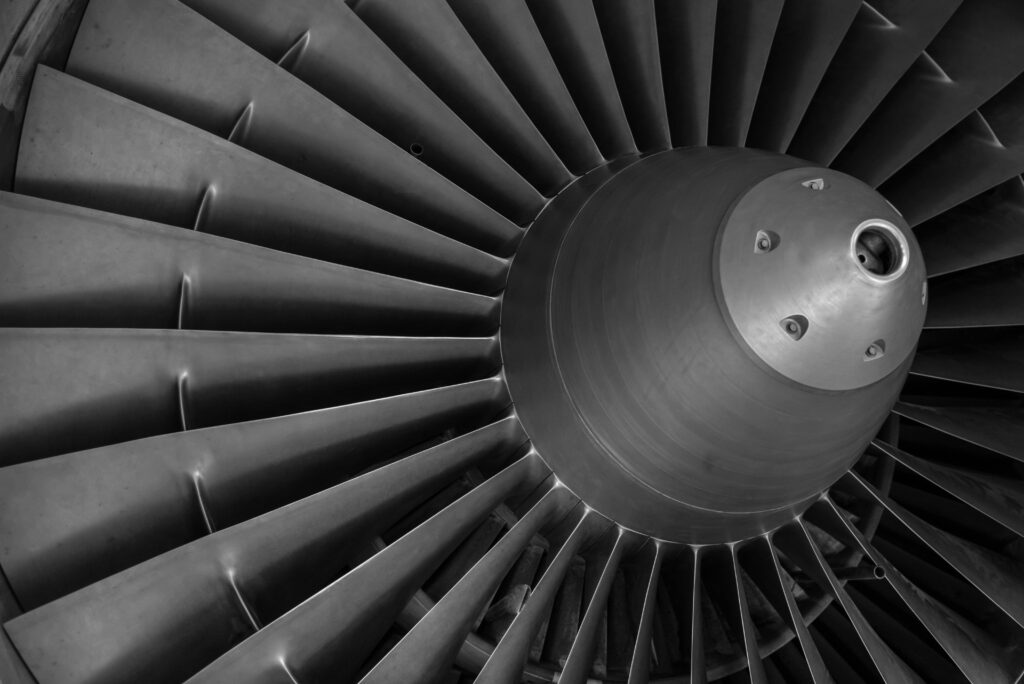 Photo by : Pixabay / Pexels
Here’s where you need to think about the mission profile. At low speeds and altitudes, turboprops crush turbofans and turbojets on fuel efficiency. The large propeller moving lots of air gently is tough to beat.
At higher speeds and altitudes where jets cruise, turbofans become the efficiency champions. The high bypass ratio means they’re moving air more like a propeller than a pure jet.
Turbojets are the thirsty ones. No bypass means you’re relying entirely on burning fuel to accelerate exhaust gases. You’ll burn maybe 30-40% more fuel than a turbofan for the same thrust at typical cruise speeds.
Noise Levels Determine Where These Engines Can Operate
Turbojets are punishingly loud. Early commercial jets required runway-side communities to basically accept living next to a permanent thunderstorm.
Modern turbofans are dramatically quieter. That bypass air acts like a sound blanket, and the larger fan produces a lower frequency hum instead of a high-pitched scream.
Turboprops fall somewhere in the middle. The propeller creates its own distinctive buzz.
Turbojets Have Not Completely Disappeared From Aviation
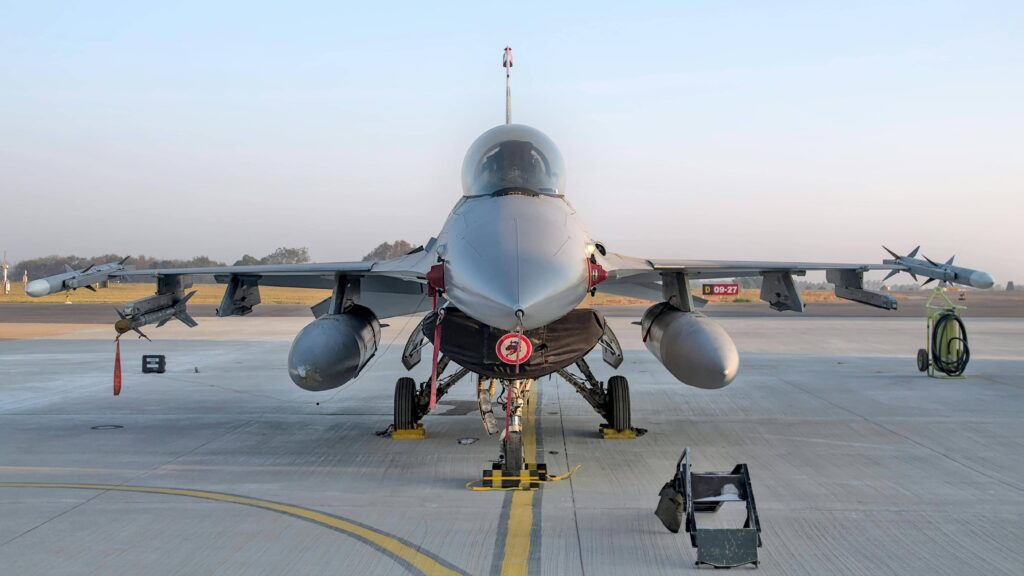 Photo by : Aseem Borkar / Pexels
Here’s a perspective you won’t hear often: turbojets might not be completely obsolete outside of museums and military applications.
Small business jets and some military trainers still use low bypass turbofans that function almost like turbojets. Why? Because at certain sizes and speeds, the mechanical complexity of a high bypass turbofan doesn’t pay off. A simpler, smaller engine might make more sense even if it burns a bit more fuel.
There’s also the altitude factor. Turbojets maintain performance at extremely high altitudes better than high bypass turbofans. The U-2 spy plane flies above 70,000 feet using what are essentially turbojets, because up there the air is so thin that bypass efficiency doesn’t matter as much.
And military applications still value the raw power and acceleration turbojets provide. A fighter needs to go from idle to full military power instantly. High bypass turbofans take longer to spool up.
So while turbojets lost the commercial aviation battle decisively, they haven’t completely disappeared. They’re just serving specialized missions.
No Single Engine Type Is Objectively Better Than the Others
This is the wrong question, honestly. Each engine type is optimized for different missions.
Need to fly 150 passengers from New York to Los Angeles efficiently and quietly? Turbofan. No contest.
Operating a regional carrier flying 50-mile hops between small cities? Turboprop makes economic sense.
Building a supersonic fighter or spy plane? You’re probably looking at turbojets or low bypass turbofans.
The global commercial fleet has spoken pretty clearly. Turbofans dominate because they hit the sweet spot for most airline operations. But walk through any smaller regional airport and you’ll see plenty of turboprops earning their keep on routes jets can’t serve profitably.
The Future of Jet Engines Is Pushing Efficiency Boundaries
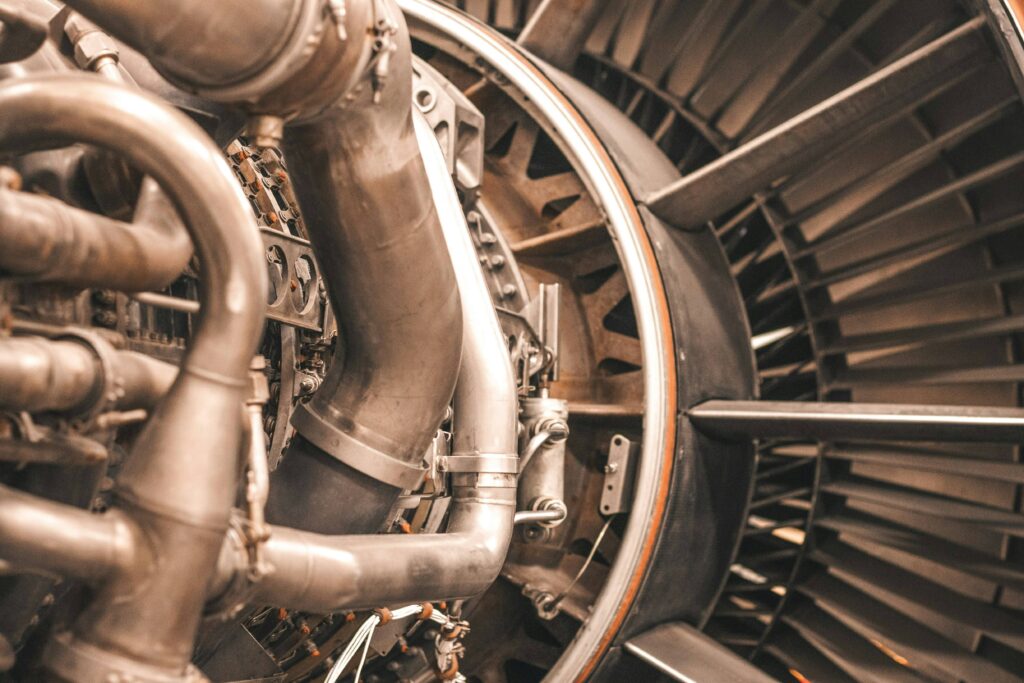 Photo by : Brice Cooper / Unsplash
The engineering community keeps pushing boundaries. Geared turbofans allow the fan to spin at a different, slower speed than the turbine, boosting efficiency. The GE9X on the 777X has a fan diameter of 134 inches, bigger than a 737 fuselage.
Experimental open rotor designs try to combine turboprop efficiency with jet speeds. Hydrogen and electric propulsion are getting serious research attention.
Understanding the differences between turbofan, turboprop, and turbojet engines reveals the engineering compromises behind every flight. Next time you’re watching planes at the airport, you’ll know exactly why that regional turboprop sounds different from the jet-powered 737, and why both are perfectly suited for their very different missions.