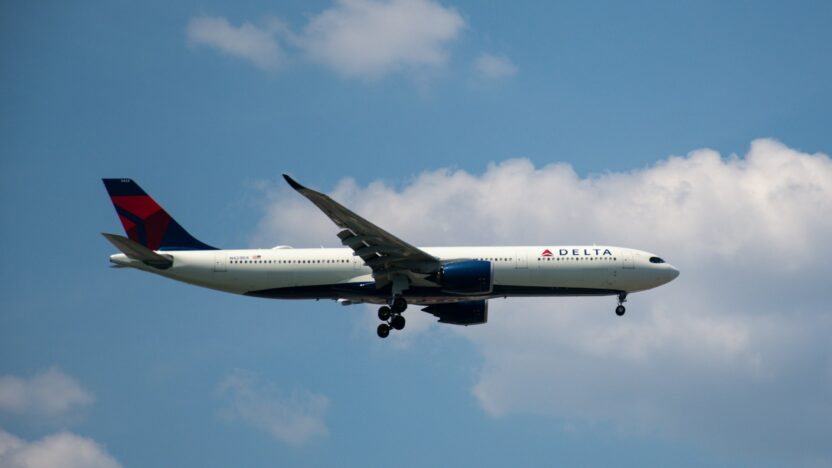
Delta Air Lines just told Wall Street something remarkable: even though jet fuel costs jumped by $400 million and should have crushed their quarterly profits, they’re still going to hit their original earnings targets. How? Because passengers are booking flights faster than ever and paying full price to do it. No discounts needed. No sales required. Just travelers opening their wallets and clicking “purchase” on tickets that cost significantly more than they did last year.
The Atlanta-based carrier raised its first quarter revenue guidance to between $15 billion and $15.3 billion on Tuesday, representing high single-digit growth over last year. More importantly, the airline confirmed that earnings per share will remain within the original guidance range of 50 cents to 90 cents, proving that strong demand can overcome even the most brutal cost increases.
The Numbers Tell a Story Airlines Have Been Dreaming About
Eight of Delta’s top 10 booking days in company history have occurred since January 1, 2026. Through a century of aviation history, the strongest booking days the airline has ever seen are happening right now.
Corporate travel revenue is up 20% year-over-year for the first quarter. Business travelers are back in force and paying premium prices. CEO Ed Bastian described the demand environment as “really, really great,” noting that higher revenue is offsetting not just fuel costs but other expense pressures as well.
The revenue acceleration spans every segment. Main cabin bookings are strong. Premium cabins are full. The loyalty program continues generating record revenue through the American Express partnership.
Leisure Travelers Are Paying Full Freight and Not Complaining
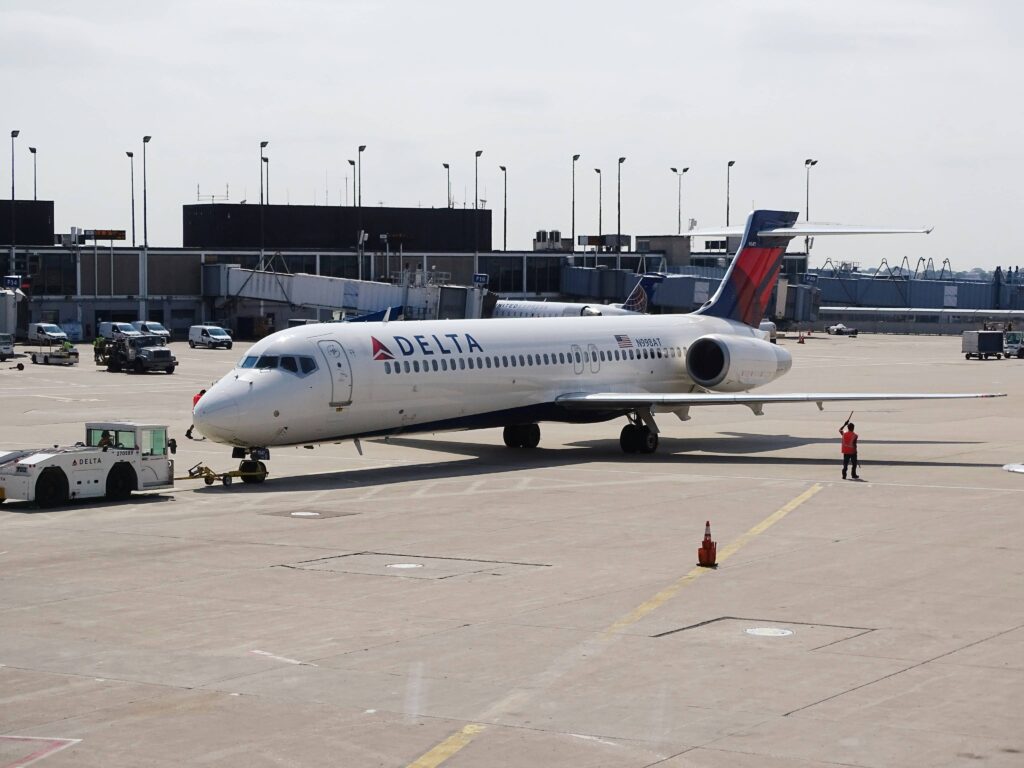 Photo by : Miguel Ángel Sanz / Unsplash
Here’s where the story gets particularly interesting for anyone who flies occasionally and watches airfare sales: leisure travelers aren’t waiting for discounts anymore. They’re booking at whatever the current price happens to be, and that price is substantially higher than last year.
Industry analysts call this phenomenon “full-priced bookings,” which is airline-speak for passengers who buy tickets without waiting for promotions, flash sales, or fare wars. In normal market conditions, airlines need to discount a significant portion of their inventory to fill planes. Sales drive traffic. Promotions create urgency. Price-sensitive leisure travelers shop around and wait for deals.
That dynamic has flipped. Travelers are buying now rather than later, paying higher fares rather than lower ones, and doing it willingly because they believe prices will only go up from here. The data suggests they’re correct. Delta’s bookings have surged through the first half of March specifically because consumers and corporate travel managers are trying to lock in rates before airlines push fares even higher.
The psychology makes sense once you understand the context. Jet fuel prices spiked from $2.50 per gallon to nearly $4.00 per gallon following the escalation of conflict in the Middle East. Airlines publicly warned that fares would need to rise to cover costs. Travelers who were planning trips decided to book immediately rather than risk paying more later. That surge in demand then gave airlines additional pricing power, creating a self-reinforcing cycle where higher prices drive more bookings rather than fewer.
The Fuel Cost Shock That Should Have Hurt But Didn’t
Delta quantified its first quarter fuel cost increase at $400 million. For context, that’s roughly the annual revenue of a mid-sized regional carrier. It’s not a rounding error. It’s a massive, unexpected expense hitting all at once.
In previous eras of airline economics, a $400 million cost shock mid-quarter would have triggered emergency cost-cutting, capacity reductions, and lowered profit forecasts. Airlines would have scrambled to preserve margins by flying fewer flights, cutting service to marginal routes, and offering early retirement packages to reduce labor costs.
Delta’s response? Absorb the cost through higher revenue and maintain the original profit guidance. The airline isn’t cutting flights. It’s not slashing service. It’s certainly not offering early retirements. Instead, it’s raising fares and watching passengers book tickets at those higher prices fast enough to completely offset the fuel spike.
This represents a fundamental shift in airline industry power dynamics. For decades, airlines operated on razor-thin margins where small cost increases could push carriers into losses or even bankruptcy. The industry’s consolidation over the past 15 years has created a structure where four major carriers control the vast majority of domestic capacity. That consolidation, combined with unprecedented travel demand, gives airlines pricing power their predecessors could only dream about.
Bastian told investors that the revenue growth isn’t just offsetting fuel costs but other expenses as well. Labor costs continue rising as pilot and flight attendant unions negotiate contracts that reflect the strong demand environment. Airport fees keep climbing as infrastructure needs grow. Technology investments require ongoing capital. Yet all of these pressures are being absorbed by an industry that can raise prices and maintain load factors simultaneously.
Premium Cabins Are Printing Money
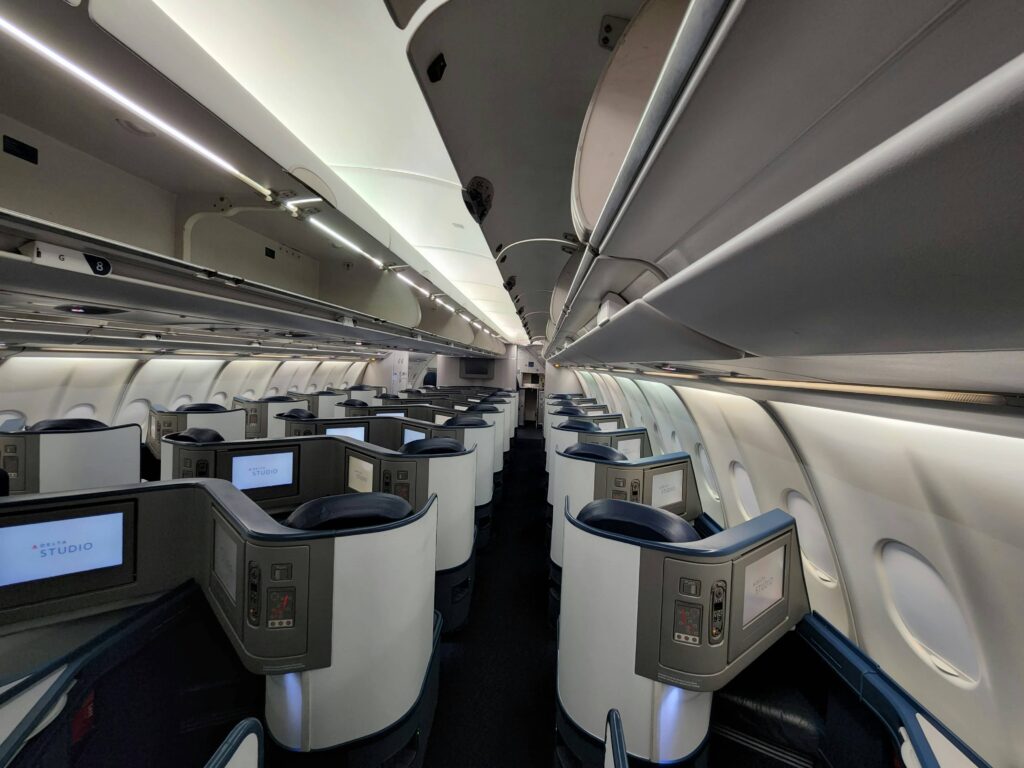 Photo by : Benjamin Nelson / Unsplash
Delta’s performance is being turbocharged by the premium cabin boom that’s reshaping airline economics across the industry. Business class, first class, premium economy, and even extra legroom seats in regular economy are selling at unprecedented rates.
The airline plans to add approximately 50 new aircraft in 2026, with all net new seat growth concentrated in premium cabins. Every single new seat Delta is adding to its fleet this year will be a premium seat. The carrier is actively reducing total economy seats while increasing premium capacity, betting that travelers will pay substantially more for better products.
That bet is paying off. Premium revenue growth is outpacing overall revenue growth significantly. Corporate travel policies that once mandated economy seating now approve business class for longer flights. Leisure travelers are using points or paying cash to upgrade.
 Photo by : Henry Siismets / Unsplash
United Debuts 737 MAX 8 in Guam, Replacing Aging Jets on Island Hopper
Delta’s SkyMiles loyalty program, operated in partnership with American Express, generated record revenue in 2025 and continues accelerating. The economics are almost absurdly profitable. Banks pay airlines billions for the right to award miles to credit card holders. Those miles get redeemed for flights that would have flown with empty seats, creating revenue from inventory that had zero marginal cost.
The Counterargument: This Can’t Last Forever
Here’s the uncomfortable reality Delta isn’t emphasizing: demand this strong, supporting prices this high, probably isn’t sustainable indefinitely.
The booking surge appears partially driven by travelers pulling forward purchases to avoid higher future prices. That creates a near-term boost that could be followed by a lull once everyone who wanted to book has already done so. The exceptional sales days might represent demand being pulled from Q2 and Q3 rather than genuinely new travel.
Economic indicators suggest caution is warranted. Interest rates remain elevated. Inflation has eroded purchasing power for middle and lower-income households who make up a significant portion of leisure travelers. The job market shows signs of softening. If unemployment rises materially, discretionary travel budgets get cut first.
Corporate travel, while currently strong, is notoriously volatile. Companies authorizing business trips today could implement travel freezes tomorrow if profit warnings emerge. The 20% year-over-year growth could reverse quickly.
There’s also the risk of demand destruction. Eventually, prices rise high enough that travelers decide not to fly at all rather than pay the premium. That threshold is different for every traveler, but it exists, and sustained fare increases will eventually find it.
What This Means If You’re Planning to Fly
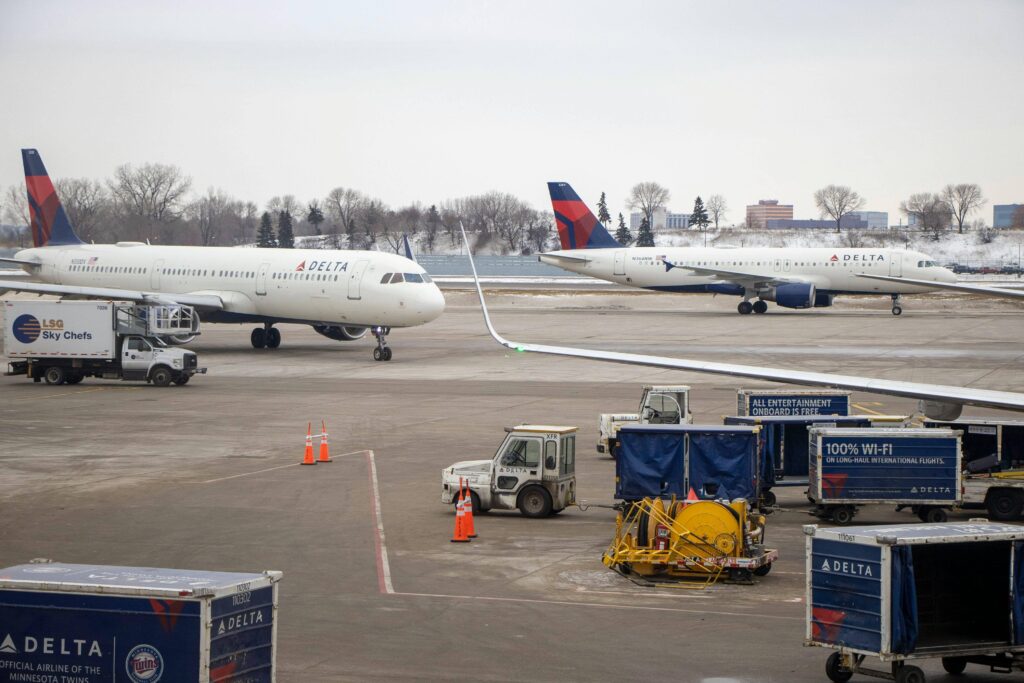 Photo by : Chris Flaten / Pexels
The practical implications for anyone booking travel in 2026 are clear: fares are going up, discounts are rare, and waiting to book will probably cost more.
Delta’s performance proves airlines have no incentive to discount when planes are filling at current prices. The promotional emails that used to flood inboxes during slow periods won’t appear when demand is this strong.
If you have travel planned for spring or summer, booking immediately makes sense. The data suggests prices will continue rising as peak season approaches. Even if fuel prices moderate, airlines are unlikely to reduce fares voluntarily when current pricing works so well.
Premium cabin availability is particularly scarce. If you’re considering an upgrade or want to use miles for a better seat, booking now rather than later maximizes your chances.
Delta Is Showing the Entire Industry What’s Possible
The bigger story isn’t just about Delta’s Q1 performance. It’s about what this quarter demonstrates regarding airline industry economics in 2026.
When a carrier can absorb a $400 million cost shock mid-quarter and still hit profit targets through pricing power alone, it signals a fundamental change in how airlines operate. The days of airlines as marginal businesses that barely made money in good times appear to be over, at least for major carriers.
Delta expects full-year 2026 earnings per share of $6.50 to $7.50, representing approximately 20% growth over 2025. That would be another record year in an industry stringing together consecutive records like professional sports dynasties string together championships.
The performance gap between major carriers and ultra-low-cost airlines continues widening. While Delta, United, American, and Southwest thrive on corporate contracts and loyalty programs, budget carriers lacking those revenue streams struggle to offset fuel cost increases.
For travelers, that bifurcation means fewer ultra-cheap options but also means major carriers have resources to invest in better products. Delta’s plan to add 50 new, more fuel-efficient planes will eventually benefit passengers through quieter cabins and better entertainment systems.
The first quarter isn’t even over yet, but Delta has already demonstrated what strong demand combined with disciplined capacity management can achieve. And judging by the booking trends, passengers are voting with their wallets that they’re willing to pay for the privilege.
Analysis based on publicly available information including company filings, press releases, and industry reports. Opinions expressed are those of the author.
Related Aviation News
 Photo by : Wikimedia Commons
Airbus vs Boeing Narrow-Body Battle: Why the A321neo Is Winning Orders
The Airbus A321neo dominates narrow-body aircraft orders with over 7,300 commitments, beating Boeing's 737 MAX through superior capacity…
Airbus vs Boeing: Who Is Winning the Aircraft Orders Race in 2026?
Boeing beat Airbus on 2025 orders for first time in 7 years with 1,173 vs 889. Early 2026…
 Photo by : Wikimedia Commons
Why Boeing’s 777X Is One of the Most Delayed Aircraft Programs in Aviation
Boeing's 777X faces 7-year delays to 2027 after technical failures, certification hurdles, and $15B in charges since 2013…