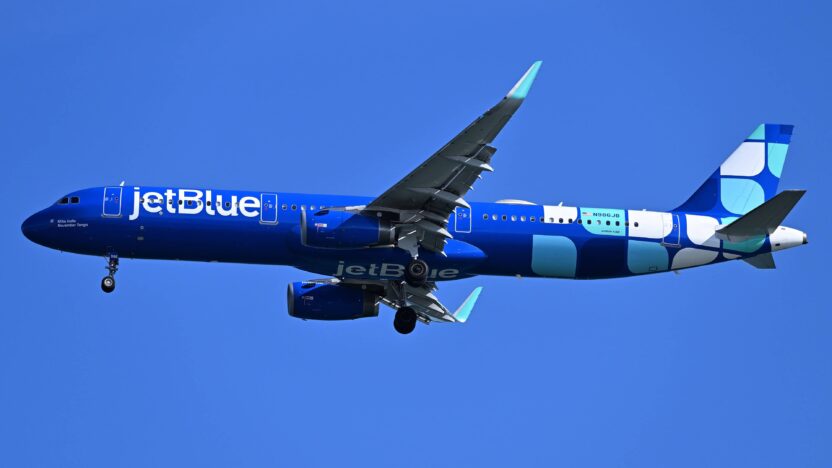
JetBlue’s groundstop, American Airlines weather delays, and a damaged CRJ700 radome at Reagan National highlighted aviation’s fragile state in March 2026.
The second week of March 2026 delivered a concentrated dose of everything that can go wrong with modern air travel, and it happened fast. Within just a few days, passengers dealt with a nationwide JetBlue system failure that grounded every flight for an hour, winter weather that continued wreaking havoc on schedules despite spring’s approach, and a regional jet forced to divert after something punched a hole clean through its nose during takeoff from one of America’s busiest airports.
These weren’t catastrophic disasters. Nobody died. But string them together and you get a vivid reminder that commercial aviation operates on razor-thin margins where a single computer glitch, a patch of ice, or a piece of debris on the runway can cascade into thousands of delayed passengers and millions in lost revenue.
JetBlue Asked the FAA to Ground Its Entire Fleet and Nobody Knows Exactly Why
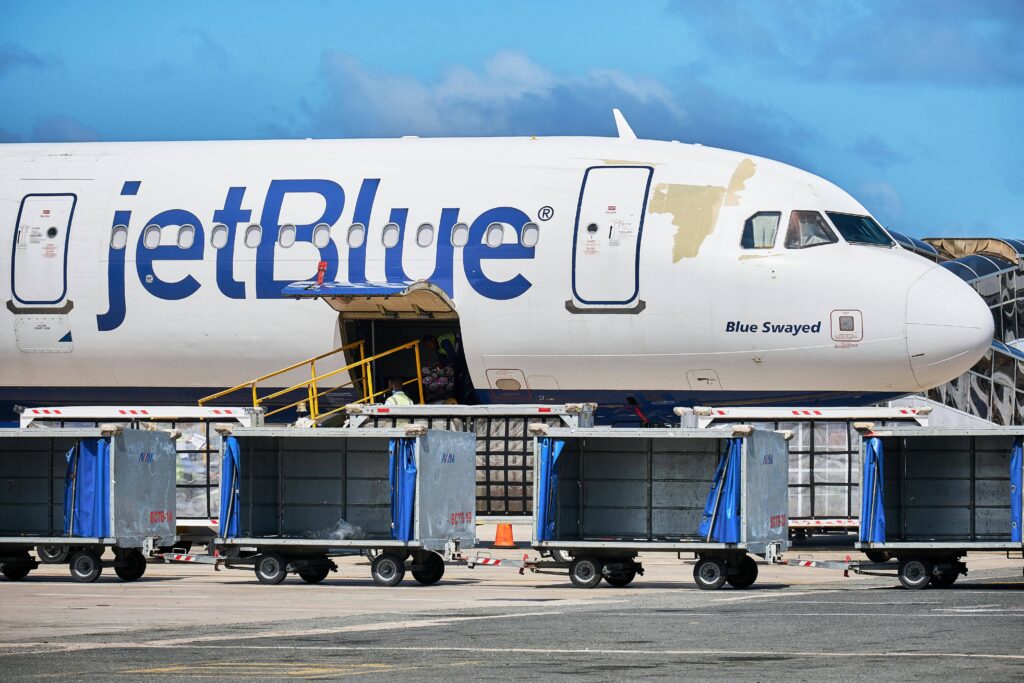 Photo by : Malcolm Garret / Pexels
Early Tuesday morning, March 10, JetBlue did something airlines almost never do voluntarily. It asked the Federal Aviation Administration to issue a nationwide groundstop, preventing every single JetBlue aircraft from taking off.
The request came in at 12:35 AM Eastern time. For the next hour, JetBlue’s entire operation froze. Planes already airborne continued to their destinations, but nothing new could depart. Passengers who had boarded sat on tarmacs wondering what was happening.
The FAA lifted the groundstop at 1:30 AM after JetBlue confirmed it had resolved what the airline vaguely described as a “brief system outage.” What system? How did it fail? JetBlue never provided those details. The airline’s official statement was comically sparse: “A brief system outage has been resolved and we have resumed operations.” No explanation of what broke or how they fixed it.
This lack of transparency is frustrating but not surprising. Airlines rarely volunteer information about internal technical failures. But the reality is that modern airline operations depend on complex software managing everything from crew scheduling to weight calculations. When those systems hiccup, the safest option is often to pause until you’re sure everything works.
What made this incident notable was its scope. Groundstops usually affect specific airports or regions due to weather. Having an airline request a total nationwide halt because of IT problems is rare enough to raise eyebrows.
FlightAware showed about 20 JetBlue flights in the air when the groundstop began. The airline logged two cancellations and 155 delays from the previous day. JetBlue clearly decided that an hour of stopped operations beat the alternative of flights departing with potentially unreliable systems.
Winter Weather Refused to Read the Calendar and Kept Hammering Flight Schedules
While JetBlue dealt with its technology crisis, Mother Nature was still making life miserable for travelers. The second week of March saw an unusual convergence of weather systems that airlines normally associate with January, not mid-spring.
A polar vortex pushed frigid temperatures into the Midwest and East. Chicago O’Hare recorded wind-driven departure delays while simultaneously dealing with equipment outages. Seattle-Tacoma International Airport dealt with snow and ice leading to 78 cancellations.
By March 14, FlightAware tracked 446 total cancellations across US airports, with another 4,910 delays. American Airlines alone registered 563 delays that day. Southwest logged 568 delays. The pattern suggested airlines were choosing to hold flights rather than cancel outright, which meant longer waits but preserved more travel options.
This came just weeks after American Airlines suffered what its CEO called “the largest weather-related operational disruption in our history” during late January’s Winter Storm Fern, which resulted in roughly 10,000 canceled flights.
The March weather wasn’t as severe, but it illustrated a persistent challenge. Spring doesn’t flip a switch on winter conditions. Polar vortexes can strike in March. And when you’re managing hundreds of flights through hubs like Chicago or Denver, even modest disruptions compound quickly.
A Hole in the Nose Forced an American Eagle Jet to Divert Minutes After Takeoff
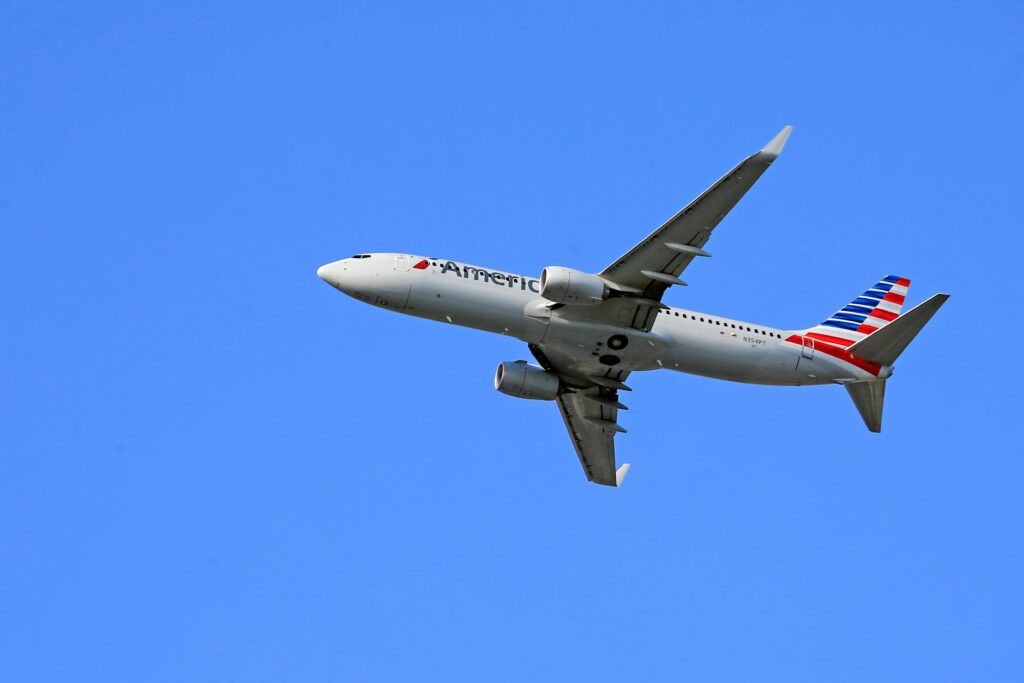 Photo by : Jeffry Surianto / Pexels
The same week brought a different kind of problem at Ronald Reagan Washington National Airport, where a PSA Airlines CRJ700 regional jet operating as American Eagle flight 5561 struck something during its takeoff roll on the evening of March 9.
The aircraft, bound for Birmingham, Alabama, accelerated down Runway 15 and became airborne despite the impact. But the flight crew immediately sensed something wrong. They halted their climb at 4,000 feet and declared an emergency, requesting an immediate diversion to Washington Dulles just 16 minutes after departing.
What ground crews found at Dulles was alarming: a substantial hole punched through the aircraft’s radome, the fiberglass nose cone that protects critical weather radar equipment.
 Photo by : David Syphers / Unsplash
How United Airlines Is Preparing for $175 Oil While Adding 120 New Planes
The FAA confirmed the aircraft “struck an object on takeoff” but didn’t specify what. Early reports suggested a bird strike, though the official classification as a “foreign object strike” left open the possibility that runway debris was the culprit.
Radomes protect radar systems that help pilots navigate weather and detect turbulence. Any breach can allow moisture into sensitive electronics. That’s why even small holes ground aircraft until repairs are completed.
The incident highlighted ongoing scrutiny at Reagan National following the tragic January 2025 midair collision that killed 67 people. Airport authorities reportedly conducted a thorough runway inspection to ensure no additional debris remained. The CRJ700 appears to have been repaired and returned to service the following day.
These Incidents Expose How Little Slack Exists in the Aviation System
Step back from the individual events and a pattern emerges. Modern commercial aviation has optimized itself to the point where resilience has become a luxury the industry can barely afford.
JetBlue couldn’t work around a system outage. They had to stop everything because their operations are so tightly integrated that partial degradation creates more problems than a complete pause. American Airlines couldn’t quickly recover from winter weather in late January, with effects rippling through their network for days. A single piece of debris or bird on a runway at DCA forced an emergency diversion and aircraft grounding.
None of this represents incompetence. Airlines have gotten remarkably good at moving millions of passengers efficiently under normal conditions. The problem is that normal conditions are increasingly rare. Weather patterns are becoming less predictable. IT systems grow more complex. Airports operate at or near capacity during peak periods.
When everything works, modern aviation is a marvel. Flights depart on time, connections click into place, and passengers reach their destinations with minimal fuss. But introduce one unexpected variable and watch how quickly the whole machine starts grinding.
The Counterargument Suggests These Problems Are Actually Signs of Health
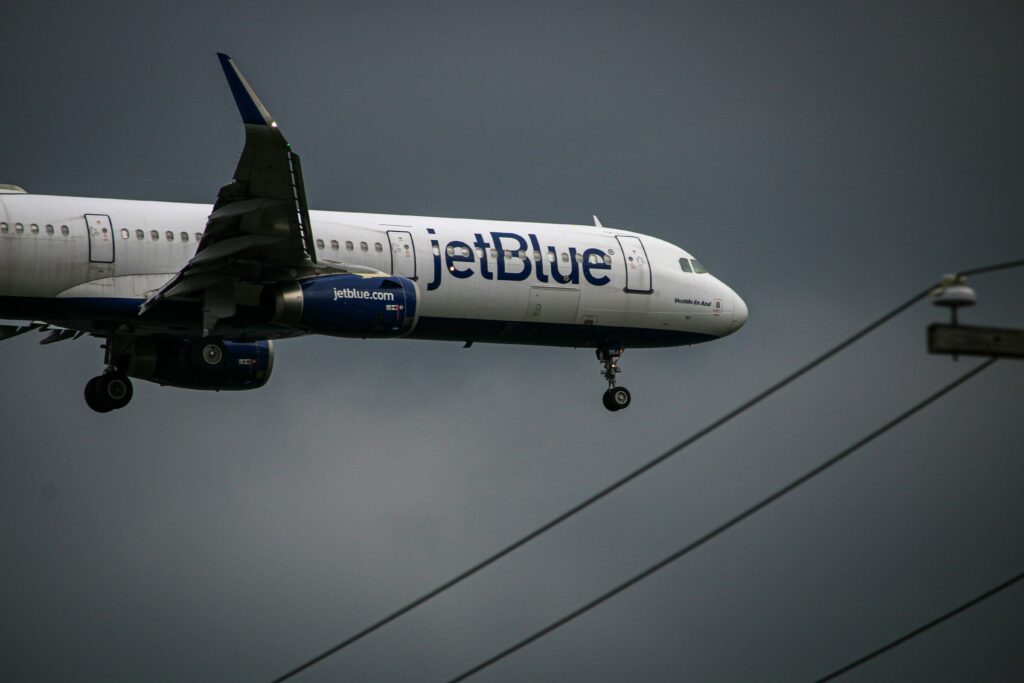 Photo by : Matt Boucher / Unsplash
Before we get too pessimistic, consider an alternative interpretation. Maybe the fact that these mid-March incidents didn’t spiral into catastrophes demonstrates that aviation safety systems are actually working as designed.
JetBlue recognized a problem and made the conservative choice to ground flights rather than push ahead with potentially compromised systems. That’s responsible decision-making, even if it frustrated passengers. The CRJ700 crew immediately diverted when they suspected damage rather than continuing to their destination and hoping for the best. Again, conservative and correct.
Weather delays are annoying but they beat the alternative of pushing aircraft into unsafe conditions. Airlines that cancel preemptively and strand passengers might actually be making smarter choices than carriers that promise to operate no matter what and then end up with crews and planes scattered across the country in the wrong locations.
Aviation’s safety record over the past two decades has been extraordinary precisely because the industry has become more willing to pause, cancel, and delay when conditions aren’t ideal. The traveling public hates this conservatism, but statistically, it’s kept them alive.
What Travelers Should Actually Take Away From These Disruptions
If you fly regularly, these mid-March incidents offer some practical lessons. First, book morning flights when possible. Most weather delays and IT issues compound as the day progresses, so earlier departures have better odds of operating normally.
Second, download your airline’s app and enable push notifications. When JetBlue’s groundstop happened at 12:35 AM, passengers checking their phones got alerts much faster than those relying on airport monitors or gate agents.
Third, understand that modern airline operations have virtually no buffer. The aircraft scheduled for your afternoon departure probably flew three other routes earlier that day. If any of those experienced delays, your flight inherits the problem. This isn’t an excuse for poor planning, but it is the reality of how efficiently airlines utilize expensive assets.
Fourth, check travel waivers proactively when weather threatens your route. Most airlines now offer free rebooking if you act before your flight cancels. Waiting until you’re at the airport means dealing with hundreds of other stranded passengers competing for limited rebooking options.
March 2026’s concentrated wave of aviation headaches reminded us that flying remains complicated, vulnerable, and dependent on countless systems all functioning correctly at the same time. The good news is that when something breaks, the industry generally errs on the side of caution. The bad news is that your schedule might not care about their conservative approach to safety.
Between IT failures, persistent winter weather, and foreign object strikes, the aviation industry faced another challenging week. For passengers, that meant delays, diversions, and the usual frustrations. For airlines, it meant another round of expensive disruptions and unhappy customers. Welcome to modern air travel, where everything has to work perfectly or nothing works well at all.
Related Aviation News
 Photo by : Filip Chudoba / Unsplash
Chicago O’Hare Turns Into a Snow Globe From Hell as 790 Flights Get Canceled
Chicago O'Hare storms cause 790 cancellations and 830 delays. Severe snowstorms and high winds strand thousands at ORD.…
 Photo by : Christian Lambert / Unsplash
Airlines Are Making More Money Than Ever and Your Wallet Is About to Feel It
U.S. airlines report record spring demand. United sees March fares up 15-20% YoY, revenue per seat rising 14%…
 Photo by : Ryuno / Unsplash
San Francisco Airport Becomes a Parking Lot in the Sky as Peak Hour Chaos Strands Travelers
SFO congestion causes 67 delays and 3 cancellations today. Peak-hour bottlenecks hit United, Delta, American, Alaska. International connections…