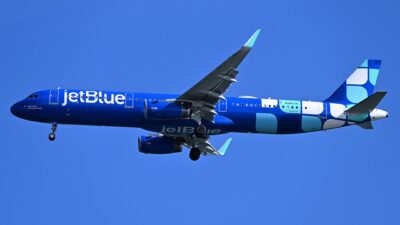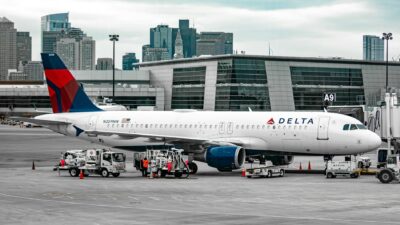
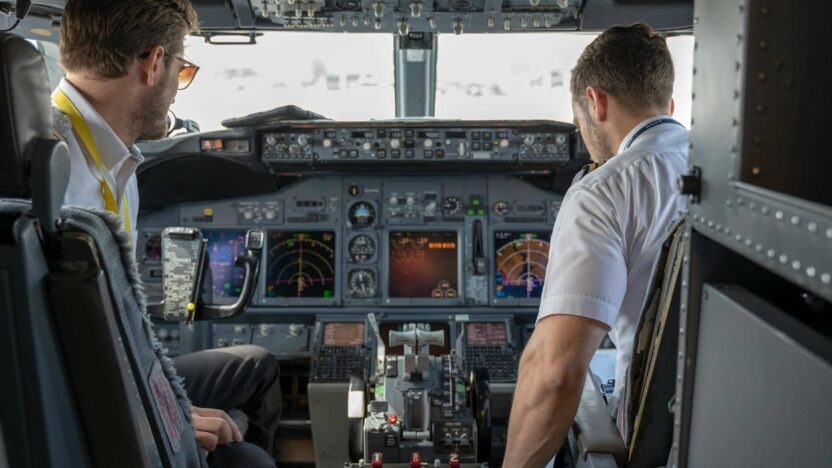
If you thought the aviation industry was done wrestling with 5G interference problems, think again. Airlines, aircraft manufacturers, and pilot associations are now pleading with the Federal Aviation Administration for more time to upgrade nearly 60,000 radio altimeters across the US fleet. The requested deadline? Mid-2032.
Here’s what makes this particularly frustrating: We’ve already been through this once. Just a couple years ago, the entire US airline fleet scrambled to upgrade altimeters before 5G Lower C-Band networks went live. Now, because wireless companies want access to even more spectrum, the whole circus is starting over.
The Numbers Behind This Massive Undertaking Tell a Daunting Story
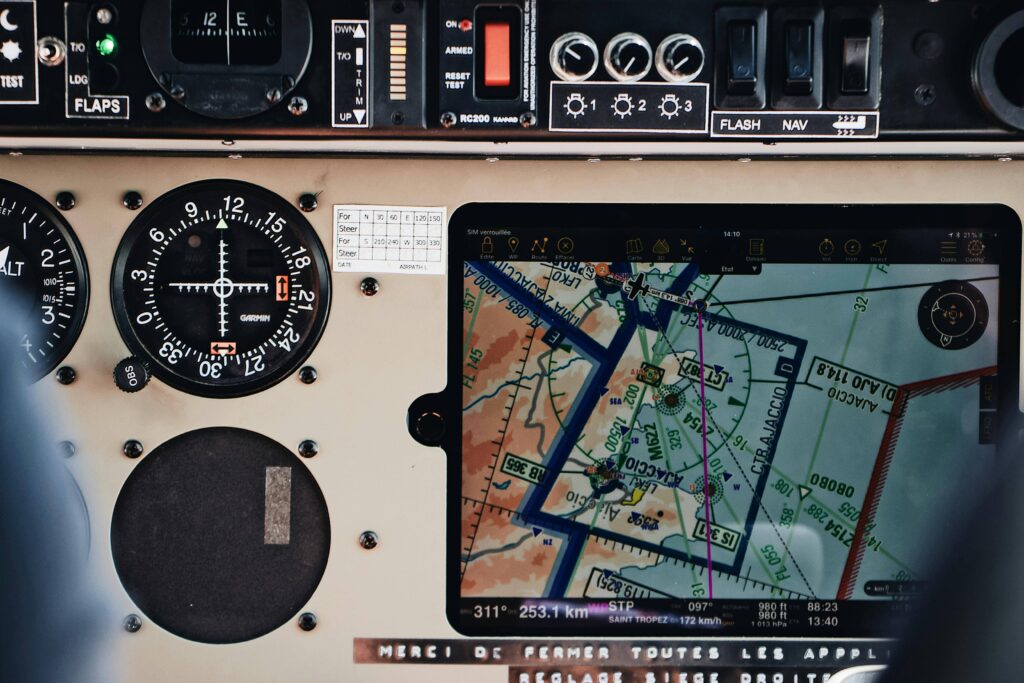 Photo by : Maël BALLAND / Pexels
The aviation industry is looking at replacing or upgrading 58,600 radio altimeters on approximately 41,000 aircraft. Many planes have multiple altimeters, which is why the numbers don’t match up.
The FAA initially proposed a deadline between 2029 and 2032 for airlines operating under Part 121 rules. Other aircraft operators would get two additional years. But the industry coalition, which includes Airlines for America, Boeing, Garmin, Gulfstream, and various pilot associations, says that timeline is unrealistic given current supply chain realities.
Their argument centers on semiconductor availability and rare-earth element inventory constraints. Lockheed Martin bluntly told the FAA that altimeter manufacturers simply can’t hit the required production rates.
Think about what has to happen for each aircraft. Engineers must develop upgraded altimeters. Then those designs need FAA certification. Then manufacturers need to actually build tens of thousands of units. Then airlines need to schedule installation windows. All of this while dealing with global supply chain issues that still haven’t fully recovered from pandemic disruptions.
Understanding Why Radio Altimeters Matter So Much
Radio altimeters use radio waves to measure an aircraft’s precise height above the ground. Unlike barometric altimeters that measure atmospheric pressure, radio altimeters give you exact distance to terrain below. That distinction becomes critical during landing, especially in low visibility.
But radio altimeter data doesn’t just help pilots land planes. Modern aircraft use that information to feed dozens of other systems. The Terrain Awareness and Warning System (TAWS), Traffic Collision Avoidance System (TCAS), autothrottle systems, automated landing, ground proximity warnings, and thrust reversers all depend on accurate height-above-ground information.
When 5G signals interfere with radio altimeters, the altimeter might display incorrect readings or no reading at all. Incorrect data can be worse than no data, because pilots and automated systems might make decisions based on faulty information without realizing anything is wrong.
This Is Actually Round Two of the 5G Altimeter Saga
 Photo by : Markus Winkler / Pexels
What makes this situation particularly aggravating is that we literally just went through this. In 2022 and 2023, the aviation industry fought with wireless carriers over 5G Lower C-Band deployment in the 3.7 to 3.98 GHz range, which sits right next to the 4.2 to 4.4 GHz band where radio altimeters operate.
The FAA set a February 2024 deadline for airlines to upgrade their altimeters or install filters. By late 2023, the entire US airline fleet had supposedly completed the necessary upgrades. Crisis averted, problem solved.
Except not really. Now the Trump administration wants the FCC to auction off even more spectrum in the Upper C-Band (3.98 to 4.2 GHz). This slice sits even closer to the altimeter frequency range. The “One Big Beautiful Bill” signed in 2025 requires the FCC to complete this auction by July 2027.
The truly maddening part? This is largely a uniquely American problem. European countries deployed 5G networks without creating these kinds of headaches because they coordinated differently from the start, using lower power levels near airports.
The Financial Reality Could Be Worse Than Anyone Admits
The FAA estimates this upgrade will cost about $4.5 billion total, or roughly $80,000 per altimeter unit. The industry thinks that’s wildly optimistic. The Joint Aviation Community pegs the real cost closer to $120,000 per unit, which would push the total bill north of $7 billion.
For airlines still recovering from pandemic losses and dealing with inflation and rising fuel costs, finding billions for altimeter upgrades is a tough pill to swallow. Especially when many carriers just spent hundreds of millions on the previous round of 5G-related modifications.
Airlines for America has suggested that aircraft operators should receive reimbursements. The FCC floated a similar idea, asking for comments on mechanisms to facilitate retrofits “from a financial perspective.” Maybe the wireless companies benefiting from this spectrum auction should help pay for the aviation industry’s massive equipment replacement bill.
That’s a reasonable argument. Wireless carriers will generate enormous revenue from the new spectrum. Making them contribute to solving the interference problem has logical appeal. But getting telecom giants and airlines to agree on cost-sharing would require political will that may or may not materialize.
Supply Chain Realities Paint a Grim Picture
 Photo by : Sergei Starostin / Pexels
The aviation industry’s plea for a 2032 deadline isn’t just bureaucratic foot-dragging. It reflects genuine concerns about manufacturing capacity and supply chain constraints.
Consider the ADS-B Out mandate as a comparison. Aviation had roughly a decade to equip aircraft with those systems before the January 2020 deadline. Even with that generous timeline, the industry barely made it. Installation backlogs stretched months and prices spiked.
 Photo by : David Syphers / Unsplash
How United Airlines Is Preparing for $175 Oil While Adding 120 New Planes
Now imagine trying to replace or upgrade 58,600 specialized avionics units in just a few years, during ongoing semiconductor shortages. The altimeters require specific components that aren’t sitting in warehouses. Rare-earth elements needed for these devices have limited global supply chains.
Manufacturers would need to dramatically scale up production capacity, which means investing in new facilities, hiring specialized workers, and securing long-term component supplies. All of that takes time and money.
Some Argue the Industry Should Just Move Faster
Not everyone sympathizes with aviation’s request for more time. Wireless industry advocates and some lawmakers argue that delaying 5G expansion puts America at a competitive disadvantage. China and other countries are racing ahead with next-generation wireless networks.
From this perspective, aviation had plenty of warning. The interference potential has been known for years. Standards-setting bodies have been working on solutions. The industry should have been preparing instead of waiting for regulatory deadlines to force action.
There’s also the question of whether the supply chain concerns are exaggerated. Many altimeters can be upgraded with software updates or filter installations that can be completed overnight. The aircraft that need completely new altimeters represent a subset of the total, not the entire fleet.
The wireless industry group CTIA has consistently maintained that 5G coexists safely with aviation. They point to successful deployments in other countries and argue that American aviation is being overly cautious.
What Actually Happens Next Will Depend on Politics and Priorities
 Photo by : RDNE Stock project / Pexels
The FAA is currently accepting public comments on its proposed rule. Those comments will inform the final deadline when the agency publishes its official regulation, likely sometime in 2026.
But the real decisions will happen in the political arena. The Trump administration has made expanding 5G networks a priority. The July 2027 auction deadline is written into law. Unless Congress changes that requirement, the FCC will move forward with spectrum sales regardless of whether aviation is ready.
Aviation can’t simply refuse to upgrade. If wireless companies start using the spectrum, aircraft without interference-tolerant altimeters will face operational restrictions. That could mean prohibiting certain approaches at specific airports or limiting operations during low-visibility conditions.
The FAA has several tools at its disposal. It could establish phased deadlines, work with wireless carriers to maintain voluntary mitigations around airports during the transition, or pressure manufacturers to accelerate production through regulatory incentives.
The Broader Context Reveals a Broken Coordination System
Step back from the immediate crisis, and a troubling pattern emerges. This marks the second time in just a few years that aviation and wireless industries have collided over spectrum allocation, with the FAA and FCC seemingly unable to coordinate effectively.
The fundamental issue is that spectrum decisions with major aviation implications are being made without adequate aviation input. The FCC’s mandate is to manage spectrum efficiently and maximize its economic value. The FAA’s mandate is to ensure aviation safety. Those missions don’t always align.
International bodies like ICAO warned years ago about potential 5G interference. Boeing raised concerns in 2018. Air Line Pilots Association flagged issues to the FCC. Yet somehow we still ended up with rushed deadlines and multibillion-dollar retrofit requirements.
Compare this to how other countries handled the same challenge. European regulators worked with aviation and wireless sectors before deploying 5G networks near airports. They set lower power levels for 5G transmitters and created exclusion zones. It wasn’t perfect, but it avoided the chaos unfolding in the United States.
Airlines and Passengers Will Pay the Price Either Way
 Photo by : Markus Winkler / Pexels
Regardless of where the final deadline lands, two things are certain. First, airlines will spend billions upgrading altimeters, and those costs will flow to passengers through higher ticket prices. Second, the upgrade process will create operational disruptions.
Even under an optimistic scenario, airlines will need to take aircraft out of service for retrofitting. During busy travel periods, losing even a handful of planes to maintenance can force flight cancellations and delays.
The alternative, rushing upgrades to meet an aggressive deadline, creates its own risks. Compressed timelines lead to mistakes. Installation errors on safety-critical equipment can be deadly.
For now, the 58,600 altimeters on 41,000 aircraft represent more than just equipment needing upgrades. They represent a fundamental challenge in balancing technological progress with aviation safety.
The mid-2032 deadline aviation is requesting might sound like kicking the can down the road. But given the scale of the undertaking and supply chain realities, it might actually be the shortest realistic timeline. Whether regulators agree remains to be seen.
Related Aviation News
AerCap Just Placed the Biggest Airbus Order in Its History and Airlines Should Pay Attention
AerCap orders 100 A320neo aircraft from Airbus in record deal: 23 A320neo, 77 A321neo. World's largest lessor bets…
 Photo by : Isaac Struna / Unsplash
Delta Boosts Airbus Fleet With 97 A321neos as Regional Lessor Enters Aviation
Delta expanded A321neo orders to 97 aircraft and added 31 widebodies while TrueNoord entered its first Airbus deal…
 Photo by : Airbornedaily.com
Sikorsky and GE Aerospace Are Betting Billions on Aviation Technology That Could Change How We Fly
Sikorsky advances hybrid-electric tiltwings and unmanned U-Hawk variants targeting 2026 flights while GE Aerospace invests $1 billion in…