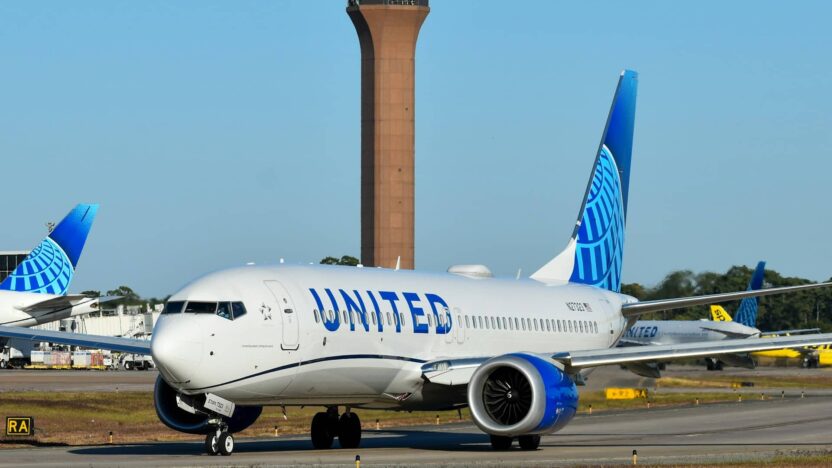
If you’ve ever been trapped in a middle seat while someone three rows back blasts TikTok videos through their phone speaker, congratulations: United Airlines just became your new best friend.
The Chicago-based carrier quietly updated its contract of carriage on February 27, 2026, adding a provision that could fundamentally change how passengers behave on flights. Under the new rule, anyone listening to audio or watching video content on personal devices must use headphones or earbuds. No exceptions, no excuses. Refuse to comply, and you could find yourself not just removed from the aircraft, but permanently banned from flying United altogether.
The policy dropped into United’s Rule 21 (the “Refusal of Transport” section) without fanfare or press releases. It wasn’t until this week that travelers and aviation reporters noticed the change, triggering an avalanche of reactions online. Many passengers are applauding the move with variations of “it’s about time,” while others worry the airline is overreaching. Either way, the days of blasting Candy Crush sound effects at 35,000 feet are officially over, at least on United flights.
What Changed (And Why It Matters)
United embedded the requirement directly into its legally binding contract of carriage under Rule 21, Section H (Safety), Item 22. The airline reserves the right to refuse transport, temporarily or permanently, to passengers who fail to use headphones while consuming audio or video content. That’s not a gentle reminder. That’s a contractual obligation with teeth.
Travel expert Scott Keyes told CBS News he’s unaware of any other major U.S. carrier that has formalized this rule to the same extent. Southwest requires headphones, but United is the first to explicitly tie non-compliance to removal and potential lifetime bans.
Why now? United points to its Starlink Wi-Fi rollout across the fleet. Better connectivity means more streaming, which means more noise. The airline says its Wi-Fi terms already encouraged headphone use, but codifying it in the contract makes enforcement straightforward. Translation: people weren’t getting the hint, so United made it a rule.
The Real Problem This Solves
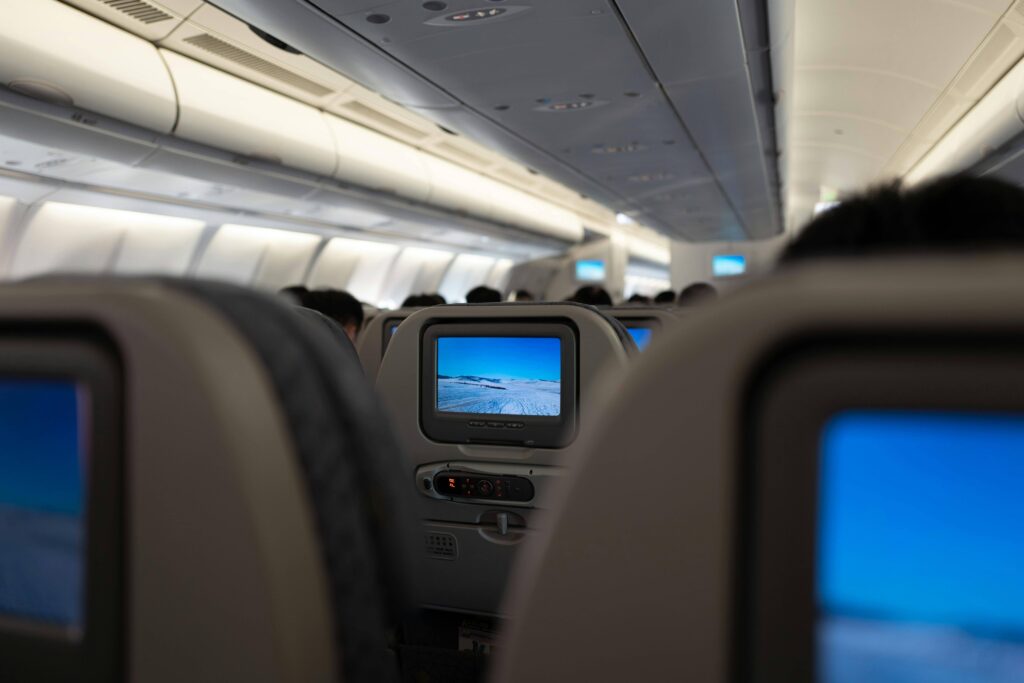 Photo by : Max Chen / Pexels
Most travelers already use headphones. But there’s that other group: the person FaceTiming on speakerphone in the gate area, the passenger watching YouTube at full volume, the business traveler taking conference calls in the lounge like it’s a private office.
These behaviors drive other passengers crazy, and complaints have been mounting. Travel bloggers have written entire posts about the habit of not using headphones, with readers describing tinny speakerphone audio as migraine-inducing. The complaints describe movies watched without headphones, music at volumes that defeat noise-canceling technology, and hours-long video calls that turn cabins into someone’s personal space.
United’s new policy draws a line. The airline is saying: we’ve asked nicely, we’ve put reminders in our Wi-Fi terms, and now we’re making it a rule. Use headphones or face consequences.
What Happens If You Don’t Comply
The policy doesn’t mandate automatic removal for forgetting your headphones. United isn’t kicking you off because your AirPods died mid-journey. The enforcement targets deliberate non-compliance. If a flight attendant asks you to use headphones and you refuse, the crew has contractual authority to take action, up to and including removal.
In extreme cases, particularly if you’re belligerent or create a scene, United can permanently ban you from future flights. The airline isn’t bluffing. Permanent bans, while rare, do happen when passengers repeatedly violate rules or demonstrate disruptive behavior patterns.
What if you genuinely forgot headphones? United says it will provide complimentary earbuds in some situations, particularly if you ask before there’s a problem. The airline’s website states: “Don’t worry if you forget your headphones for your flight.” Be proactive, communicate with the crew, and you’ll probably be fine.
The policy addresses the person who gets told “please use headphones” and responds with “I don’t have to” or “the volume is low, it’s fine.” That confrontational refusal triggers potential removal, not an honest mistake.
Why Airlines Are Cracking Down
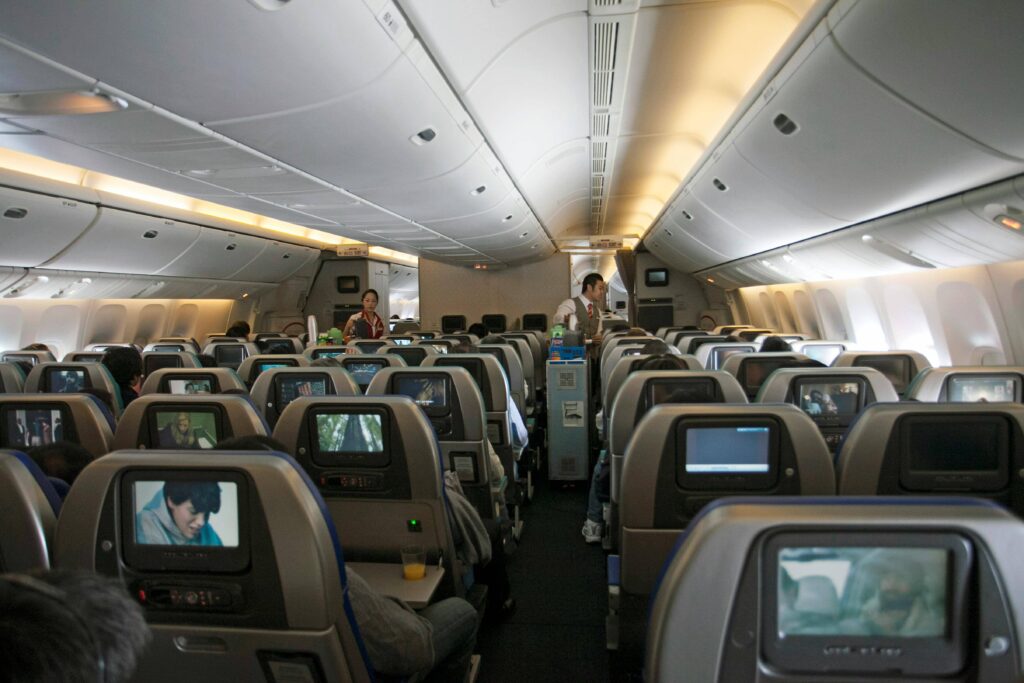 Photo by : Jeffry Surianto / Pexels
United’s policy reflects broader changes in cabin management. Device usage has exploded, and so have noise complaints. A decade ago, most passengers used seatback entertainment with provided headphones. Today, everyone has smartphones with streaming services and social media.
TikTok, Instagram Reels, and YouTube Shorts have created constant scrolling through short videos with sound. Many people watch these in public without thinking twice. But airplanes are different. You can’t escape annoying sounds at 35,000 feet. You’re trapped with 150 to 300 other people who paid hundreds or thousands for tickets.
Airlines also face operational pressure. A single noise confrontation can delay departures, burn crew time, and create network ripple effects. At major hubs like United’s Chicago O’Hare or Denver bases, where tight connections matter, a 10-minute delay can cascade into missed flights and reaccommodation costs. Written rules give crew members clearer backing to resolve problems quickly.
The Starlink Connection
United’s Starlink Wi-Fi rollout is directly tied to this policy. Traditional satellite Wi-Fi on planes is slow and can’t handle streaming. Starlink offers speeds comparable to home internet, enabling smooth video streaming and real-time calls.
That’s fantastic for passengers, but it amplifies the noise problem. When connectivity was spotty, people switched to downloaded content. With Starlink, streaming becomes the default, and skipping headphones becomes more tempting. United is future-proofing its cabin environment as connectivity improves.
 Photo by : David Syphers / Unsplash
How United Airlines Is Preparing for $175 Oil While Adding 120 New Planes
What Other Airlines Are Doing
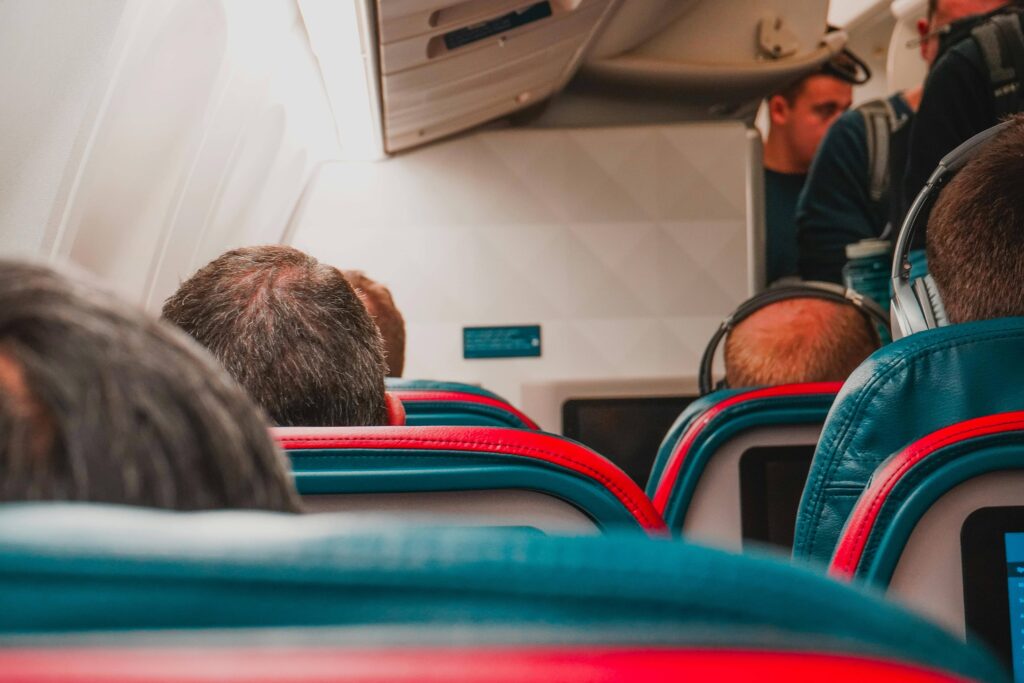 Photo by : Dylan Bueltel / Pexels
United isn’t alone in caring about cabin noise, but its approach is unusually formal. Southwest requires headphones: “Headphones are required whenever a Passenger is listening to any audio.” However, Southwest doesn’t explicitly link non-compliance to removal the way United does.
Delta takes a softer approach. Their website states: “For the comfort of everyone around you, please use earbuds or headphones.” That’s a request, not a requirement.
American and other majors similarly encourage but don’t require headphones. United’s decision to codify the rule and attach serious consequences makes it an outlier. Industry observers expect others may follow if the policy proves effective.
Passenger Reactions: Applause and Anxiety
Social media reaction has been overwhelmingly positive, with travelers expressing relief that someone is finally addressing this irritant. Comments range from enthusiastic (“FINALLY!”) to sarcastic (“Shouldn’t this have been a rule decades ago?”) to grateful (“As someone with misophonia, thank you United”).
But not everyone is celebrating. Some worry the policy gives airlines too much power over minor infractions. Others note that inconsistent enforcement could create problems. There’s also the question of accessibility: What about passengers with hearing impairments who use captions, or parents managing young children? United’s contract doesn’t carve out explicit exceptions, though crew discretion seems likely.
The Counterargument: Are We Overregulating?
 Photo by : Hasan Gulec / Pexels
While most people support requiring headphones, there’s a legitimate concern about airlines creating an ever-expanding rulebook that micromanages passenger behavior.
Air travel has become increasingly restrictive. We remove shoes, limit liquids to 3.4 ounces, sit in shrinking seats, accept luggage fees, and navigate complex boarding procedures. Every new rule adds potential conflict between passengers and crew.
Some experts worry that formalizing every piece of etiquette into enforceable contract terms creates a legalistic, adversarial environment rather than fostering mutual respect. When every small transgression can result in removal or bans, does that make flights more comfortable or just more tense?
There’s also a practical question: how much enforcement capacity do airlines really have? Flight attendants are already stretched managing safety, service, and unruly passengers. Adding headphone compliance might not be realistic on full flights during busy periods.
The counterpoint is straightforward: airlines tried the courtesy approach, and it didn’t work. Reminders and gentle requests haven’t solved the problem. At some point, rules need backing.
What This Means For You
If you fly United, here’s your takeaway: pack headphones, charge them before your flight, and keep them accessible. If you normally borrow earbuds from the airline, bring your own as backup. If your headphones die mid-flight, ask a flight attendant for spare earbuds before you hit play.
Most importantly, if crew members ask you to use headphones, comply immediately. Don’t argue, don’t explain why your situation is different, don’t insist the volume is low. Just put them on or turn off the audio. The policy exists because too many passengers turned simple requests into confrontations.
For the 95% of travelers who already use headphones, nothing changes. You’ll continue as always, and you’ll probably enjoy quieter flights as holdouts get the message.
The Bottom Line
 Photo by : Rafael Cosquiere / Pexels
United’s headphone policy represents airlines’ willingness to formalize behavioral norms when informal pressure fails. It acknowledges that device usage has fundamentally changed the cabin experience. And it signals that airlines are thinking proactively about how improved connectivity might create new problems.
Whether other carriers follow remains to be seen. If the policy successfully reduces noise complaints without backlash or overwhelming enforcement burden, expect similar rules to spread. Airlines watch each other closely, and successful policies get copied.
For passengers, the message is simple: the cabin is a shared space, and technology has made that sharing more complicated. Airlines are no longer leaving it to chance that people will do the right thing. They’re writing rules, attaching consequences, and betting that travelers will appreciate the effort.
So next time you board a United flight, double-check that your headphones are in your bag. Because the passenger blasting music isn’t just annoying anymore. They’re in violation of their contract of carriage, and the airline now has clear authority to do something about it.
And honestly? It’s about time.
Related Aviation News
 Photo by : Christian Lambert / Unsplash
Airlines Are Making More Money Than Ever and Your Wallet Is About to Feel It
U.S. airlines report record spring demand. United sees March fares up 15-20% YoY, revenue per seat rising 14%…
Photo by : David Syphers / UnsplashHow United Airlines Is Preparing for $175 Oil While Adding 120 New Planes
United cuts 5% of flights as Iran conflict drives fuel costs higher. Planning for $175 oil while still…
 Photo by : Filip Chudoba / Unsplash
Chicago O’Hare Turns Into a Snow Globe From Hell as 790 Flights Get Canceled
Chicago O'Hare storms cause 790 cancellations and 830 delays. Severe snowstorms and high winds strand thousands at ORD.…