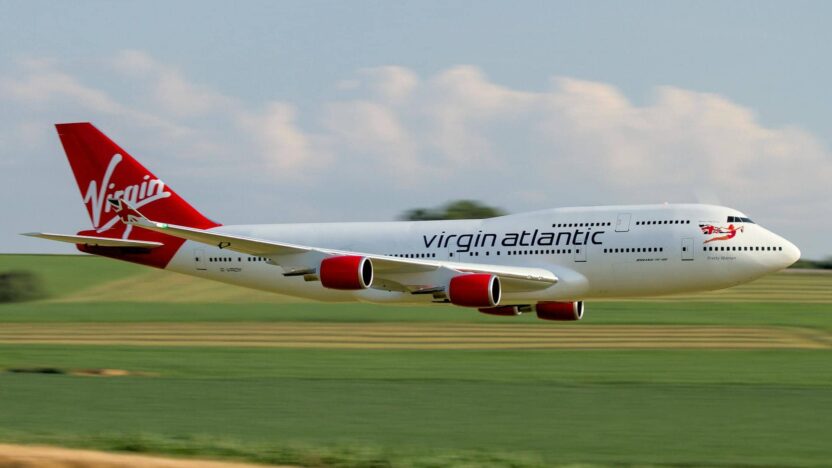
A single Virgin Atlantic Airbus A350 pushed back from its gate at Dubai International Airport on Wednesday morning, 30 minutes behind schedule but carrying something far more valuable than punctuality: a signal that commercial flying between the Gulf and the UK is slowly, cautiously coming back to life. Flight VS401 departed at 11:50 a.m. local time bound for London Heathrow, making Virgin Atlantic the first carrier to resume a scheduled passenger service out of the UAE since the Middle East airspace crisis began six days ago.
The departure was modest. One widebody jet, one route, half an hour late. But set against the backdrop of more than 12,300 cancelled flights across seven major Middle East airports since February 28, that single plane climbing out of DXB felt like a turning point. Virgin also resumed its Riyadh to Heathrow service earlier that morning, with VS243 departing King Khalid International Airport at 4:22 a.m. local time. Together, the two flights represented the first tentative steps toward restoring normal UK-Gulf connectivity for an airline that had been grounded alongside everyone else.
Why Virgin Was Able to Move First
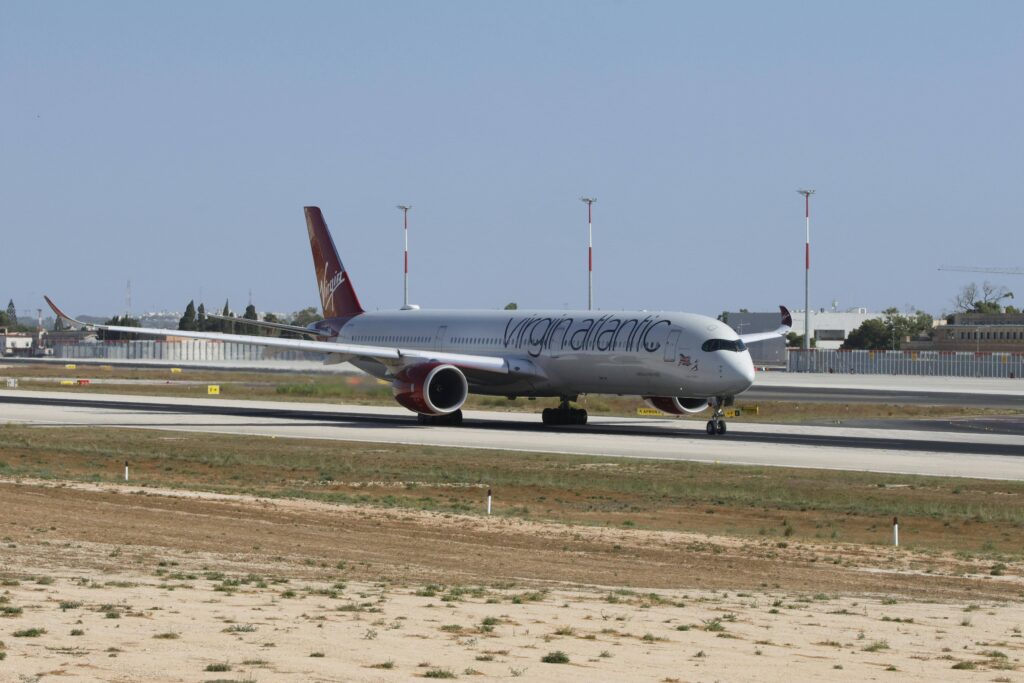 Photo by : Andrew Cutajar / Pexels
The key question is not just that Virgin Atlantic flew, but why it could fly when the three Gulf mega-carriers could not.
The answer comes down to base of operations and operational flexibility. Emirates, Etihad, and Qatar Airways are all headquartered inside the conflict-affected region. Their fleets, crews, maintenance operations, and entire hub infrastructure sit within or adjacent to closed or restricted airspace. Emirates extended its suspension of all scheduled flights until 11:59 p.m. local time on March 7, a full 72-hour extension from its previous deadline. Etihad pushed its commercial suspension to 2:00 p.m. on March 5. Qatar Airways remains entirely grounded because Qatari airspace has not reopened at all, with the next update promised for Friday, March 7.
Virgin Atlantic, by contrast, operates from London Heathrow. Its aircraft, crew bases, engineering facilities, and scheduling hub are all in the UK. When Saudi airspace reopened to limited operations on March 2 and Dubai airspace followed with security precautions in place, Virgin was able to route its flights through cleared corridors without needing to untangle the crew displacement, aircraft repositioning, and hub congestion problems that the Gulf carriers are still wrestling with.
Stephen P. Goulding, Virgin Atlantic’s Country Manager for Canada, confirmed the operational picture to Open Jaw: the airline had returned to using Saudi airspace and, with security precautions, airspace over Dubai had also reopened. The airline warned customers that some flights are operating on adjusted routings with slightly longer flight times, but the key point was that they were operating at all.
The Scale of What Remains Broken
Celebrating one flight is appropriate. Pretending it fixes anything would be foolish.
According to Flightradar24, cancellations across Dubai International, Hamad International in Doha, Zayed International in Abu Dhabi, Sharjah International, Kuwait International, Bahrain International, and Dubai World Central had exceeded 12,300 flights between February 28 and March 3. That number has continued climbing. More than 80 percent of scheduled services to and from Dubai remained cancelled as of Tuesday, and more than half of Abu Dhabi’s flights were grounded.
The UAE’s General Civil Aviation Authority announced the start of “exceptional” flight operations, with Dubai, Abu Dhabi, and Sharjah airports handling a limited number of commercial flights through designated emergency corridors at a rate of 48 flights per hour. At a media briefing on March 3, authorities confirmed that 17,498 passengers had been returned home on 60 national carrier flights since March 1. The next phase targets 80 flights per day, with capacity to move over 27,000 passengers.
By Wednesday morning, the pace had picked up further. LoyaltyLobby compiled data showing that Emirates, Flydubai, and 20 other airlines had scheduled 114 repatriation flights from Dubai for March 4, with capacity to move between 25,000 and 30,000 stranded passengers. But these are not normal commercial services. Airlines are not selling new tickets for most of these flights. They exist to clear the backlog of passengers with existing bookings who have been stuck since Saturday.
The distinction matters. A repatriation flight and a scheduled commercial service are fundamentally different animals. Repatriation flights are one-off operations coordinated with aviation authorities, often operating under special safety approvals and without the expectation that they will repeat tomorrow. A scheduled service, like Virgin Atlantic’s VS401, runs on a published timetable and signals an airline’s intent to keep operating. That is what makes Virgin’s Wednesday departure meaningful.
What Other Airlines Are Doing
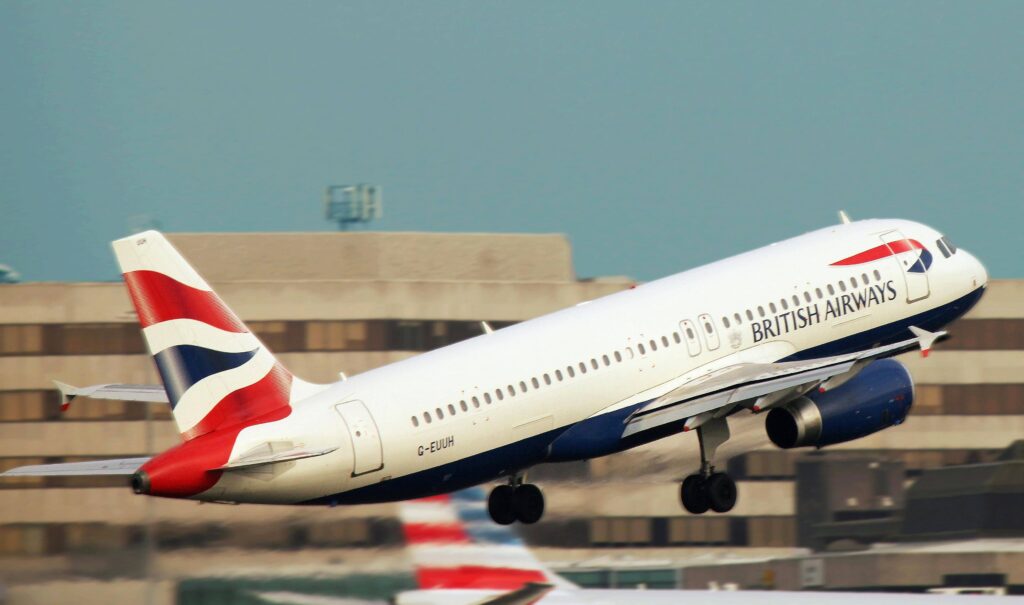 Photo by : Pixabay / Pexels
The contrast between Virgin Atlantic’s resumption and the rest of the European carrier landscape is striking.
British Airways has been unable to operate flights from several Middle East destinations, including Abu Dhabi, Amman, Bahrain, Doha, Dubai, and Tel Aviv. Passengers with bookings through March 15 can change dates free of charge to depart by March 29. In a creative workaround, BA organized a special flight from Muscat, Oman, to London, departing at 2:30 a.m. on March 5, with seats assigned first-come, first-served to passengers from cancelled regional flights.
 Photo by : David Syphers / Unsplash
How United Airlines Is Preparing for $175 Oil While Adding 120 New Planes
Lufthansa Group suspended flights to Dubai and Abu Dhabi until March 6 and to Tel Aviv, Beirut, Amman, Erbil, and Tehran until March 8. KLM suspended Dammam, Dubai, and Riyadh flights until March 5. Norwegian pulled Dubai service through March 10. Finnair went furthest, suspending daily Dubai and Doha flights until March 28, suggesting its planners are not expecting a quick return to normal.
Gulf Air cannot operate because Bahrain’s airspace remains closed. Oman Air cancelled flights to nine destinations through March 6. Air Arabia suspended all UAE flights until 3:00 p.m. on March 4.
The Rerouting Reality
Even for airlines that are flying, the Middle East is not back to normal. Airspace over Iran, Iraq, Bahrain, Kuwait, Syria, and Israel remains closed. Qatar’s airspace is shut. Jordan closes its airspace at night. Saudi Arabia has partial restrictions.
What this means practically is that flights between Europe and the Gulf cannot use the most direct routing. Virgin Atlantic acknowledged this, warning of “adjusted routings” and “slightly longer flight times.” The traditional London-to-Dubai path crosses Europe, Turkey, and Iraqi/Iranian airspace. With that corridor blocked, flights must detour south through Egypt and across the Arabian Peninsula, or north through the Caucasus. Either option adds one to three hours, increases fuel burn, and complicates crew duty calculations.
For a single daily flight like Virgin’s Dubai service, the rerouting is manageable. For an airline like Emirates that normally operates more than 30 flights per day out of Heathrow alone, the cumulative effect of rerouting every service is enormous. Each diverted flight consumes more fuel, occupies airspace for longer, and forces crew scheduling adjustments that ripple across the entire network.
This is one reason why the Gulf carriers have not attempted to resume scheduled services even as limited repatriation flights have been operating since March 2. Running a few dozen emergency flights under special coordination with authorities is a very different challenge from restarting a full commercial schedule across 130-plus destinations.
The Counterargument: Is This Really a Signal?
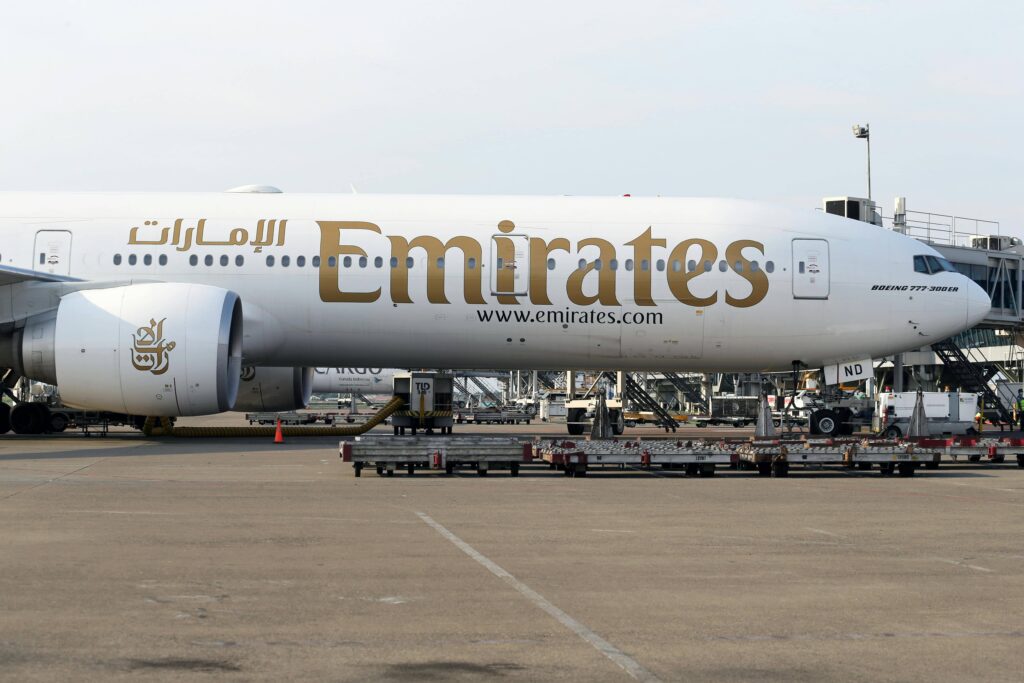 Photo by : Jeffry Surianto / Pexels
There is a reasonable case that Virgin Atlantic’s single Dubai departure, while symbolically encouraging, overstates the pace of recovery. Virgin operates one daily flight to Dubai. It is a point-to-point service carrying passengers between the UK and the UAE. It does not depend on a connecting hub, does not feed passengers onto onward flights to Asia or Africa, and does not require the complex interlining and transfer infrastructure that makes Dubai, Doha, and Abu Dhabi function as global crossroads.
The real test of recovery comes when Emirates, Qatar Airways, and Etihad can restart their connecting operations. Those three airlines collectively handled tens of millions of transfer passengers annually through their Gulf hubs before the crisis. Until they can offer reliable connections, the Asia-Europe air bridge remains effectively broken for anyone whose itinerary depends on a Gulf transit.
Emirates extending its scheduled suspension through March 7, and Qatar Airways unable to even set a reopening date, suggests that moment is still days away at minimum. The scattered fleet of grounded aircraft around the world, the displaced crew members in hotels from Sydney to London, and the physical damage to airport infrastructure in Dubai and Abu Dhabi all need to be resolved before anything resembling normal operations can resume.
What Passengers Should Know Right Now
If you are booked on a Virgin Atlantic flight to or from Dubai or Riyadh in the coming days, the airline says it intends to operate but that the situation remains “dynamic.” Check flight status before heading to the airport. Expect the possibility of rerouted flights and longer journey times.
If you are booked with any other carrier for Middle East travel, do not go to the airport unless your airline has contacted you directly with a confirmed departure. This is not a general suggestion. Emirates, Etihad, and Dubai Airports have all stated explicitly that passengers without confirmed bookings should stay away. The UAE government continues to cover accommodation and meal costs for stranded travelers, and the Federal Authority for Identity, Citizenship, Customs and Ports Security has processed travel procedures for over 30,000 travelers, including more than 15,000 entry visas for those requiring temporary residence.
For the roughly 12,300-plus cancelled flights and the hundreds of thousands of passengers caught in the disruption, Virgin Atlantic’s Wednesday departure from Dubai is a small but genuine piece of good news. One plane, one route, 30 minutes late, heading for Heathrow. The recovery starts somewhere. Today, it started at Gate D21.
Related Aviation News
 Photo by : Ryuno / Unsplash
San Francisco Airport Becomes a Parking Lot in the Sky as Peak Hour Chaos Strands Travelers
SFO congestion causes 67 delays and 3 cancellations today. Peak-hour bottlenecks hit United, Delta, American, Alaska. International connections…
 Photo by : Wikimedia Commons
Three Aviation Incidents in One Week Exposed How Fragile Modern Air Travel Really Is
JetBlue's groundstop, American Airlines weather delays, and a damaged CRJ700 radome at Reagan National highlighted aviation's fragile state…
 Photo by : Filip Chudoba / Unsplash
Chicago O’Hare Turns Into a Snow Globe From Hell as 790 Flights Get Canceled
Chicago O'Hare storms cause 790 cancellations and 830 delays. Severe snowstorms and high winds strand thousands at ORD.…