Imagine sitting at Gate C22 in LaGuardia Airport, watching your departure time quietly slide from 2:15 p.m. to 3:00 p.m. to 5:45 p.m. to “we’ll update you shortly.” Now multiply that experience by 161.
LaGuardia Airport recorded 161 flight delays and 8 cancellations in a single operational period, with Delta Air Lines and American Airlines absorbing the worst of the disruption. Heavy snow, icy runways, and visibility that dropped well below safe thresholds combined to slow operations to a crawl. Routes connecting New York to Atlanta, Fort Lauderdale, Boston, and Dallas were particularly hard hit, leaving passengers stuck in terminals for hours or scrambling for hotel rooms overnight. Spirit Airlines also took significant hits, though the legacy carriers bore the heaviest volume simply because they operate the most departures out of LaGuardia.
This wasn’t an isolated bad day. It was the latest chapter in a punishing winter for East Coast air travel.
Why LaGuardia Falls Apart Faster Than Other Airports
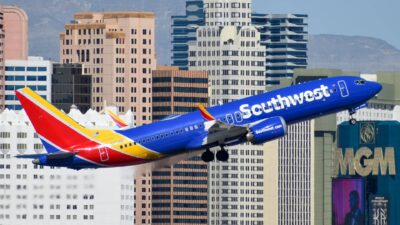
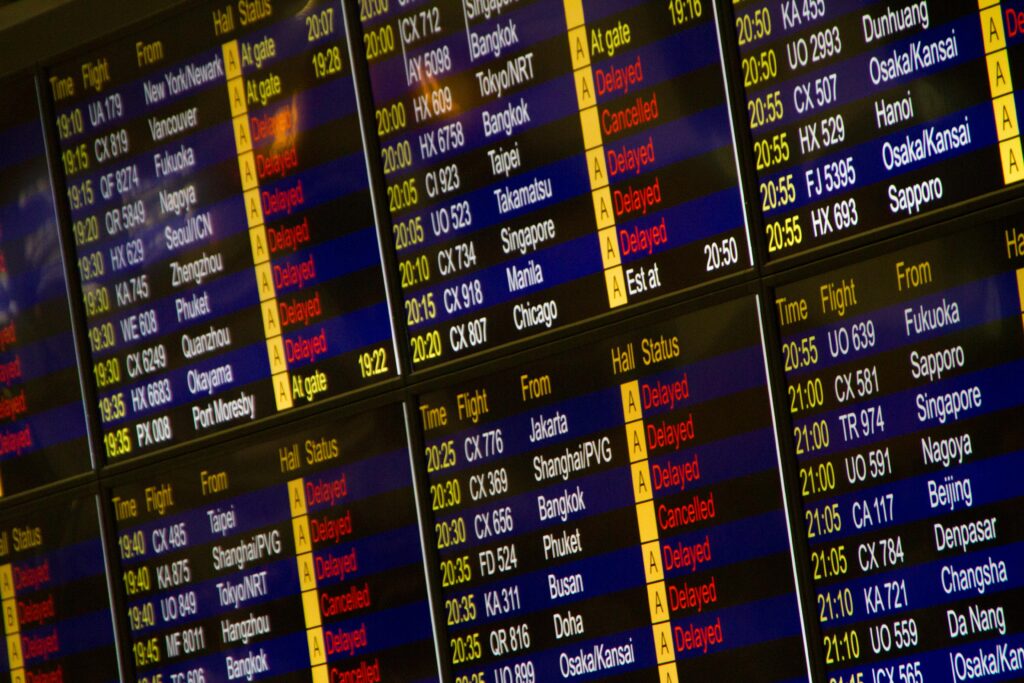 Photo by : Oscar Chan
Here is something most travelers don’t realize about LaGuardia: it has only two runways. Two. For an airport that ranks as the 19th busiest in the country and handles roughly half of all regional airline traffic in the New York metro area, that is an astonishingly thin margin of error. Both runways are 7,000 feet long, and they cross each other. Controllers generally use one for arrivals and one for departures. The system works fine on a clear day. On a day with heavy snow and visibility dropping toward minimums, it falls apart fast.
When conditions force single-runway operations, the math gets brutal. The FAA caps LaGuardia at roughly 71 scheduled operations per hour under its slot-control system. Cut that capacity in half and the delay cascade starts almost immediately. Planes stack up on taxiways, gates stay occupied, and departures sit waiting for a slot. Once that backlog builds, it can take the rest of the day to unwind.
Compare that to Dallas-Fort Worth with seven runways across 17,000 acres. LaGuardia sits on 680 acres. There is simply nowhere to put the problem when weather shrinks capacity.
What the Storm Did to Operations
The 169 total disrupted flights were driven by weather factors that all peaked at roughly the same time. Heavy snowfall reduced visibility below instrument approach thresholds. Ice accumulated on runways faster than ground crews could treat it. And sustained winds complicated the already tricky approach paths into LaGuardia, where pilots must navigate some of the most congested airspace in the country while threading between JFK and Newark traffic flows.
Airport runway de-icing is nothing like clearing your driveway. Crews use specialized vehicles with polyurethane blades to avoid damaging runway surfaces, and they apply chemical formulas designed to melt ice without corroding aircraft. Every 20 to 30 minutes during heavy precipitation, crews need to re-treat surfaces to maintain safe friction levels. During this storm, the rate of accumulation frequently outpaced the rate of treatment.
Air traffic control compounded the slowdown. When visibility drops, controllers increase spacing between arriving aircraft, which means fewer planes land per hour and departure slots open less frequently. The FAA issued ground delay programs at various points, directing airlines to hold aircraft at origin airports rather than sending them into congested New York airspace to burn fuel in holding patterns.
Delta and American Took the Biggest Hits
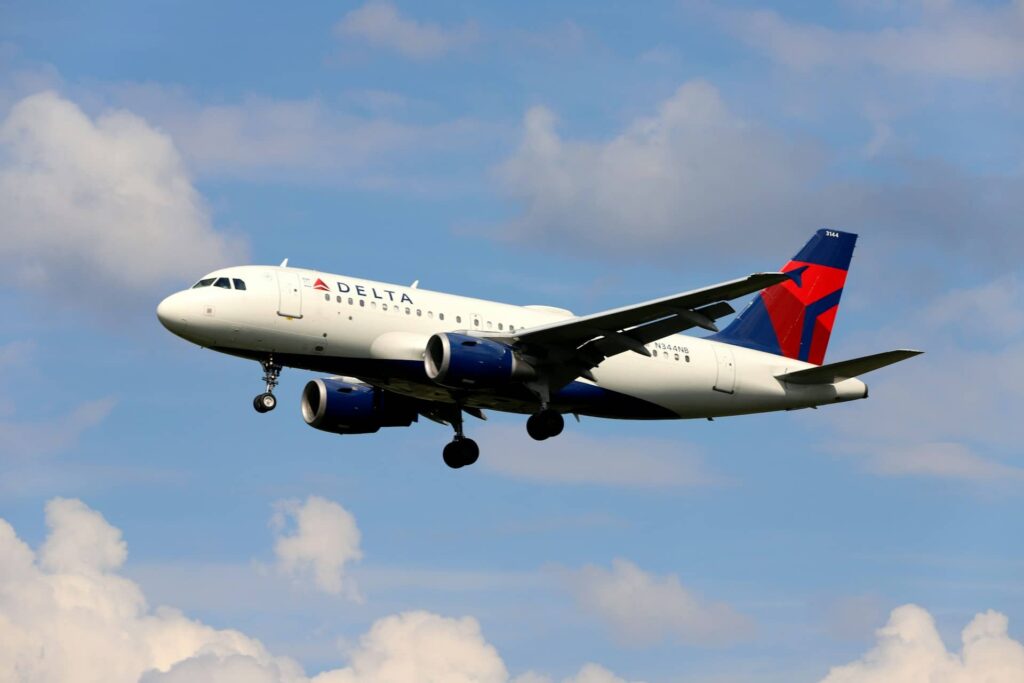 Photo by : Forsaken Films / Unsplash
Delta Air Lines and American Airlines reported the highest volume of delays and cancellations at LaGuardia, which tracks with their gate footprints. Delta operates a major shuttle and connecting hub through Terminal C, while American runs significant operations through Terminal B. Between them, the two carriers account for a substantial share of total daily departures.
Regional carriers operating under the Delta Connection and American Eagle brands were hit especially hard. These smaller aircraft, including Embraer E175s and CRJ-900s, fly the shorter routes to Boston, Washington, and Philadelphia that form LaGuardia’s backbone. Those flights run with tighter turnaround times and thinner crew margins, meaning delays compound faster than on mainline operations with more scheduling buffer.
Spirit Airlines also reported multiple delayed flights, and several affected passengers described spending four to six hours in the terminal before either boarding a delayed departure or rebooking for the next day.
 Photo by : David Syphers / Unsplash
How United Airlines Is Preparing for $175 Oil While Adding 120 New Planes
Passengers Spent Hours, and Some Spent the Night
For thousands of travelers caught in the disruption, the experience ranged from annoying to genuinely miserable. Food courts became de facto waiting rooms. Departure boards flickered with updates in 15-minute increments, each one pushing the estimated time a little further into the evening. Portable chargers became the most valuable item in anyone’s bag.
Some passengers with connecting itineraries missed their onward flights entirely. With aircraft departing fully booked even after delays, same-day rebooking was scarce. Several travelers reported being told the next available seat was 24 or even 48 hours out, particularly on high-demand routes to Atlanta and Fort Lauderdale. Families with young children and elderly passengers found the situation especially taxing, with limited seating and gate areas that weren’t designed to accommodate hundreds of stranded travelers at once.
LaGuardia’s terminals, while significantly improved by the recent multibillion-dollar redevelopment, still have limited overnight accommodations nearby compared to JFK or Newark. Passengers who couldn’t get on a flight and couldn’t find a reasonably priced hotel ended up sleeping in terminal seating areas.
What Travelers Are Entitled To
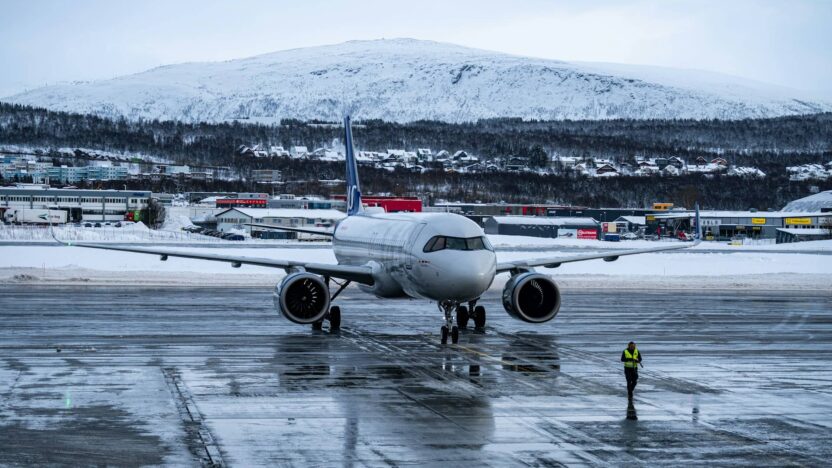
 Photo by : Darcy Lawrey / Pexels
Here is the part most stranded passengers either don’t know or forget in the chaos. Under federal rules finalized in October 2024, airlines must provide automatic refunds to passengers whose flights are cancelled or delayed by three or more hours on domestic routes. That applies regardless of the cause. Even when the delay is weather-related, passengers who choose not to travel are legally entitled to a full cash refund including taxes and fees. Airlines must issue that refund within seven business days for credit card purchases.
The catch: airlines are generally not required to cover meals, hotels, or ground transportation during weather-related delays. Most major carriers voluntarily provide meal vouchers and hotel rooms during controllable disruptions like mechanical issues, but weather sits in a different category. Check your airline’s commitments at flightrights.gov, and review your credit card’s travel protections. Many premium travel cards cover expenses that airlines won’t during weather events.
The Counterargument: Is This Actually a Crisis?
Perspective matters here. Yes, 161 delays and 8 cancellations sounds bad. But LaGuardia handles somewhere around 400 to 500 daily departures depending on the season. That means roughly 60 to 65 percent of flights still operated on this particular day, many of them with manageable delays of under an hour. Compare those numbers to what happened during Winter Storm Hernando in late February, when LaGuardia saw 449 cancellations in a single day and nearly 98 percent of flights were grounded. Or the January 2026 blizzard, which produced over 5,300 cancellations nationwide and shut down virtually every airport from Washington to Boston for 48 hours.
By those standards, 8 cancellations is almost a good day for a winter storm at LaGuardia. The 161 delays reflect an airport that was actually fighting to stay open rather than throwing in the towel, with ground crews de-icing continuously, controllers managing reduced but active traffic flows, and airlines repositioning aircraft and crews to recover as quickly as possible. That doesn’t make the experience less frustrating for the person stuck in seat 14C watching their phone battery drain. But it does suggest the system performed within roughly expected parameters for the conditions.
The broader pattern is more concerning. This winter has produced an unusual number of significant storms hitting the Northeast in rapid succession, and each one leaves a residual backlog of displaced aircraft and crews that makes the next disruption worse. Industry analysts have pointed out that airlines are running with tighter staffing margins and higher load factors than in previous years, which leaves less slack in the system to absorb irregular operations. When every flight is nearly full, there are fewer empty seats to rebook disrupted passengers onto, and the recovery from even a moderate disruption takes longer.
What to Do Before Your Next LaGuardia Flight
 Photo by : Takashi Miyazaki / Unsplash
If you’re flying through LaGuardia during the remaining weeks of winter, a few practical steps can save you real headaches. Book the earliest departure you can tolerate. Morning flights are far more likely to operate on time because the delay cascade hasn’t started yet. Leave at least three hours for any domestic connection, and more if you’re connecting through another weather-vulnerable hub like Chicago or Boston. Sign up for your airline’s app notifications so you get pushed updates the moment your flight status changes.
Check the weather forecast at both your origin and destination 48 hours before departure. If a storm is building, don’t wait for the airline to act. Call or rebook proactively through the app. Most carriers issue travel waivers ahead of named storms, and rebooking before the chaos starts gives you access to better options than you’ll find once the delays have already hit.
And pack a phone charger. Seriously. The single most common complaint from stranded passengers at LaGuardia this winter hasn’t been about the food or the seating or even the delays themselves. It has been dead phones. When your entire rebooking lifeline runs through an app, a dead battery at 30 percent turns a bad delay into a genuinely helpless situation.
Winter at LaGuardia has always been a gamble. Two short, crossing runways on 680 acres of waterfront real estate in one of the most weather-exposed corridors in American aviation. No amount of terminal renovation changes that physics. The best defense is preparation, and the passengers who got through this latest round of disruptions with the least pain were overwhelmingly the ones who had a backup plan before they ever left the house.
Related Aviation News
 Photo by : Ryuno / Unsplash
San Francisco Airport Becomes a Parking Lot in the Sky as Peak Hour Chaos Strands Travelers
SFO congestion causes 67 delays and 3 cancellations today. Peak-hour bottlenecks hit United, Delta, American, Alaska. International connections…
 Photo by : Filip Chudoba / Unsplash
Chicago O’Hare Turns Into a Snow Globe From Hell as 790 Flights Get Canceled
Chicago O'Hare storms cause 790 cancellations and 830 delays. Severe snowstorms and high winds strand thousands at ORD.…
 Photo by : Wikimedia Commons
Three Aviation Incidents in One Week Exposed How Fragile Modern Air Travel Really Is
JetBlue's groundstop, American Airlines weather delays, and a damaged CRJ700 radome at Reagan National highlighted aviation's fragile state…