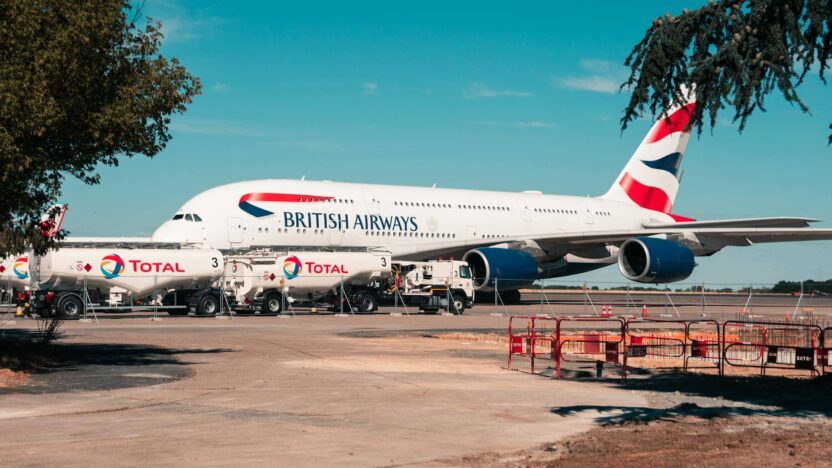
If you’re holding a British Airways boarding pass to anywhere in the Middle East right now, it might be worth more as a bookmark than a travel document. The IAG-owned carrier has cancelled all flights to Tel Aviv and Bahrain through at least Wednesday, scrapped Saturday services to Amman, Abu Dhabi, Dubai, and Doha, and warned passengers on six key routes that disruption could stretch well into the second week of March. One overnight BA flight from Heathrow to Doha actually turned around mid-air and flew back to London.
The cancellations are part of the largest disruption to global air travel since the Covid-19 pandemic, triggered by US and Israeli strikes on Iran on February 28 and Iran’s retaliatory attacks across the Gulf. At least eight countries shut their airspace. Over 3,000 flights have been cancelled region-wide. And BA, which operates some of the highest-profile routes connecting London to the Middle East, finds itself managing a crisis with no clear end date.
What British Airways Has Cancelled
BA’s response has come in stages, evolving rapidly as conditions deteriorated. The initial Saturday announcement confirmed Tel Aviv and Bahrain suspended through March 3. That window was subsequently extended. As of the latest updates, both routes remain grounded through at least Wednesday, with the airline monitoring conditions on a rolling basis.
Saturday’s services to Amman, Abu Dhabi, Dubai, and Doha were scrapped outright. The airline warned that flights between Heathrow and all six destinations “could face disruption for days.” In practice, every BA route touching the Middle East is either cancelled or operating under extreme uncertainty.
BA confirmed: “We are closely monitoring the situation and have taken the operational decision to cancel our flights to Tel Aviv and Bahrain… Safety is always our top priority, and we’re contacting our customers to advise them of their travel options.”
The Rebooking and Refund Policy, Decoded
 Photo by : Markus WInkler / Unsplash
BA’s rebooking policy has expanded multiple times since Saturday, which is both reassuring and slightly confusing. Here’s where things stand as of Sunday evening.
For passengers on routes to Dubai, Abu Dhabi, Bahrain, Amman, Doha, or Tel Aviv, free flight changes are available for travel dates up to March 15. You can rebook onto any available BA flight to the same destination up to March 29. That’s a meaningful window, not the three-to-five-day band some airlines offer during disruptions.
For refunds, BA initially offered full refunds for travel up to March 4. By Sunday evening, that was extended to cover flights through March 8. You can request a refund by calling BA at 0800 727 800 within the UK or 020 3250 0145 from outside.
There’s a specific provision for Tel Aviv passengers worth highlighting. For flights through March 13, BA is offering the option to change your destination from Tel Aviv to either Athens or Larnaca in Cyprus. Onward travel from there would be at your own expense, but it gives stranded travelers a path to the Eastern Mediterranean rather than nowhere at all.
BA can also rebook affected passengers onto partner airlines: Qatar Airways, Etihad, Air France, Lufthansa, Swiss International, Iberia, Scandinavian Airlines, Austrian Airlines, LOT, and Brussels Airlines. That partner list means BA isn’t limited to its own schedule when finding alternatives.
Why These Routes Matter
The Heathrow-to-Dubai route is one of the most commercially important long-haul services in BA’s network, carrying business travelers, tourists, and connecting passengers who transfer onward to Asia, Africa, and Australasia. Doha functions as a gateway for Qatar Airways connections. Tel Aviv serves both leisure and business demand alongside the UK’s significant Jewish diaspora community. When BA pulls all of these simultaneously, it disrupts connecting itineraries across the entire network.
The Heathrow-to-Doha turnaround on Saturday night illustrates how fast conditions shifted. That aircraft and crew are now out of position, the return service was automatically cancelled, and every passenger on both legs needs rebooking. Multiply that across dozens of similar scenarios industry-wide, and you understand why recovery will take far longer than the airspace closures themselves.
How BA Compares to Other European Carriers
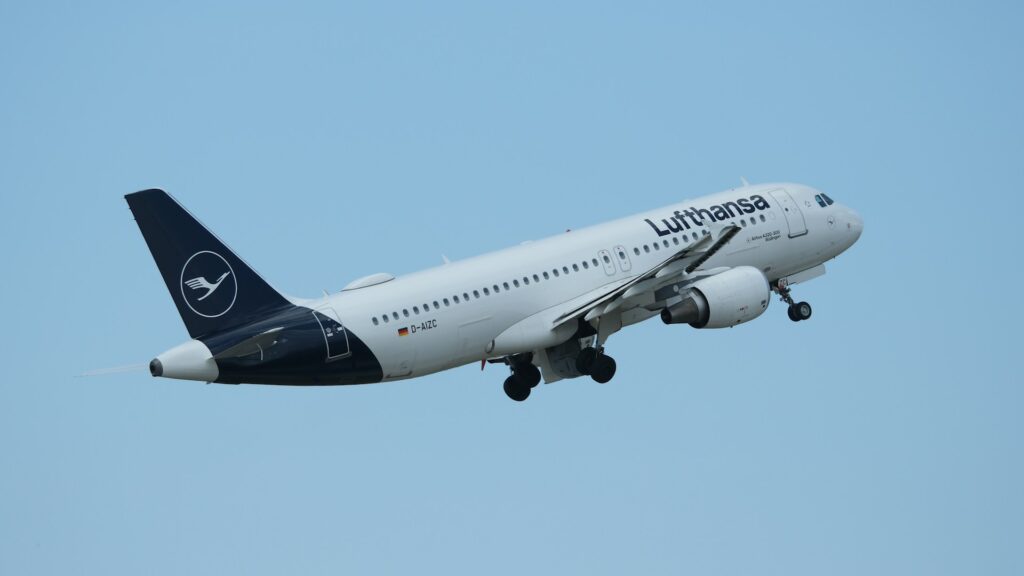 Photo by : Sevcan Alkan / Unsplash
British Airways isn’t alone, but timelines vary meaningfully. The European Union Aviation Safety Agency issued a conflict zone bulletin labeling the entire region “high risk” for civilian aircraft, advising airlines against operating there. Lufthansa Group suspended flights to Tel Aviv, Beirut, Amman, Erbil, and Tehran through March 8 (extended from the initial March 7 date) and declared it would not use the airspace of Israel, Lebanon, Jordan, Iraq, Qatar, Kuwait, Bahrain, or Iran through the same date.
KLM cancelled all flights to Tel Aviv, Dubai, Riyadh, and Dammam through March 5. Air France pulled service to Beirut, Dubai, and Riyadh. Wizz Air went furthest among European budget carriers, suspending everything to Israel, Dubai, Abu Dhabi, and Amman through March 7.
 Photo by : David Syphers / Unsplash
How United Airlines Is Preparing for $175 Oil While Adding 120 New Planes
BA’s approach sits in the middle: firm cancellations on the most directly affected routes (Tel Aviv, Bahrain) with cautious day-by-day assessment for Gulf destinations that depend on whether UAE and Qatari airspace reopens. The rebooking window extending to mid-March suggests BA’s planners are not expecting a rapid return to normal.
The UK Foreign Office Factor
The Foreign, Commonwealth and Development Office has issued a “do not travel” advisory for Israel and Palestine, the strongest possible warning. Bahrain, Qatar, Kuwait, and the UAE have all been upgraded to “avoid all but essential travel.” British nationals in those countries have been urged to register their presence with the Foreign Office, and over 76,000 have already done so, the vast majority in the UAE.
Those classifications directly affect travel insurance. Standard policies will not cover travel to a destination under a “do not travel” warning. Any British traveler in Israel right now faces a situation where flying is impossible, insurance is void, and the only safety net is the airline’s refund policy. BA’s policy becomes the de facto lifeline.
The UAE advisory is slightly less severe but still significant. “Avoid all but essential travel” gives insurers grounds to scrutinize claims. For practical purposes, if you’re a tourist with a Dubai booking in the next two weeks, the combination of BA’s disruption policy and the FCDO warning makes postponing the obvious choice. One couple from London, Richard and Hannah, were en route to Oman when their connection stranded them in Bahrain. “As the days go on and the vacation is eroded, we’re looking at plans to just get back home,” Richard told the BBC.
The Counterargument: Is BA Being Too Conservative?
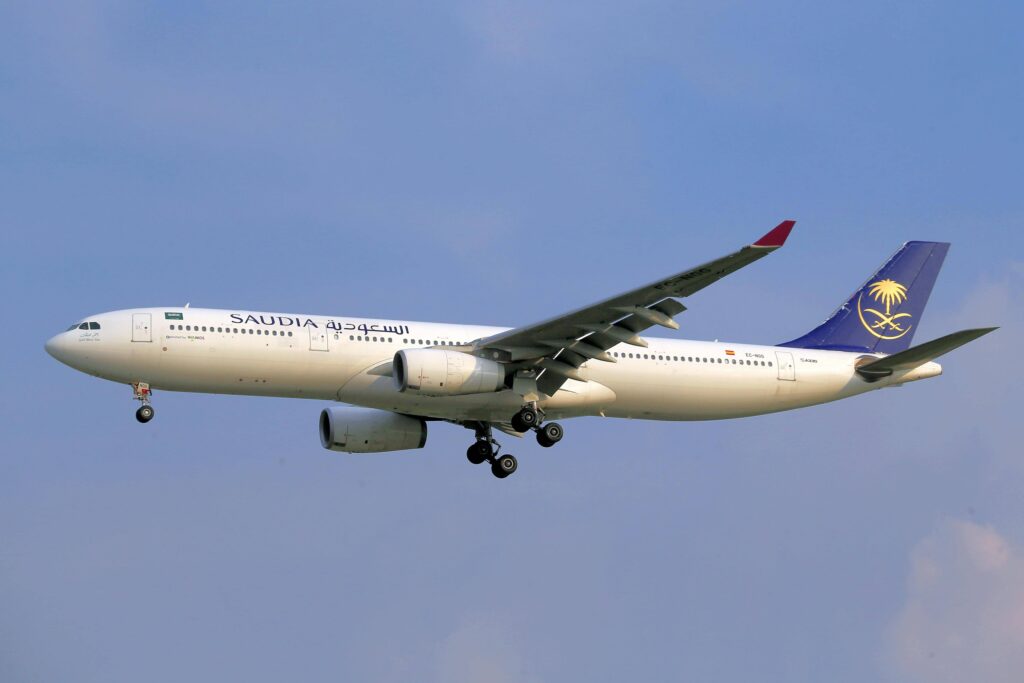 Photo by : Jeffry Surianto / Pexels
Some aviation observers have noted that BA’s cancellation window is narrower than Lufthansa’s or Wizz Air’s for Gulf destinations. Saudi Arabia has kept its airspace partially open, and some airlines have found routing through Saudi or Omani corridors that bypass closed zones. A few carriers have already announced tentative plans to resume Dubai and Doha service as early as Monday or Tuesday.
The argument: BA could operate some Gulf routes using longer flight paths avoiding Iranian, Iraqi, and Bahraini airspace, accepting higher fuel costs as a trade-off. Some Asian carriers routing via the Caucasus have done exactly this.
BA’s counter-position is straightforward: the security situation remains fluid, Iranian strikes have hit civilian airports in Dubai and Abu Dhabi, and committing to partial service before airspace certainty exists risks more disruption if a resumed flight has to turn around again. The Doha incident already demonstrated that risk.
The conservative approach carries real cost. Every day of cancelled flights means lost revenue and reputational pressure from competitors who resume first. But for an airline positioning itself as a premium, safety-first carrier, the downside of resuming too early and having another mid-air turnaround outweighs the downside of waiting an extra day.
What Affected Passengers Should Do Right Now
If you have a BA booking to any of the six affected destinations, check your status on ba.com or the BA app before calling. Phone lines are overwhelmed. The digital channels will show whether your specific flight is cancelled and what options are available.
If your travel date falls within the refund window (currently through March 8), claim a full refund through the contact centres. If you’d rather rebook, free changes extend to March 15 with rebooking available through March 29. For Tel Aviv passengers, the Athens or Larnaca option is worth considering if you need to reach the Eastern Mediterranean regardless.
Save screenshots of cancellation notices. If BA rebooks you onto a partner airline, confirm that checked luggage and prepaid extras transfer. If you booked through a travel agent, contact them directly as they may have different procedures.
Where This Goes From Here
 Photo by : Oblivion Sparks / Pexels
BA’s next decision point is likely Tuesday or Wednesday, when it will assess whether Gulf airspace has reopened enough to resume Dubai, Abu Dhabi, and Doha services. Tel Aviv is a different timeline entirely. Israeli airspace has been closed since Saturday, and EL AL has shut ticket sales through March 21, suggesting even Israel’s own carrier doesn’t expect quick reopening.
The honest answer is that nobody, including British Airways, knows when normal service resumes. The airline is making rolling decisions based on security assessments, airspace availability, and fleet positioning. For passengers, the best posture is patience and flexibility. A March trip to the Middle East may need to become an April one. BA’s rebooking policy, to its credit, is structured to accommodate exactly that shift.
Related Aviation News
 Photo by : Christian Lambert / Unsplash
Airlines Are Making More Money Than Ever and Your Wallet Is About to Feel It
U.S. airlines report record spring demand. United sees March fares up 15-20% YoY, revenue per seat rising 14%…
 Photo by : Wikimedia Commons
Three Aviation Incidents in One Week Exposed How Fragile Modern Air Travel Really Is
JetBlue's groundstop, American Airlines weather delays, and a damaged CRJ700 radome at Reagan National highlighted aviation's fragile state…
 Photo by : Ryuno / Unsplash
San Francisco Airport Becomes a Parking Lot in the Sky as Peak Hour Chaos Strands Travelers
SFO congestion causes 67 delays and 3 cancellations today. Peak-hour bottlenecks hit United, Delta, American, Alaska. International connections…