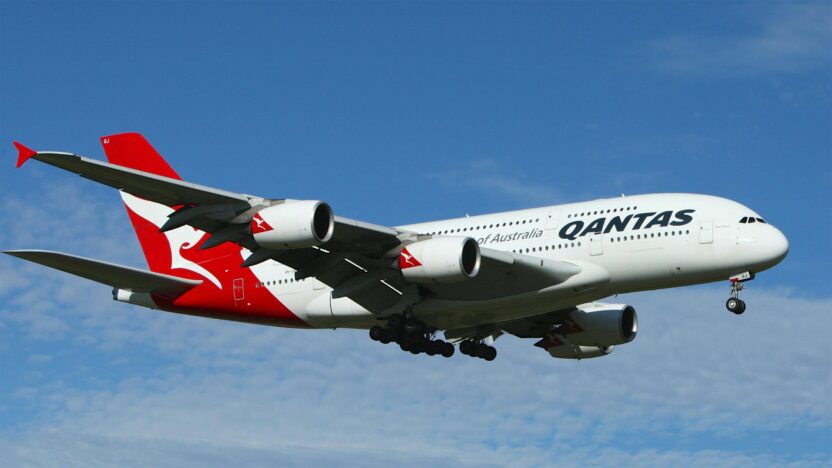
Try getting from Sydney to Las Vegas right now. Pull up a booking engine and you’ll find yourself routed through Los Angeles, San Francisco, or Dallas, adding connections, customs queues, and roughly five extra hours to what should be a straightforward transpacific hop. That era ends on December 29, 2026, when Qantas flight QF55 pushes back from Sydney and points itself directly at Harry Reid International Airport. No stops. No transfers. No dragging your bags through LAX at midnight.
No airline has ever operated scheduled nonstop service between Australia and Las Vegas. Qantas is calling it a world first, and the claim checks out.
The Numbers Behind the Route
The new Qantas Sydney to Las Vegas service will operate seasonally, running three times per week on Tuesdays, Thursdays, and Sundays from December 29, 2026 through March 12, 2027. That’s roughly ten weeks of flying, deliberately timed around Las Vegas’s peak international events calendar.
QF55 departs Sydney at 9:00 PM and lands in Las Vegas at 3:55 PM the same calendar day, thanks to the international date line. Flight time is 13 hours and 55 minutes eastbound. The return, QF56, leaves at 8:20 PM and arrives in Sydney at 6:35 AM two calendar days later, with a westbound block of 15 hours 15 minutes.
Qantas is deploying its Boeing 787-9 Dreamliner, configured with 236 seats: 42 in business class with fully flat beds, 28 in premium economy, and 166 in economy. Return economy fares start at AUD $1,099, roughly US $700. Las Vegas becomes the 101st destination on the Qantas network and the airline’s eighth city in the Americas.
How Rugby League Paved the Runway
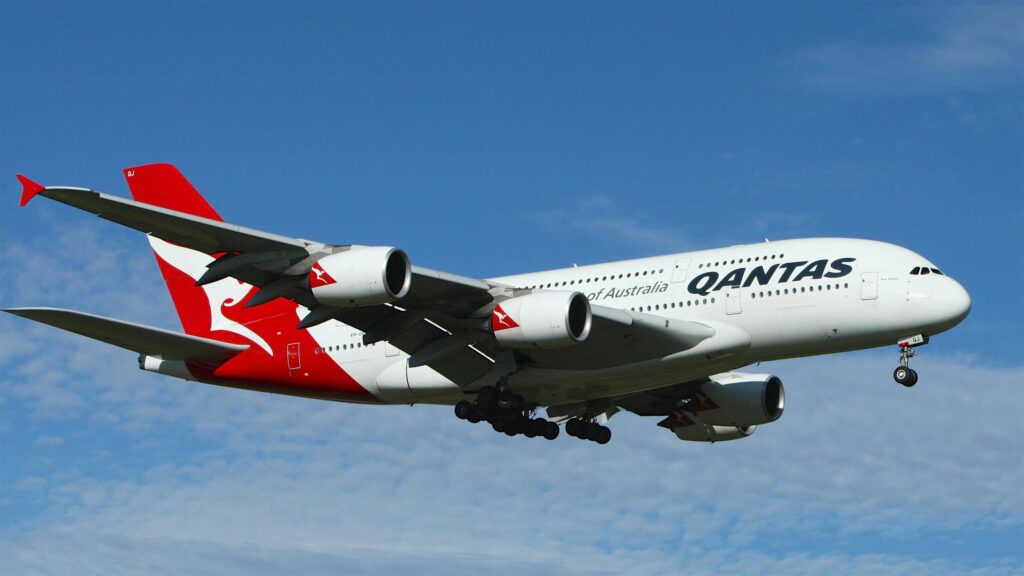 Photo by : Pascal Borener / pexels
This route didn’t appear out of thin air. It was tested, repeatedly, by sport.
For the past three years, the NRL (National Rugby League) has staged its annual season-opening festival in Las Vegas, turning Allegiant Stadium into a temporary outpost of Australian culture, complete with meat pies, sausage rolls, and Tim Tam brownies at the concession stands. Qantas partnered with the NRL to operate direct charter flights from Australia’s east coast, and those charters sold out every single year. Three years running. Economy seats gone within days of release.
Those sold-out charters gave Qantas exactly what airlines need before committing to a new long-haul route: hard proof of demand. Not survey data. Not consultant projections. Actual passengers, filling actual seats, paying actual fares. The 2026 NRL charter flights, which departed just this week, were fully booked again, with economy selling out so fast that a third departure had to be added.
Qantas International CEO Cam Wallace framed the decision as part of a broader seasonal strategy that has already worked elsewhere. The airline launched seasonal services to Rome and Sapporo in recent years, both timed around peak travel periods, and both performed well enough to justify repeat seasons. Las Vegas fits the same model: a destination with massive demand concentrated in a predictable window.
Why Las Vegas, and Why Now?
Start with the raw market size. More than 250,000 Australians visit Las Vegas every year, making Australia the city’s second-largest overseas source market. Until now, every one of those quarter-million travellers had to connect through another US city. That’s a staggering volume of passengers enduring unnecessary layovers. Steve Hill, president and CEO of the Las Vegas Convention and Visitors Authority (LVCVA), called Australia the city’s top international market without a nonstop flight. That gap closes in December.
The timing is also strategic from Las Vegas’s perspective. The city is nursing a hangover from a brutal 2025. Visitor numbers dropped 7.5 percent to 38.5 million, the steepest non-pandemic decline since the LVCVA began tracking in 1970. Canadian visitors, once the city’s largest international market, pulled back sharply amid US-Canada political tensions. Domestic leisure travellers got sticker shock from rising Strip prices. MGM Resorts CEO Bill Hornbuckle admitted on an earnings call that the company had lost control of its pricing narrative, singling out a $12 Starbucks coffee at Excalibur as the kind of thing that alienated budget-conscious visitors.
Against that backdrop, a direct pipeline of high-spending Australian tourists looks like exactly what Las Vegas needs. International long-haul visitors tend to stay longer, spend more per day, and explore beyond the casino floor. They book shows, eat at celebrity-chef restaurants, rent cars to visit the Grand Canyon and Zion National Park. According to LVCVA data shared with Matador Network, the initial ten-week season is projected to offer 7,552 seats and generate an estimated $16.4 million in economic impact.

American Airlines Is Heading Back to Venezuela And the Stakes Are Enormous
The event calendar sweetens the deal. The seasonal window covers CES (Consumer Electronics Show) in January, which alone draws over 100,000 attendees, and the NRL Las Vegas Festival. It also coincides with the broader northern hemisphere winter, when Australians (enjoying their summer) are most inclined to travel.
The Counterargument: Can a Seasonal Route Survive?
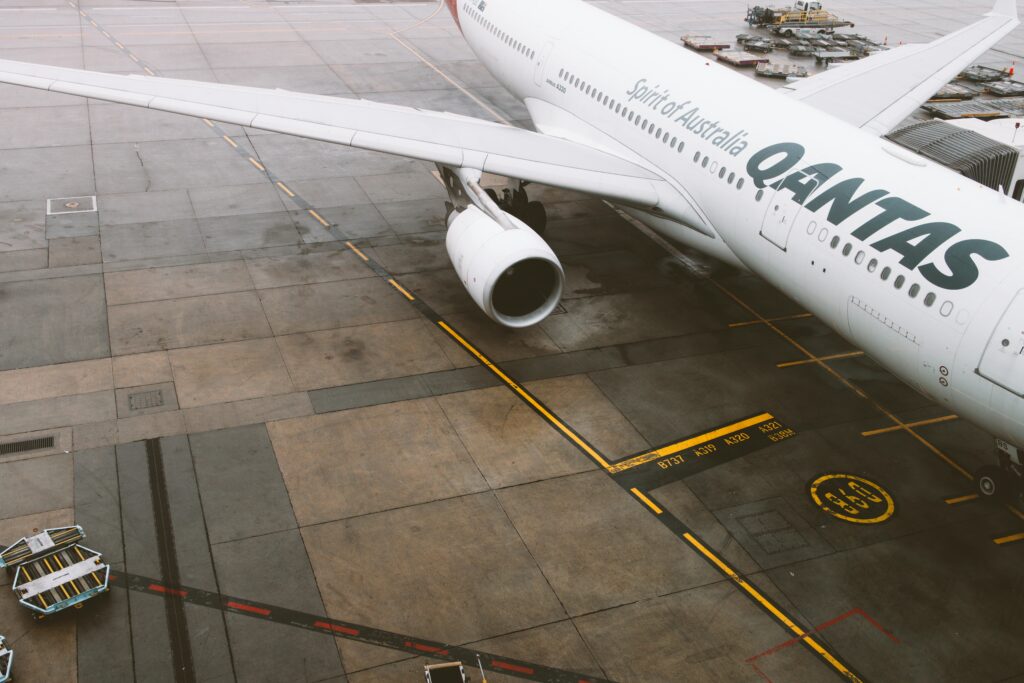 Photo by : Josh Withers / Pexels
Not everyone is convinced this becomes a permanent fixture. Aviation commentators have noted that Las Vegas is heavily event-driven, and outside peak periods, demand can soften quickly. A ten-week seasonal window is a smart hedge, but it also means the route disappears for roughly 42 weeks of the year. That’s a lot of downtime.
There’s also the question of connectivity. Las Vegas is not a major airline hub. The only other regular nonstop from Harry Reid to the Asia-Pacific region is Korean Air’s service to Seoul. Unlike LAX or San Francisco, Las Vegas doesn’t offer robust onward connections for passengers heading elsewhere in the US. Travellers whose final destination is, say, Chicago or Miami might still prefer routing through a traditional West Coast gateway where they can pick up a wider range of domestic flights.
Some industry observers have flagged that Qantas is simultaneously reducing capacity on its Melbourne to Los Angeles route, swapping an A380 for a 787, citing softening demand. If the broader Australia-US market is cooling, can a brand-new leisure route to Las Vegas swim against the tide?
The counterpoint: Qantas doesn’t need Las Vegas to work year-round. The beauty of a seasonal model is that aircraft return to the fleet when the season ends. The 787 flying QF55 in January can be redeployed on a different route by April. There’s no stranded asset, no half-empty flights grinding through low season. And Harry Reid International Airport has skin in the game too, with an incentive program offering up to $3 million annually in fee waivers to attract new international service.
Qantas’s Fleet Renewal Makes It Possible
This route couldn’t have happened five years ago. Qantas is in the middle of an aggressive fleet renewal, and the 787-9 Dreamliner is central to it. The aircraft’s fuel efficiency and range make ultra-long-haul point-to-point routes economically viable in ways older widebodies couldn’t match. Lower operating costs per seat-mile mean the airline can profitably serve thinner leisure routes that would have been financial dead ends on a 747 or A330.
Cam Wallace put it directly: the fleet renewal is giving Qantas flexibility to deploy aircraft where demand exists, opening up routes that weren’t feasible before. The 787’s cabin systems also matter at nearly 14 hours. Its lower cabin altitude (equivalent to 6,000 feet versus 8,000 on older aircraft) and higher humidity should make the experience meaningfully better than legacy equipment on the same distance.
The Bigger Picture: Las Vegas Goes Global
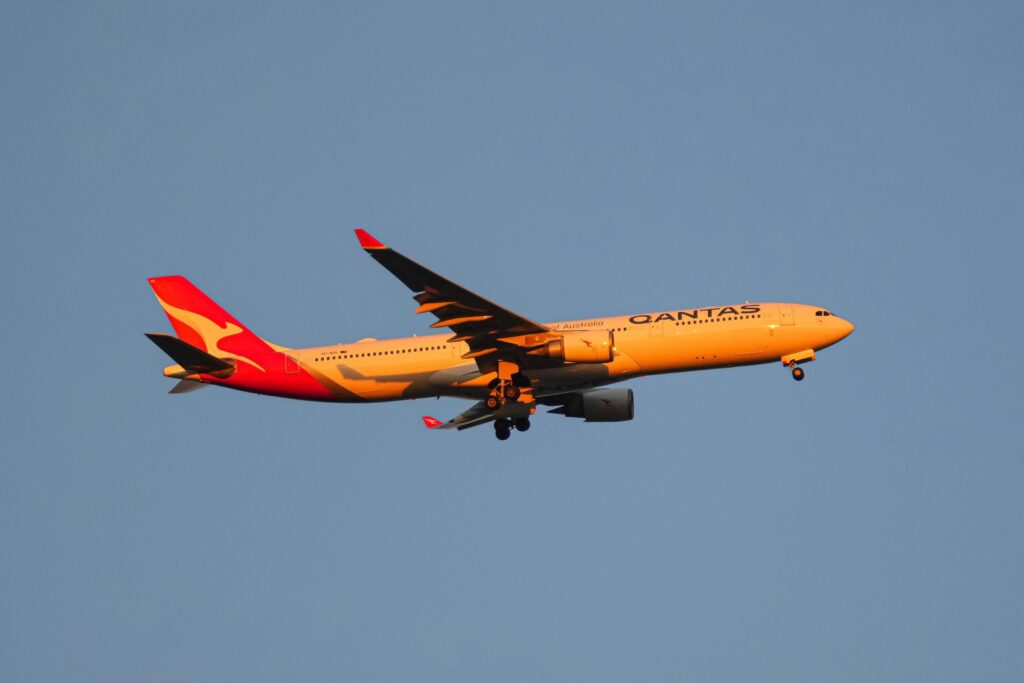 Photo by : 天玑 不器 / Pexels
Qantas isn’t the only carrier betting on Las Vegas as an emerging long-haul destination. Air France is launching Paris to Las Vegas three times weekly starting April 15, 2026. Korean Air continues its Seoul service. Las Vegas is actively courting international airlines as part of a recovery strategy that treats air access as the single most important lever for reversing the 2025 tourism decline.
The city’s 2026 event calendar is loaded: WrestleMania 42 in April, Formula One Las Vegas Grand Prix in November, UFC International Fight Week in June, and proximity to FIFA World Cup matches being held across the US this summer. If the Qantas seasonal service performs well, extending into late 2027 to overlap with the F1 race seems like an obvious next step. A Melbourne departure could eventually follow, widening the catchment across Australia’s two largest cities.
What This Route Actually Means for Travellers
For the 250,000-plus Australians who visit Las Vegas annually, this changes the calculation entirely. No more clearing customs and re-checking bags at a congested gateway airport. You board in Sydney after dinner, sleep (or try to), and land in Las Vegas mid-afternoon with your evening wide open. The date line even gives you a psychological bonus: you arrive before you left.
For Americans heading the other direction, the nonstop link puts Sydney within a single overnight flight of the Strip. Trade and Tourism Minister Don Farrell noted that 745,000 Americans visited Australia last year, calling the route a major win for inbound tourism.
Cheryl Smith, Director of Air Service Development at the LVCVA, told Matador Network the route was years in the making. Bookings are already open on qantas.com, and if the NRL charter sell-outs are any indication, those 787s will be flying full. For a quarter-million Australians who’ve been connecting through LAX every year, December 29 can’t come soon enough.