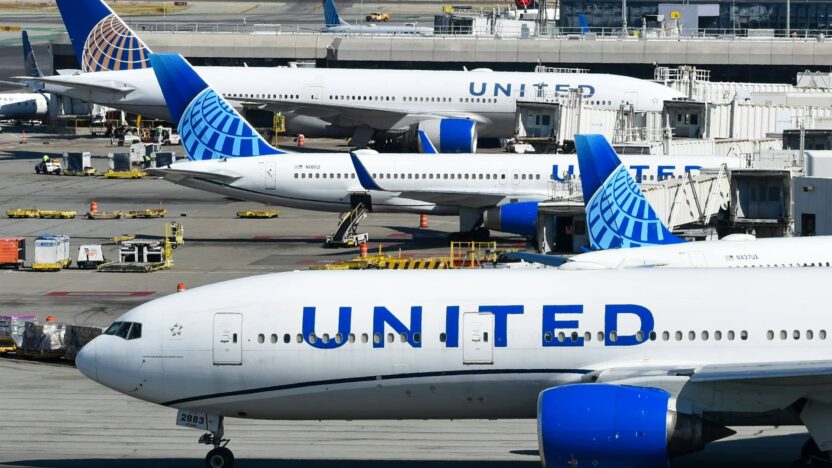
Try streaming a live football game at 35,000 feet on most airlines and you’ll spend more time staring at the buffering wheel than watching actual gameplay. United Airlines decided that experience was unacceptable, and less than two years after announcing the largest airline Wi-Fi deal in aviation history, it’s delivering something passengers have wanted for decades: internet in the sky that actually works.
United Airlines Starlink Wi-Fi is no longer a press release or a future promise. The carrier has equipped more than 300 aircraft with SpaceX’s satellite internet, flown over seven million passengers on Starlink-connected flights, and is accelerating the mainline rollout toward 800+ planes by year-end. If you fly United regularly, your chances of landing on a Starlink aircraft are climbing fast.
How United Got Here
The story starts in September 2024, when United announced a partnership with SpaceX to install Starlink across its entire fleet of more than 1,000 aircraft. It was the largest airline connectivity deal ever signed. The goal was simple: replace the patchwork of four different Wi-Fi providers United had accumulated over the years with a single, consistently fast system.
The rollout began in May 2025 with an Embraer E175 regional jet out of Chicago O’Hare. By October, United moved to its mainline fleet, launching the first Starlink-equipped Boeing 737-800 on Flight 2940 from Newark to Houston. That flight number wasn’t random. It’s approximately the total number of Starlink antennas United plans to install fleet-wide.
Since then, the pace has been relentless. By February 2026, more than 300 regional jets were Starlink-equipped, covering most of United’s two-cabin Express fleet. Over 25% of daily departures, roughly 1,200 flights, now carry Starlink. The airline has powered 3.7 million devices across 129,000 flights in under a year.
What Makes Starlink Different From the Wi-Fi You’re Used To
 Photo by : Pascal
If you’ve tried in-flight Wi-Fi before and written it off as useless, that reaction is completely fair. Traditional aviation Wi-Fi relies on geostationary satellites orbiting roughly 22,000 miles above Earth. Signals travel an enormous distance, creating high latency and slow speeds. Think of it like trying to have a conversation with someone on the moon. The words arrive eventually, but the delay makes everything painful.
Starlink takes a fundamentally different approach. SpaceX operates a constellation of over 6,000 low-Earth orbit satellites positioned roughly 340 miles up. The shorter distance slashes latency and delivers speeds that passengers genuinely notice. Independent testing during United’s media flights recorded download speeds exceeding 460 Mbps, which is faster than many home broadband connections. Even during takeoff, speeds held above 360 Mbps.
The practical difference is striking. Passengers can stream Netflix in HD, play online games with playable latency, and use multiple devices simultaneously. Voice and video calls remain prohibited by federal law to keep cabins quiet, but everything else works the way you’d expect it to on the ground.
Starlink also provides gate-to-gate connectivity. Older systems only kicked in above 10,000 feet. With Starlink, you connect as soon as you sit down and stay connected through taxi, takeoff, cruise, landing, and arrival at the gate. For business travelers who treat every minute as productive time, that distinction matters more than raw speed numbers.
The Installation Marathon
Equipping 1,000+ aircraft with new satellite hardware is a logistical challenge most people underestimate. Each Boeing 737-800 receives two Starlink antennas mounted on top of the fuselage. The core installation takes about eight hours, roughly ten times faster than legacy Wi-Fi systems. But the full retrofit stretches to approximately four days per aircraft because engineers first strip out old equipment, run certification tests, and close everything back up.
United needs FAA Supplemental Type Certification for each distinct aircraft model in its fleet, covering 16 different types across regional and mainline operations. The Embraer E175 was certified first in May 2025. The Boeing 737-800 followed in the fall. The airline is currently pursuing STC approval for the Boeing 737-900ER, the Airbus A321 family, and the Boeing 777 widebody, all expected this year.
At peak capacity, United is installing Starlink on up to 15 mainline 737-800s per month, with more than one aircraft per day across the fleet getting the upgrade throughout 2026. The target: 800+ Starlink aircraft by December 2026, entire fleet done by end of 2027.
One under-discussed advantage is weight. Starlink hardware weighs around 85 pounds per aircraft. The legacy systems it replaces can weigh up to 300 pounds. That 215-pound reduction translates into measurable fuel savings across tens of thousands of flights annually. Starlink estimates the antenna’s slimline profile adds only about 0.3% to fuel burn through aerodynamic drag, significantly less than the older, bulkier hardware.
How Passengers Actually Experience It
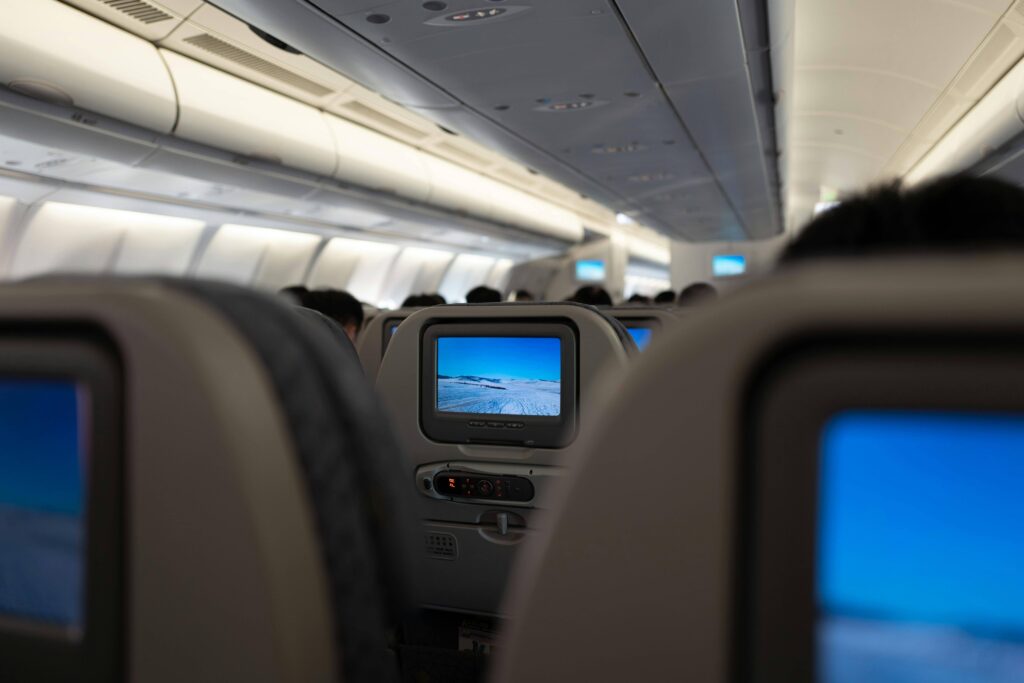 Photo by : Max Chen / Pexels
United makes Starlink Wi-Fi free for all MileagePlus members, and since MileagePlus is free to join, the service is effectively available to everyone at no cost. There’s no premium tier, no speed throttling based on loyalty status, and no pay-per-hour model. You connect, authenticate through the United app or portal, and you’re online.
Customer satisfaction scores on Starlink-equipped aircraft have nearly doubled compared to planes with legacy Wi-Fi. Ninety percent of passengers specifically highlighted the ability to stream content as a major benefit. When you consider that United is simultaneously installing 300,000+ seatback screens across its fleet (the most of any US airline), the combination of fast free Wi-Fi and personal entertainment screens represents a meaningful passenger experience upgrade.
The airline has also built Starlink into its seatback entertainment system. Because the screens now receive live data, they display real-time gate updates and live connection status for onward flights. United recently announced content partnerships with Spotify and Apple TV that leverage this always-connected architecture.
Grant Milstead, United’s Vice President of Digital Technology, has described the vision as creating a “living room in the sky.” That phrase gets thrown around loosely in airline marketing, but the difference here is that the underlying technology can actually deliver on it. When your seatback screen shows your connecting gate changing in real time while you’re streaming on your phone and your laptop syncs work files, it stops feeling like a marketing slogan.
The Competitive Landscape
United’s Starlink rollout doesn’t exist in a vacuum. The entire US airline industry is racing to offer free, fast in-flight internet, and the competitive dynamics are worth understanding.
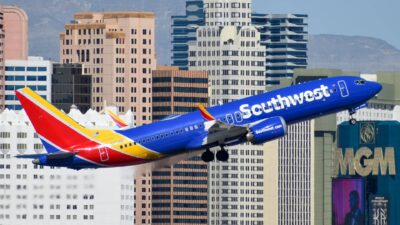
Delta Air Lines has outfitted over 1,000 aircraft with free Wi-Fi for SkyMiles members, giving it the largest equipped fleet in the country. However, Delta uses geostationary satellite systems from providers like Viasat and Intelsat, which deliver noticeably slower speeds and higher latency than Starlink’s low-Earth orbit network. Southwest Airlines made its Wi-Fi free for Rapid Rewards members last fall. American Airlines followed with free internet for AAdvantage members in early 2026. Both also rely on older geostationary technology.
Alaska Airlines, following its merger with Hawaiian Airlines (the first US carrier to offer Starlink), is equipping its fleet beginning this year, targeting completion by 2027. JetBlue has signed with Amazon’s Project Kuiper, a competing low-Earth orbit constellation, though that service isn’t expected until 2027.
The quality gap is real, and passengers are starting to notice. As PCMag put it, United’s competitors are sticking with geostationary networks that typically yield slower downloads, much slower uploads, and significantly higher latency. Delta may have more planes with free Wi-Fi right now. But the technology underneath is a generation behind.
The Counterargument: Is Starlink Really That Far Ahead?
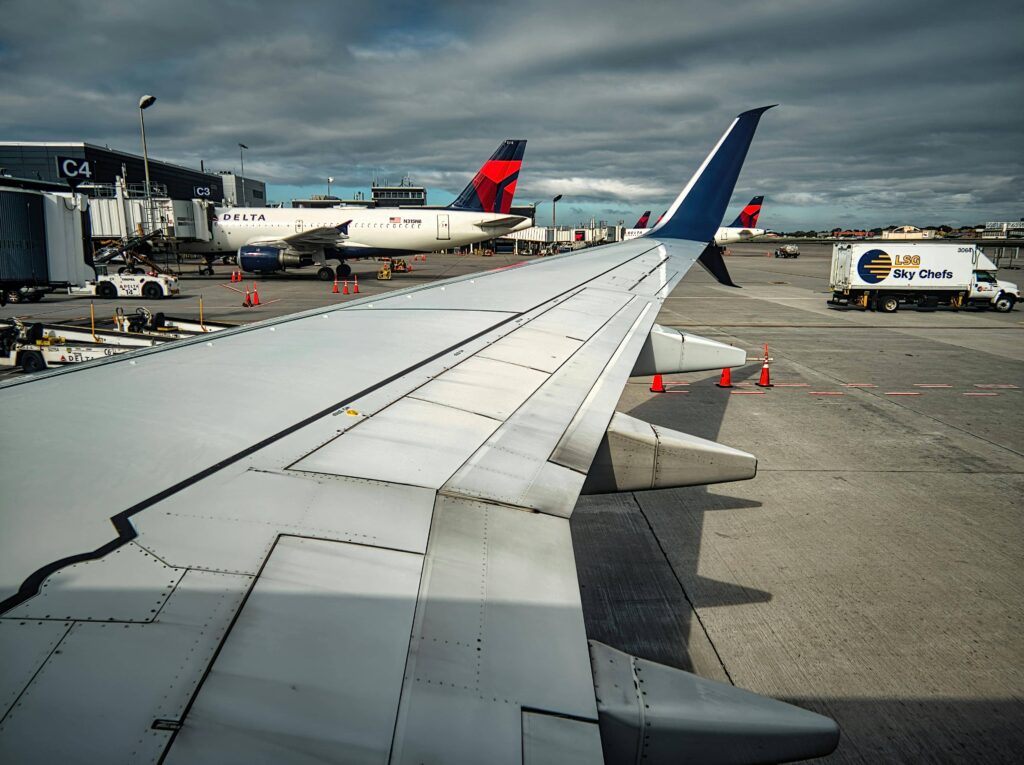 Photo by : Tom Fisk / Pexels
It’s worth pumping the brakes slightly on the hype. Delta’s Wi-Fi, while slower, already covers virtually its entire fleet. United’s Starlink currently sits on roughly 15% of its total aircraft according to independent tracker data. A Delta passenger today has a near-certain chance of getting free Wi-Fi on any flight. A United passenger might still land on one of 700+ mainline jets running the old systems that made everyone hate airplane internet in the first place.
There are also legitimate questions about scalability. With Qatar Airways, Air France, Air New Zealand, and dozens of other carriers signing on globally, Starlink’s constellation faces growing bandwidth demands. SpaceX continues launching satellites, but whether supply keeps pace with airline demand remains an open question.
United also hit a speed bump early on. Some regional installations encountered static interference issues that temporarily disrupted service. The airline says those problems have been resolved and didn’t carry over to mainline aircraft, but they serve as a reminder that deploying new technology at this scale inevitably involves stumbles along the way.
What Comes Next
United’s 2026 roadmap involves expanding STC certification to additional aircraft types, pushing past the 400-plane threshold for total Starlink installations, and preparing for widebody deployment on 777s that fly international routes. The airline has hinted at a major customer innovation announcement coming this spring, suggesting a substantial product upgrade beyond connectivity alone.
For passengers, the practical advice is simple: check united.com or the United app before your flight. Starlink-equipped flights are clearly marked in the flight status display, and third-party tools like unitedstarlinktracker.com provide detailed aircraft-level tracking. If you have any flexibility in your schedule, choosing a Starlink flight over a legacy one is genuinely worth the effort.
The broader significance extends beyond one airline’s fleet upgrade. United’s Starlink Wi-Fi rollout is proving that reliable, fast, free internet at cruising altitude is a solved problem. The technology exists. The economics work. The logistics, while complex, are manageable at scale.
Every airline that hasn’t committed to low-Earth orbit connectivity is now explaining to passengers why their Wi-Fi still feels like 2015. United bet big on Starlink. Eighteen months in, that bet is paying off.