
Two of aviation’s heavyweight companies just made moves that suggest the industry’s biggest transformation in decades is happening right now. Sikorsky is racing to get three radical aircraft demonstrators into the air by the end of 2026, while GE Aerospace announced it will pour another $1 billion into American manufacturing to meet surging demand for engines. Together, these developments paint a picture of an aerospace sector moving faster than most people realize toward hybrid-electric propulsion, advanced autonomy, and revolutionary manufacturing capabilities.
While electric air taxi startups grab headlines with flashy renderings, established players like Sikorsky and GE are quietly advancing technologies that could actually reshape aviation at scale. These aren’t concept drawings. They’re metal being cut, systems being tested, and billions of dollars being committed to infrastructure.
What makes these announcements particularly significant is the timing. Both companies are betting that the next generation of aircraft won’t be purely electric but rather hybrid systems that combine traditional turbine engines with electric propulsion. This represents a pragmatic middle ground between the limitations of current aviation technology and the promises of fully electric flight that remain decades away from practical implementation for anything larger than small urban air taxis.
Sikorsky Is Building Three Different Future Aircraft at the Same Time
The Connecticut-based helicopter manufacturer has its hands full with an ambitious technology development program. The centerpiece is HEX, short for Hybrid-Electric Demonstrator, a tiltwing aircraft that combines the vertical takeoff capabilities of a helicopter with the speed and range of a fixed-wing plane.
Think of a tiltwing as the next evolution beyond a tiltrotor like the V-22 Osprey. Instead of just the rotors tilting, the entire wing tilts. The HEX demonstrator won’t be small. Maximum gross weight hits 9,000 pounds, powered by a 1.2-megawatt class turbogenerator feeding electric motors that drive two four-bladed proprotors.
Sikorsky aims for a range exceeding 500 nautical miles at speeds in the high 200 knots range. That’s roughly 575 statute miles at speeds approaching 240 mph. Compare that to conventional helicopters, which typically cruise around 140 knots. The hybrid-electric system could potentially increase helicopter range by 30 percent while reducing operating and maintenance costs by similar amounts.
Before flying the full HEX demonstrator, Sikorsky is testing a Power Systems Test Bed. This stripped-down version will hover using two 600-kilowatt electric motors to validate the propulsion system before integrating it into the complete aircraft. Igor Cherepinsky, director of Sikorsky Innovations, said the testbed should get airborne in 2026, with the full HEX demonstrator following in late 2026 or early 2027.
Sikorsky also expects to fly Nomad 100 in 2026, a rotor-blown-wing uncrewed aerial system that sits on its tail for takeoff and landing, then transitions to horizontal forward flight.
Then there’s U-Hawk, which might be the most immediately practical demonstrator. Based on the UH-60L Black Hawk helicopter, U-Hawk is a fully autonomous cargo variant with no cockpit. Sikorsky removed the cockpit entirely, opening up additional cargo space and installing clamshell cargo doors. The result is an aircraft with 3,180 kilograms of internal cargo capacity, 4,080 kilograms of external sling capacity, or 4,540 kilograms split between cabin and sling. It runs Sikorsky’s Matrix autonomy software and targets 2026 for first flight.
The Technology Behind These Demonstrators Solves Real Engineering Problems
What makes Sikorsky’s hybrid-electric approach compelling is how it addresses fundamental limitations of both traditional helicopters and all-electric aircraft. Conventional helicopters transfer mechanical energy through complex transmissions and drivetrains to rotor blades. Those mechanical systems are heavy, require extensive maintenance, and represent multiple failure points.
A serial hybrid-electric propulsion system replaces much of that mechanical complexity with electrical wiring. The thermal engine acts as a turbogenerator producing electricity, which powers electric motors driving the proprotors. Fewer moving parts mean potentially fewer failure points and lower maintenance requirements.
The hybrid approach also sidesteps the energy density problem plaguing all-electric aircraft. Batteries simply don’t store as much energy per pound as jet fuel, which is why fully electric aircraft struggle with range and payload. By keeping a turbine engine generating electricity, you maintain the energy density advantages of traditional fuel while gaining the efficiency benefits of electric propulsion.
Sikorsky is designing the electric motors, power electronics, and vehicle management systems in-house. GE Aerospace is contributing the turbogenerator and associated power electronics. Advanced manufacturing plays a big role too. They’re using thermoplastics for some components and 3D printing for dynamic parts like gears and gearboxes, which dramatically reduces costs for experimental aircraft.
GE Aerospace Is Spending a Billion Dollars Because Demand Is Overwhelming Supply
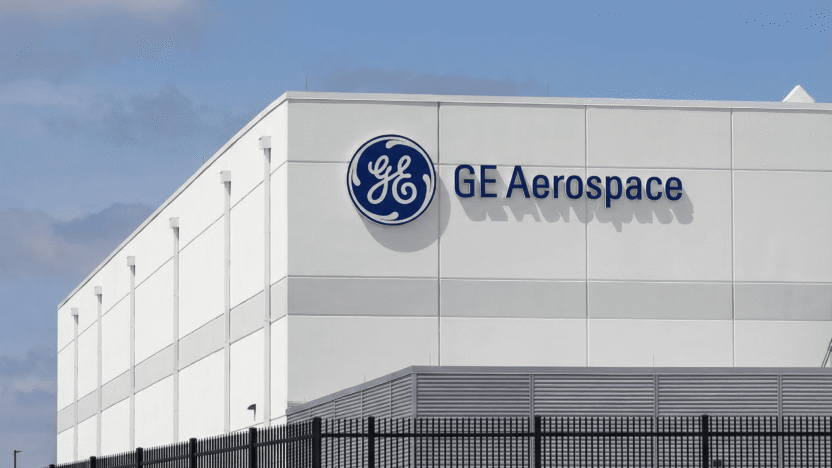
While Sikorsky focuses on future aircraft, GE Aerospace is dealing with a more immediate challenge. They can’t build engines fast enough to meet current demand. The company announced on March 9, 2026 that it will invest another $1 billion in U.S. manufacturing sites and supplier networks during 2026, marking the second consecutive year of billion-dollar investments.
The investment will touch more than 30 communities across 17 states. GE Aerospace also plans to hire 5,000 additional workers, matching the 5,000 hired in 2025. That’s 10,000 new employees in two years. These aren’t speculative hires. Order backlogs for both commercial and defense engines stretch years into the future.
Breaking down where the money goes reveals GE’s priorities. The company allocated $115 million for its Cincinnati headquarters to modernize infrastructure, increase test cell capacity, and expand 3D metal printing capabilities. Another $200 million will expand manufacturing for CFM LEAP engine high-pressure turbine durability kits, which improve time-on-wing for customers by more than two times in harsh conditions.
Defense manufacturing gets more than $275 million to upgrade sites producing military engines. The supplier network receives more than $100 million for tooling and equipment. This matters because even if GE can build engines faster, they depend on suppliers delivering components on time. These investments alongside the company’s FLIGHT DECK lean operating model improved material input from priority suppliers by more than 40 percent in 2025, helping drive commercial engine deliveries up 25 percent and defense engine deliveries up 30 percent last year.
Some Industry Observers Question Whether These Investments Will Pay Off
Not everyone is convinced that hybrid-electric propulsion represents the future of aviation. Critics point to explosive growth in battery technology and argue that within a decade, all-electric aircraft will be practical for most missions, making hybrid systems transitional technology at best.
The counterargument centers on physics. Energy density improvements in batteries have been incremental, not revolutionary. Jet fuel contains roughly 50 times more energy per kilogram than the best lithium-ion batteries. Even with dramatic efficiency improvements, that gap is hard to overcome for anything but short-range, light aircraft. Hybrid systems might not be transitional. They might be the permanent solution for aircraft that need to carry substantial payload over meaningful distances.
Regarding GE’s manufacturing investments, some analysts question investing heavily in facilities that build traditional turbine engines if the industry is shifting toward electric propulsion. The answer lies in timelines. Even optimistic projections for widespread electric aircraft adoption place it decades away for anything larger than urban air taxis. Boeing and Airbus have order backlogs for thousands of aircraft, all of which need turbine engines. GE’s investments address demand that exists now and will continue for the foreseeable future.
What This Means for the Aviation Industry Over the Next Decade
The combination of Sikorsky’s demonstrator programs and GE’s manufacturing investments tells us something important about where aviation is heading. The industry isn’t making a sudden leap from traditional turbine-powered aircraft to all-electric designs. Instead, we’re entering a period of hybrid systems and incremental electrification while manufacturing capacity for existing engines expands to meet near-term demand.
Sikorsky’s work on autonomous systems through both U-Hawk and the Matrix software suggests that removing pilots from certain operations is becoming technically feasible for established aerospace companies, not just startups. Autonomous cargo operations might arrive before passenger-carrying autonomous aircraft, simply because the regulatory and public acceptance hurdles are lower.
The investment levels are noteworthy. Sikorsky is committing serious engineering resources to fly three different demonstrators in 2026. GE is spending $2.5 billion on manufacturing over just a few years. These represent strategic decisions by major aerospace companies about where the industry needs to go and how fast.
For people working in aerospace or communities that depend on aviation manufacturing, these announcements signal sustained employment and investment. GE alone is adding 10,000 jobs over two years.
The next year will be telling. If Sikorsky successfully flies its power systems testbed and demonstrates the hybrid-electric propulsion concept works at scale, it validates an approach that other companies will likely pursue. If GE’s capacity investments successfully reduce engine delivery delays, airlines get aircraft faster and can meet growing travel demand.
Aviation has always moved cautiously, for good reason. Getting experimental aircraft wrong can be catastrophic. But 2026 appears to be the year when some of these experimental technologies transition from PowerPoint presentations to actual hardware flying actual missions. Whether that hardware performs as promised remains to be seen, but at least we’re about to find out.