Delta expanded A321neo orders to 97 aircraft and added 31 widebodies while TrueNoord entered its first Airbus deal with Breeze Airways A220s.
Delta Air Lines just wrapped up what might be the most aggressive aircraft shopping spree in recent memory, and tucked into the same news cycle was a smaller but equally significant deal that signals where the aircraft leasing market is heading. While Delta was signing contracts for more than 120 new Airbus jets across three separate orders in early 2026, regional aircraft lessor TrueNoord quietly closed its first-ever Airbus transaction by delivering three A220-300s to Breeze Airways. Together, these moves paint a picture of an aviation industry that’s simultaneously consolidating around proven aircraft families while opening doors to previously overlooked market segments.
The contrast between these deals tells you everything about modern aviation. Delta is doubling down on efficiency and premium capacity with massive orders spanning narrowbody and widebody aircraft. TrueNoord is expanding from its traditional regional turboprop and small jet focus into the 100-to-150-seat sweet spot that Airbus carved out with the A220. Both strategies make perfect sense when you understand the economics driving airline fleet decisions today.
Delta Just Made the A321neo Its Largest Fleet Type in Company History
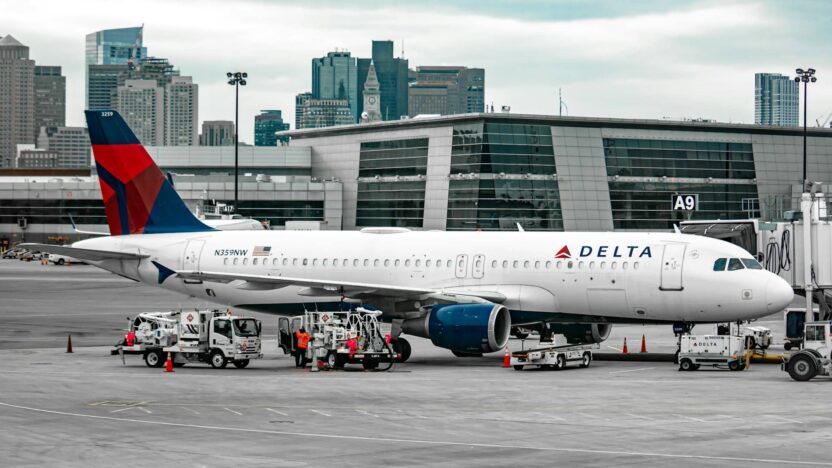
In late February 2026, Delta exercised options for 34 additional Airbus A321neo aircraft, bringing its total firm orders to 97 jets. When you add the 92 A321neos already flying in Delta’s colors, the airline will eventually operate 189 of these fuel-sipping workhorses. That makes the A321neo the single largest fleet type Delta has ever operated.
Deliveries from this latest batch won’t start until 2029, which means Delta is planning its fleet composition nearly a decade into the future. Airlines this size don’t exercise aircraft options without running the numbers through every imaginable scenario.
The A321neo seats 194 passengers in Delta’s configuration, with 20 Delta First seats and 42 Delta Comfort+ seats. That premium density is intentional. Delta has shifted its strategy toward capturing higher-yield customers rather than simply filling seats with the lowest fares. The A321neo gives them the tool to execute that strategy.
The aircraft delivers 20 to 30 percent better fuel efficiency compared to the planes it replaces. When you’re operating hundreds of flights daily, those percentage points translate into tens of millions in annual fuel savings. Delta’s version uses Pratt & Whitney’s geared turbofan engines, which the airline supports through its own TechOps maintenance division in Atlanta.
Delta Also Added 31 Widebodies to Handle Its International Expansion
The A321neo announcement was actually Delta’s third aircraft order of 2026. In January, the airline placed firm orders for 31 additional widebody jets: 16 Airbus A330-900s and 15 A350-900s. The A350-900 represents the cutting edge of widebody technology, capable of flying up to 9,700 nautical miles nonstop while burning 25 percent less fuel than previous generation aircraft.
Delta’s widebody strategy reveals where the airline sees growth. The A350 will anchor service to demanding long-haul markets in Asia, Africa, the Middle East, and the South Pacific. Delta recently launched routes to Melbourne, Hong Kong, and Taipei, and announced service to Riyadh starting October 2026.
The A330-900 serves as Delta’s workhorse for transatlantic routes and longer South American runs. It can’t match the A350’s range, but excels on routes like New York to London or Atlanta to Paris where you need solid economics without ultra-long-range capabilities. With these orders, Delta’s A330neo fleet will grow to 55 aircraft while its A350 fleet reaches 79 jets.
All of these new widebodies will feature Delta’s premium-heavy cabin configurations with more Delta One Suites and Premium Select seats than you might expect. This ties directly to Delta’s revenue strategy of filling planes with high-paying customers rather than competing solely on price.
Meanwhile TrueNoord Just Entered Territory It Never Occupied Before
While Delta was making headlines with triple-digit aircraft commitments, Dutch lessor TrueNoord quietly announced something more modest but arguably more interesting. In February 2026, TrueNoord delivered three factory-new Airbus A220-300 aircraft to Breeze Airways under a long-term sale-and-leaseback agreement.
The significance isn’t the number. Three planes barely registers compared to Delta’s shopping spree. What matters is that this represents TrueNoord’s first Airbus transaction ever, and the A220-300 is now the largest aircraft type in its portfolio.
TrueNoord built its business around regional aircraft like ATR turboprops, Embraer E-Jets, and De Havilland Dash 8s. These are 50-to-100-seat workhorses connecting smaller cities to major hubs. The A220-300, with capacity for up to 160 passengers, lives in a different category as a small narrowbody competing with the Boeing 737 and Airbus A320 families.
By moving into the A220 market, TrueNoord is following where the industry is heading. The distinction between regional jets and small narrowbodies has blurred considerably. Airlines increasingly want aircraft that can serve both traditional regional missions and also replace older 737s or A320s on longer thin routes. The A220 handles both roles exceptionally well.
For Breeze Airways, the lease arrangement provides flexibility that outright purchases can’t match. The carrier has staked its strategy on connecting underserved city pairs, often linking smaller airports that lack nonstop service. Leasing aircraft from TrueNoord allows Breeze to add capacity without tying up capital.
The sale-and-leaseback structure works like this: Breeze purchased the three A220s new from Airbus, then immediately sold them to TrueNoord while simultaneously signing a long-term lease to operate the aircraft. This gives Breeze access to brand-new planes while converting what would have been a massive capital expense into a predictable monthly lease payment. TrueNoord gets ownership of modern, fuel-efficient aircraft leased to a growing customer.
Some Industry Observers Question Whether All This Growth Is Sustainable
Not everyone views these massive aircraft orders as unqualified good news. Both Delta and Breeze are betting that demand for air travel will continue growing or at least remain stable for the next decade. Economic recessions, pandemics, geopolitical conflicts, or shifts in business travel patterns could all undermine those assumptions.
Delta in particular is loading up on aircraft just as competition intensifies. Ultra-low-cost carriers continue expanding domestically, putting pressure on fares. Meanwhile, Middle Eastern carriers like Emirates and Qatar Airways are aggressively growing their U.S. connections.
The counterargument is that Delta has repeatedly demonstrated discipline in managing its fleet and capacity. The airline’s focus on premium cabins and business travelers provides some insulation from fare wars with budget carriers.
For TrueNoord, the risk is different but equally real. The lessor is expanding into larger aircraft just as the leasing market faces questions about residual values. If Breeze struggles financially or decides to reduce its A220 fleet, TrueNoord needs to find new customers for these aircraft.
What These Deals Tell Us About the Future of Commercial Aviation
Looking past the individual transactions, several broader trends emerge. First, the industry is consolidating around fewer aircraft families. Delta could have ordered Boeing 737 MAXs instead of more A321neos. It could have added Boeing 787s to its widebody mix instead of more Airbus iron. But once an airline builds expertise around specific aircraft types, the economics of standardization become compelling. Training, maintenance, spare parts, and crew scheduling all get simpler when you operate fewer aircraft models.
Second, the premium cabin focus is real and it’s not going away. Both Delta’s narrowbody and widebody orders emphasize configurations with more upfront seats and fewer economy seats. Airlines have learned that competing solely on price is a race to the bottom. Competing on experience and comfort while charging appropriate fares can actually generate profits.
Third, the leasing market continues maturing and diversifying. TrueNoord’s move into Airbus aircraft shows how lessors are expanding beyond their traditional niches. As aircraft become more expensive and airlines seek financial flexibility, leasing will likely account for an even larger share of total fleet financing going forward.
Finally, both Delta and Breeze are making bets about what kinds of flying people will want to do in the future. Delta thinks premium international travel will remain strong and that domestic passengers will pay for better seats. Breeze thinks underserved city pairs can support profitable nonstop service if you have the right aircraft. Time will tell whether those bets pay off, but the fact that both airlines are willing to commit billions of dollars in aircraft spending suggests they’ve done their homework.
For passengers, these fleet decisions will directly shape travel options for the next two decades. More modern aircraft generally means better fuel efficiency, quieter cabins, larger overhead bins, and more reliable in-flight entertainment. The premium cabin expansion means more opportunities to upgrade or use points for better seats, though it also means fewer cheap seats on some routes.
The aviation industry runs on long lead times. The decisions airlines make today about which aircraft to order won’t fully materialize until years down the road. But when you see Delta committing to 189 A321neos and TrueNoord delivering its first Airbus jets to Breeze, you’re watching the future of commercial aviation take shape one aircraft at a time.