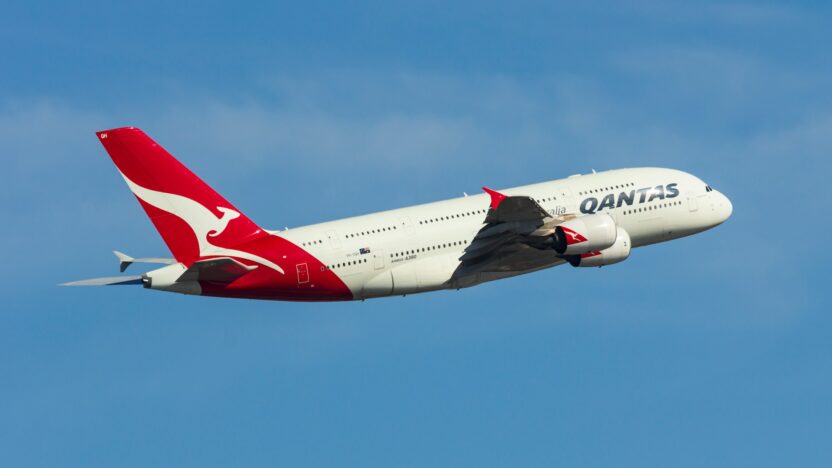
The world’s largest passenger aircraft was supposed to revolutionize flying. Instead, it became aviation’s most expensive lesson in reading the market wrong. Airbus sunk $25 billion into developing the A380, built 251 of them over 15 years, and watched the program end in 2021 without ever turning a profit. Yet here we are in 2026, and the double-decker giant refuses to disappear quietly into aviation history.
Roughly 159 A380s still thunder down runways worldwide, carrying passengers who actively seek them out for the experience. Emirates operates 116 of them. Airlines are retrofitting cabins with new premium suites. Some carriers are even pulling stored A380s back into service. The aircraft Airbus thought would dominate hub airports for decades instead created a niche it owns completely, one that no other aircraft can fill and probably never will.
Why Airbus Thought the A380 Would Print Money
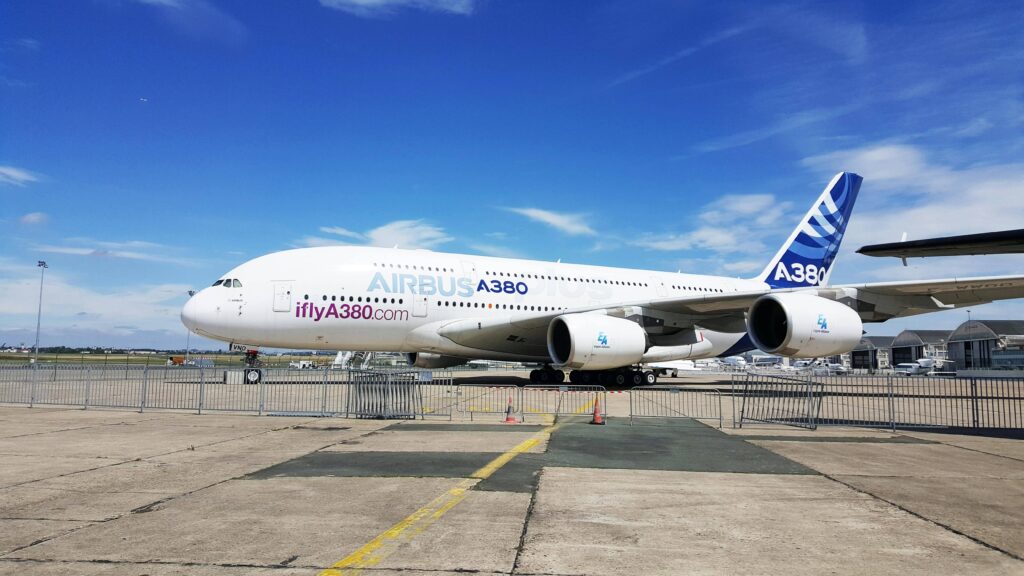 Photo by : Please donation / Pexels
When Airbus launched the A380 program in December 2000, the aviation industry’s trajectory seemed obvious. Air travel was growing exponentially. Major hub airports like London Heathrow, Dubai, and Singapore were running out of runway slots. The logical solution appeared to be bigger planes moving more people through constrained infrastructure.
Boeing had dominated the jumbo jet market since 1970 with the 747. Airbus wanted that crown. They envisioned the A380 carrying 525 passengers in typical configuration, with a maximum certified capacity of 853 people if you really crammed them in. The double-deck layout would let airlines offer unprecedented premium experiences on the upper level while filling the lower deck with economy passengers. Airport congestion would get solved by capacity, not frequency.
The market validated this thinking initially. Fourteen airlines placed orders, led by Singapore Airlines as the launch customer and Emirates as the true believer. By the time production ramped up in the mid-2000s, Airbus had enough orders to justify the massive investment in new tooling, assembly facilities, and supplier networks required to build something this enormous.
Then reality intervened. The A380 took two years longer than planned to reach service entry due to problems with electrical wiring that ran through the fuselage. Development costs nearly doubled from initial projections. Airlines started reconsidering their orders as fuel prices spiked and operating economics became clear. Those four massive engines burned through fuel at rates that made airline finance departments nervous.
What Actually Killed the Superjumbo Program
The A380’s demise came down to a fundamental miscalculation about how aviation would evolve. Airbus bet on the hub-and-spoke model intensifying. Instead, airlines shifted toward point-to-point routes enabled by efficient twin-engine widebodies like the Boeing 787 and Airbus’s own A350.
Flying a 747 or A380 only makes economic sense when you can fill 400-plus seats on a regular basis. That requires consolidating demand from dozens of cities into major hubs, then moving those passengers onward in one massive aircraft. Emirates perfected this model, using Dubai as a super-connector between Europe, Asia, Africa, and Australia. For Emirates, the A380 is a money-printing machine because their network is specifically designed around it.
Most airlines don’t operate that way. They’d rather fly a 250-seat 787 three times daily between two cities than a 500-seat A380 once daily. More frequencies give passengers more scheduling flexibility, which business travelers pay premium fares for. The 787 and A350 also opened up new route possibilities by making long thin routes economically viable. You don’t need to fill 400 seats to justify a flight from Seattle to Bangalore when a 250-seat aircraft works profitably.
The four engines became an albatross. Modern twin-engine jets achieve better fuel efficiency per seat despite flying the same passengers. Maintenance costs escalate with four engines instead of two. Parts inventories double. Pilot training requirements differ. The operational complexity just kept adding up against the A380.
By 2019, Airbus faced brutal mathematics. They needed sustained orders to keep production lines running profitably. Emirates was essentially the only customer still buying, and even they were scaling back commitments. On February 14, 2019, Airbus announced production would end. The final aircraft, Emirates A6-EVS, rolled out of the Toulouse factory in December 2021.
Why Some Airlines Are Actually Bringing Them Back
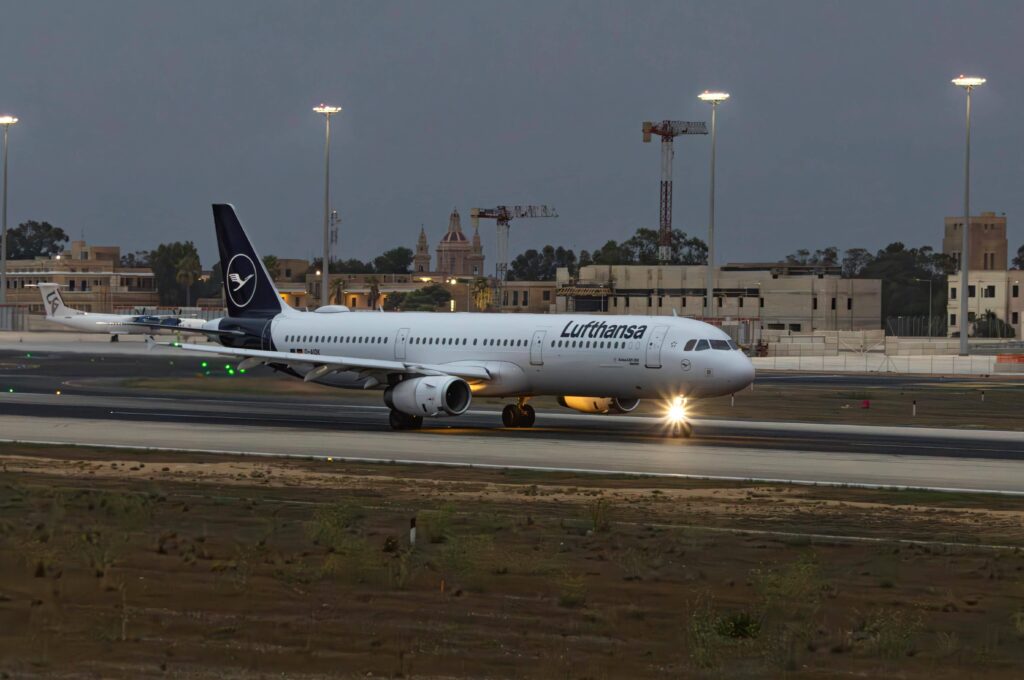 Photo by : Andrew Cutajar / Pexels
Here’s where the story gets interesting. Several airlines that parked their A380s during the pandemic are now reactivating them. Lufthansa brought eight back into service. Etihad reactivated its fleet. British Airways is investing in comprehensive cabin retrofits starting in mid-2026. These aren’t nostalgic gestures. They’re calculated business decisions driven by specific market conditions.
The Boeing 777X, which was supposed to replace A380 capacity with better economics, remains stuck in certification delays. Airlines that counted on 777-9 deliveries starting in 2023 or 2024 are still waiting, with entry into service now pushed potentially to 2026 or beyond. Meanwhile, travel demand has surged back to pre-pandemic levels and continues growing.
Airbus vs Boeing: Who Is Winning the Aircraft Orders Race in 2026?
Slot-constrained airports create unique value for the A380. If you can only get one landing slot per day at London Heathrow but demand supports 600 passengers, you need an A380. Trying to serve that demand with two A350 flights requires two slots, which you might not be able to get. The superjumbo solves a problem that pure economics can’t address.
Premium passengers also love the aircraft. Those shower spas on Emirates, the bar lounges, the sheer spaciousness of the upper deck, the quieter ride from being positioned above the engines… these create experiences impossible to replicate on smaller aircraft. In premium markets, the A380 functions as a flying billboard for airline brands. When you’re competing for business class travelers on lucrative routes, having the A380 provides differentiation competitors can’t match.
The Technical Reality of Why Production Won’t Restart
Airbus’s head of civil aircraft, Christian Scherer, addressed restart speculation in characteristically diplomatic language: “The door is closed, but not locked. In our industry, nothing is ruled out.” That sounds encouraging until you parse what he actually said. The door is closed. He’s just not welding it shut permanently.
The practical barriers to restarting A380 production are immense. The Toulouse production facility where A380s were built has been converted to A350 assembly. All that specialized tooling, jigs, and equipment no longer exists in functional form. The supplier base has moved on. Companies that made A380-specific parts have repurposed their facilities or gone out of business entirely.
Certification would need to be done fresh for any new production run. You can’t just restart an assembly line five years later and expect regulators to wave through aircraft built with methods and components that haven’t been active. The engineering documentation would need updating. Supply chains would require rebuilding. The costs would be staggering.
Then there’s the market reality. What airline besides Emirates would order new A380s in sufficient quantity to justify this investment? You’d need commitments for probably 100-plus aircraft to make the economics work. Lufthansa isn’t buying more. Qantas isn’t. Singapore Airlines has moved on. The market that didn’t materialize the first time around hasn’t magically appeared now.
Even Emirates, the A380’s biggest cheerleader, isn’t actively pushing for new aircraft. CEO Tim Clark has said he’d welcome an A380neo with more efficient engines if Airbus built one, but that’s a “if you build it we might buy it” statement, not an actual order. And building an A380neo would require developing new engines that don’t currently exist, adding yet another layer of cost and complexity.
The Legacy That Actually Matters
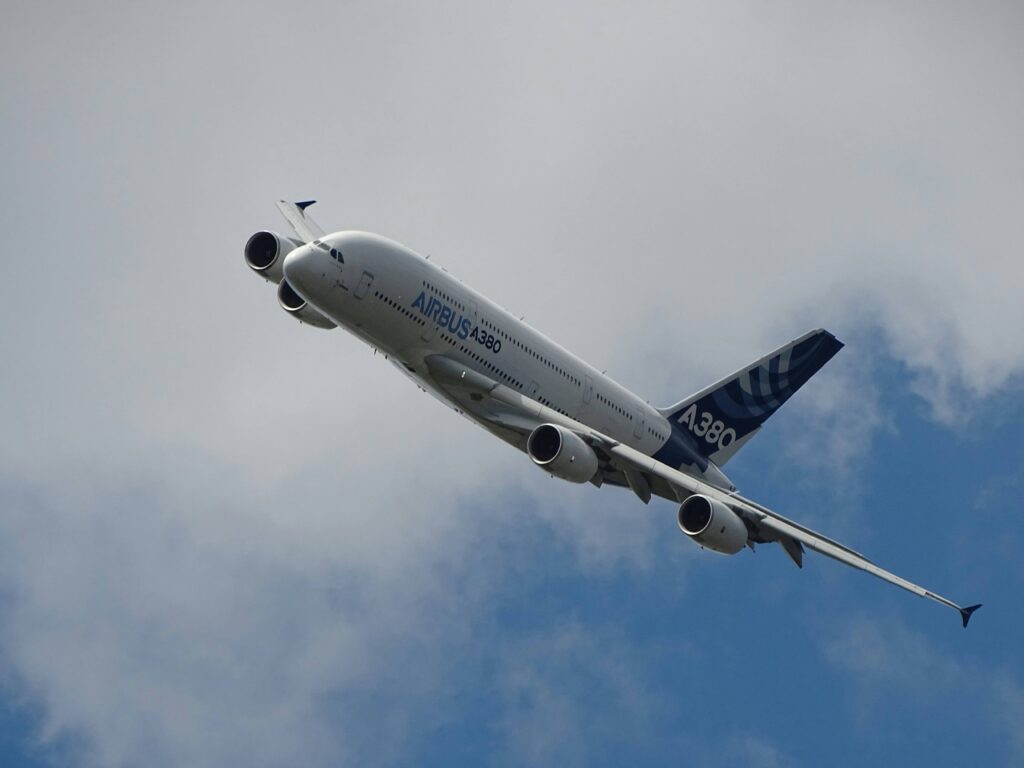 Photo by : G-R Mottez / Unsplash
The A380’s real impact on aviation isn’t about the aircraft itself. It’s about what the program taught the industry and how it shaped passenger expectations.
Airport infrastructure got redesigned around A380 operations. Gates capable of handling double-deck boarding. Wider taxiways to accommodate the 80-meter wingspan. Strengthened runways and taxiways to handle the 575-ton maximum takeoff weight. Those investments will outlast the aircraft by decades and benefit other large aircraft programs.
The A380 proved that passengers do value premium experiences and will pay for them. The success of business class suites with doors, first class apartments, and onboard amenities traces directly back to innovations pioneered on the A380. Airlines learned they could charge substantial premiums for truly differentiated products on flagship routes.
It also taught Airbus painful lessons about market forecasting and program management. The delays, cost overruns, and eventual commercial failure fundamentally changed how Airbus approaches new aircraft development. You can see that caution in how carefully they’re proceeding with future programs, doing more market validation before committing billions to new designs.
For the 159 aircraft still flying, they’ve found their sustainable niche. Emirates will keep operating them for another decade or longer because the aircraft fits their specific network model perfectly. Other airlines will phase them out as twin-engine replacements arrive, but that’s a gradual process playing out over years, not a sudden retirement.
The A380 will never dominate aviation the way Airbus hoped. But it carved out a role that ensures we’ll see these majestic aircraft in the skies well into the 2030s. Sometimes the biggest legacy isn’t winning the war. It’s proving something incredible was possible, even if the market wasn’t ready for it. The A380 remains an engineering marvel that changed aviation’s possibilities, and that matters more than profit margins.
Related Aviation News
Airbus vs Boeing: Who Is Winning the Aircraft Orders Race in 2026?
Boeing beat Airbus on 2025 orders for first time in 7 years with 1,173 vs 889. Early 2026…
 Photo by : Wikimedia Commons
Airbus vs Boeing Narrow-Body Battle: Why the A321neo Is Winning Orders
The Airbus A321neo dominates narrow-body aircraft orders with over 7,300 commitments, beating Boeing's 737 MAX through superior capacity…
Airbus Explores Hydrogen-Powered Aircraft as Aviation Pushes Toward Net Zero
Airbus delays hydrogen aircraft to 2040s after spending $1.7B on ZEROe program, highlighting challenges in aviation's path to…