The biggest disruption to global air travel since the Covid-19 pandemic is unfolding right now, and it happened in a matter of hours. Following coordinated US and Israeli military strikes on Iran on Saturday, February 28, and swift Iranian retaliation targeting Gulf states, at least eight countries slammed their airspace shut. The result: more than 3,000 flights cancelled in roughly 48 hours, hundreds of thousands of travelers stranded on every continent, and the world’s busiest international airport sitting empty.
More than 2,800 flights were cancelled on Sunday alone to and from Middle Eastern airports, according to FlightAware. Flightradar24 put the Sunday figure even higher at over 3,400 cancellations across seven regional airports. Aviation analytics firm Cirium estimated around 3,000 total flights scrapped since the conflict erupted Saturday. No matter which tracker you use, the picture is the same: Middle East aviation has come to a near-total standstill. Euronews reported that an estimated 19,000 flights experienced delays as the ripple effects spread far beyond the conflict zone, touching airports on every continent from Bali to Sao Paulo.
How We Got Here
The crisis began early Saturday when the US and Israel launched strikes across Iran, killing Supreme Leader Ayatollah Ali Khamenei. Iran retaliated swiftly, launching waves of missile and drone attacks targeting Israel and Gulf nations hosting US military bases, including Bahrain, Kuwait, Qatar, and the UAE.
The attacks did not spare civilian infrastructure. Dubai International Airport, the world’s busiest for international traffic, reported four people injured. Abu Dhabi’s Zayed International Airport confirmed one killed and seven injured in a drone strike. Kuwait International Airport was also hit.
Airspace closures cascaded rapidly. Iran, Israel, Iraq, Jordan, Qatar, Bahrain, Kuwait, and the UAE all announced full or partial closures. Syria shut its southern airspace. By Sunday morning, FlightRadar24’s live map showed the main east-west air corridor over Iraq, normally one of aviation’s busiest superhighways linking Asia to Europe, almost completely empty.
The Scale of Disruption
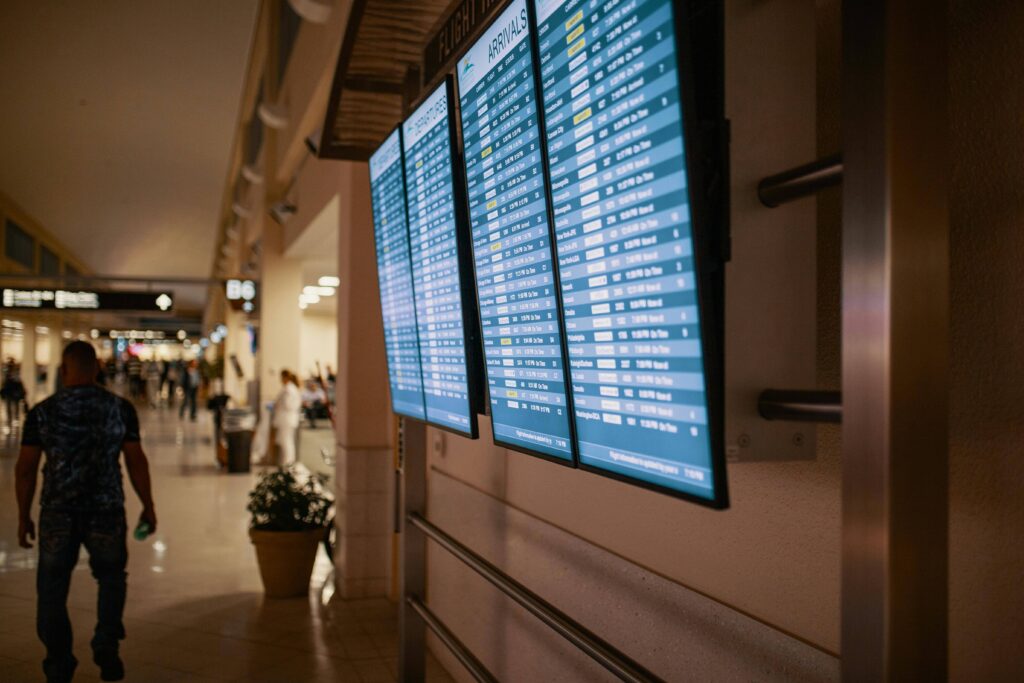 Photo by : Josh Sorenson / Pexels
Dubai International recorded over 747 flight cancellations on Sunday according to Cirium, roughly 70% of its schedule wiped out. Hamad International in Doha logged 539 cancellations. Ben Gurion in Tel Aviv cancelled 231 flights. And those are just the airports in the conflict zone.
The disruption rippled in every direction. International airports in London, Mumbai, Delhi, Bangkok, Istanbul, Sri Lanka, and Paris each reported dozens of cancellations. India’s Ministry of Civil Aviation confirmed 444 international flights cancelled on Sunday and 410 on Saturday. IndiGo alone scrapped over 190 flights. Air India went further, cancelling services not just to the Gulf but to London, Paris, Frankfurt, New York, and Chicago, because those routes depend on airspace now closed.
Mumbai recorded 101 cancellations and 325 delays. Delhi logged 73 cancellations and 246 delays. Bali reported over 1,600 travelers stranded after connections through Doha and Dubai evaporated. In Dhaka, crowds packed the airport waiting for Gulf flights that weren’t coming.
The Human Cost of Grounded Flights
Behind the statistics are real people in real distress. Louise Herrle and her husband, returning to Pittsburgh from Dubai, had their Washington flight cancelled with no timeline. They barricaded themselves in their hotel room, unwilling to give it up.
Mohammad Abdul Mannan, waiting at Dhaka’s airport, captured a different urgency. He wasn’t worried about the war. He needed to reach the Gulf for work. “We have set out to go for work, and we must go,” he said. For millions of migrant workers from South Asia, the Gulf isn’t a vacation destination. It’s a livelihood.
Cirium estimates Emirates, Qatar Airways, and Etihad alone normally move about 90,000 passengers daily through Dubai, Doha, and Abu Dhabi. All three airports shut. All three airlines suspended. That’s 90,000 people per day stuck at their origin, their destination, or somewhere in between.
At least 145 planes already airborne when strikes began were diverted to Athens, Istanbul, and Rome. One flight from Philadelphia made it to Spain before turning back, spending nearly 15 hours in the air without reaching its destination.
Which Airlines Are Affected
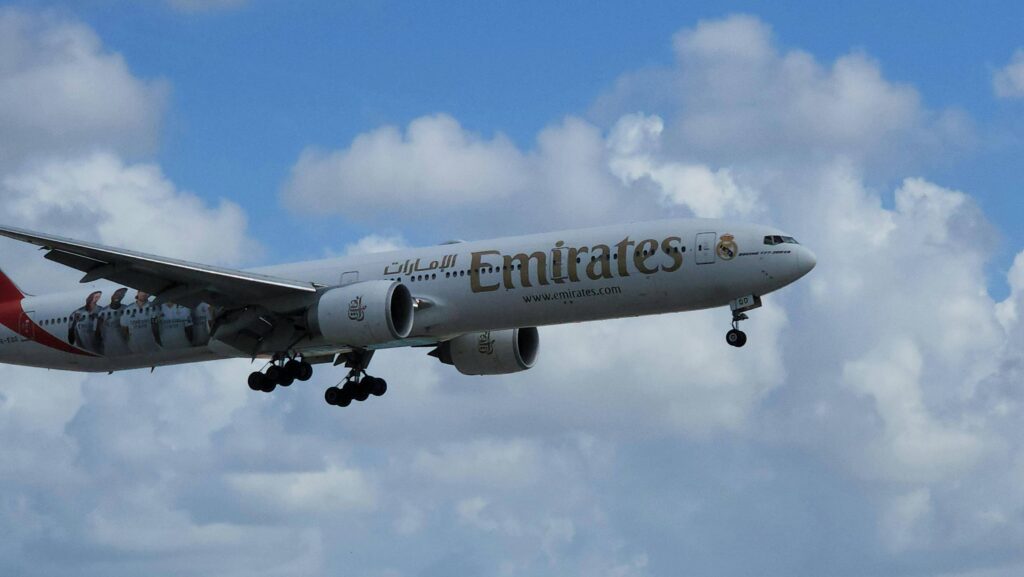 Photo by : Crystal Vega / Pexels
The grounded carrier list reads like a directory of global aviation. Emirates suspended all flights until at least 3 PM Monday. Qatar Airways halted all Doha departures. Etihad suspended Abu Dhabi operations through early Monday.
The cancellations spread worldwide. Air India pulled all Middle East flights and suspended Europe and North America service through Tuesday. Lufthansa Group cancelled everything to Tel Aviv, Beirut, Amman, Erbil, and Tehran through March 7. British Airways stopped flying to Tel Aviv and Bahrain until March 4. KLM cancelled all flights to Dubai, Riyadh, and Dammam through March 5. Turkish Airlines scrapped flights to over a dozen Middle Eastern destinations. Wizz Air suspended all flights to Israel, Dubai, Abu Dhabi, and Amman through March 7.
 Photo by : David Syphers / Unsplash
How United Airlines Is Preparing for $175 Oil While Adding 120 New Planes
EgyptAir, Pakistan International Airlines, Cathay Pacific, Singapore Airlines, and Russia’s Rosaviatsia all grounded regional services. Garuda Indonesia suspended Doha flights until further notice. Kenya Airways pulled Dubai and Sharjah service. SriLankan Airlines cancelled 12 flights. Air Canada scrapped Israel flights through March 8 and Dubai service through March 3. EL AL closed ticket sales through March 21 to prioritize repatriating stranded Israeli citizens. India’s DGCA went further than most regulators, directing airlines to avoid the airspace of 11 countries, including Iran, Saudi Arabia, UAE, Qatar, Kuwait, and Iraq, through at least March 2.
When Will Flights Resume?
That’s the question hundreds of thousands of people are asking, and nobody has a confident answer. Emirates conditioned its Monday afternoon target on the security situation. Qatar Airways is waiting for airspace clearance. Air India extended suspensions through Tuesday.
Aviation security analyst Eric Schouten warned that airspace should be expected to remain shut “for quite some time.” Former FAA air traffic chief Mike McCormick suggested reopenings might begin once military flight corridors are communicated and Iran’s remaining strike capability becomes clearer. But with Iran launching what it described as a sixth wave of retaliatory strikes on Sunday, clarity is in short supply.
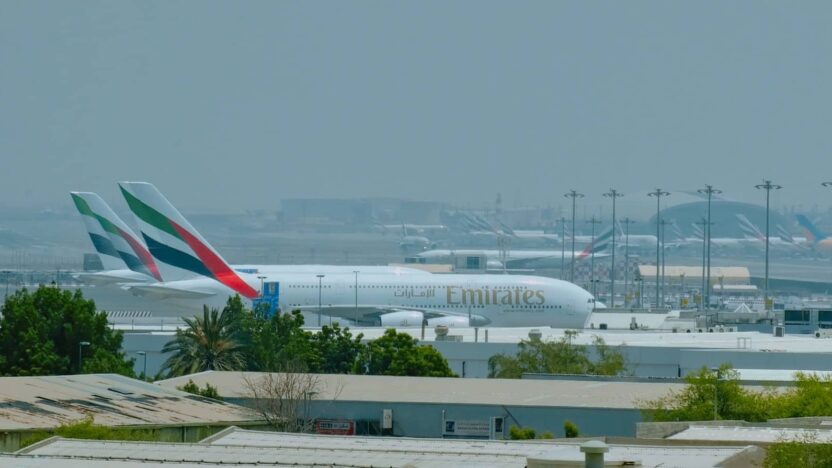
Even when airspace reopens, the disruption won’t end overnight. Airlines need to reposition fleets scattered worldwide. Etihad’s A380s are parked in London, Paris, Toronto, and Singapore. Emirates has aircraft stranded from Bali to Sao Paulo. Repositioning alone could take days. Then comes the surge as every airline simultaneously tries to clear its passenger backlog, competing for the same gates, airspace, and ground handling resources.
Airline industry analyst Henry Harteveldt of Atmosphere Research Group summarized the outlook for travelers bluntly: prepare for delays and cancellations for at least the next several days as attacks evolve and, hopefully, end.
Why This Disruption Hits Differently
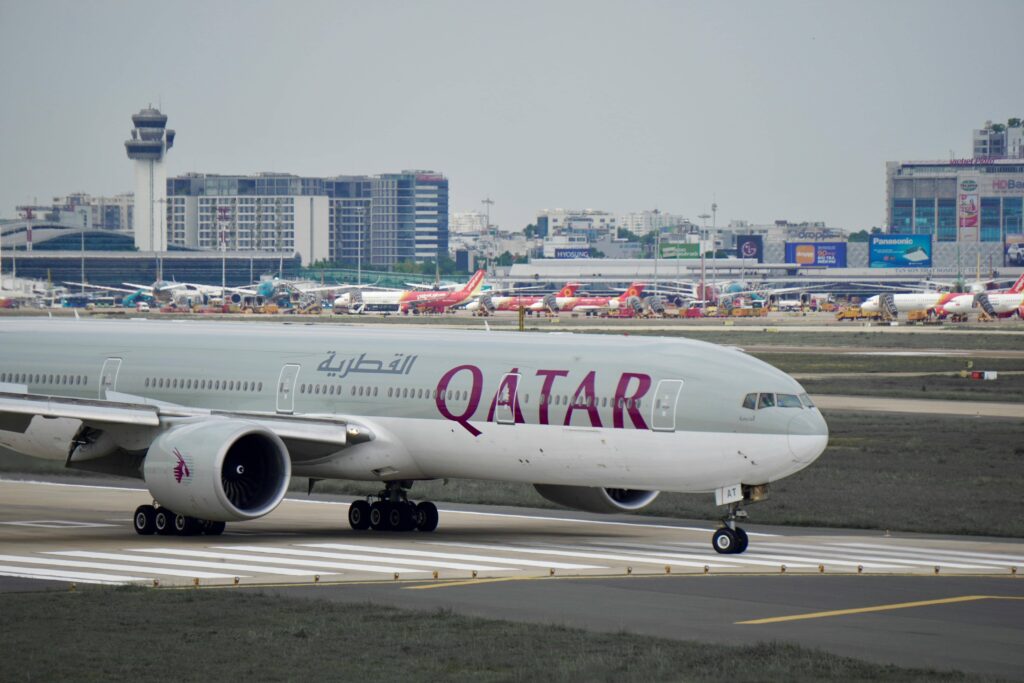 Photo by : Pham Huynh Tuan Vy / Pexells
Middle East airspace closures aren’t unprecedented. Airlines periodically reroute around conflict zones. But the scale here is categorically different. Dubai, Doha, and Abu Dhabi aren’t ordinary airports. They are the connective tissue of global aviation, the hubs where Europe meets Asia, where Africa connects to the Americas. When all three go dark simultaneously, it severs a primary artery of international travel.
India’s aviation sector offers a stark illustration. The India-UAE corridor is the single densest international route system for Indian carriers. Air India Express alone operates about 110 Gulf flights daily under normal conditions. With that network offline, the impact cascades through connections, crew schedules, and fares. Crude oil has climbed from around $65 to over $72 per barrel, and analysts warn it could push toward $80, further squeezing airline margins through jet fuel costs.
The Counterargument: Could This Force Structural Change?
Every time Middle East airspace becomes a liability, it forces airlines and passengers to reconsider the hub model that funnels so much traffic through the Gulf. India is already investing in nonstop long-haul routes from Delhi and Mumbai that bypass Gulf connections. European carriers have alternative routing through Central Asian airspace, though at higher cost.
This crisis could accelerate a shift toward diversified routing and reduced reliance on Gulf superhubs. Some aviation strategists have argued for years that concentrating so much global connectivity through a geopolitically volatile region was a structural vulnerability waiting to be exposed. This weekend proved them right.
That said, rewriting global aviation geography takes years. For the foreseeable future, Dubai, Doha, and Abu Dhabi remain irreplaceable. And for the hundreds of thousands of travelers currently sleeping in terminals and refreshing airline apps showing nothing but cancellations, the long-term outlook is cold comfort.
What Stranded Travelers Should Do Now
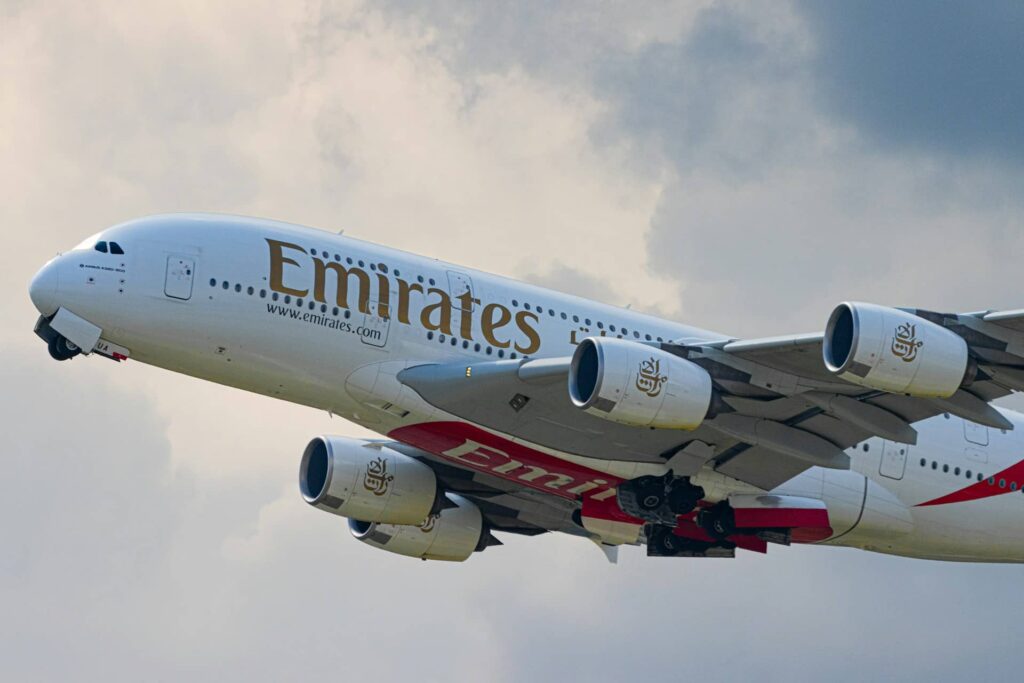 Photo by : Fabian Joy / Unsplash
Check your airline’s app before calling. Phone lines are overwhelmed. Emirates is allowing rebookings up to 20 days from the original date. IndiGo and Air India are offering full flexibility and fee waivers through March 5-7. Standard travel insurance typically does not cover events already underway, so unless you purchased “cancel anytime” coverage, airline policies are your primary recourse.
If you’re in the Gulf, follow your embassy’s guidance. India’s embassy has urged nationals to avoid unnecessary travel. Several governments have advised citizens to shelter in place.
The situation remains, as one stranded Emirates passenger put it, one where “no one knows” what happens next. The world’s busiest air corridors are silent, and getting home could take days, if not longer.
Related Aviation News
 Photo by : Ryuno / Unsplash
San Francisco Airport Becomes a Parking Lot in the Sky as Peak Hour Chaos Strands Travelers
SFO congestion causes 67 delays and 3 cancellations today. Peak-hour bottlenecks hit United, Delta, American, Alaska. International connections…
 Photo by : Filip Chudoba / Unsplash
Chicago O’Hare Turns Into a Snow Globe From Hell as 790 Flights Get Canceled
Chicago O'Hare storms cause 790 cancellations and 830 delays. Severe snowstorms and high winds strand thousands at ORD.…
 Photo by : Christian Lambert / Unsplash
Airlines Are Making More Money Than Ever and Your Wallet Is About to Feel It
U.S. airlines report record spring demand. United sees March fares up 15-20% YoY, revenue per seat rising 14%…