The Middle East airspace crisis has not just grounded flights out of Dubai and Doha. It has also created a problem that will only become visible once those airports reopen: the staggering backlog of displaced passengers, stranded aircraft, and disrupted crew schedules that will flood back into the system all at once. And the UK’s busiest airports are already preparing for it.
The Civil Aviation Authority is actively liaising with NATS, the UK’s air traffic service provider, to anticipate knock-on congestion at Heathrow and Gatwick when Gulf carriers begin ramping operations back up. Among the options on the table: granting airlines night-movement dispensations at both airports, temporarily lifting the strict noise-based curfews that normally keep runways quiet between 11:30 p.m. and 6:00 a.m. If approved, it would mark the first use of emergency night flight dispensations since the December 2022 US winter storm disruption that rippled across transatlantic schedules.
What Night Flight Dispensations Actually Mean
Most passengers never think about what happens at an airport after dark. But at Heathrow and Gatwick, the night is one of the most heavily regulated periods in global aviation.
Under the UK government’s Night Quota Period, which has governed Heathrow operations since 1993, the airport is capped at 5,800 nighttime takeoffs and landings per year between 11:30 p.m. and 6:00 a.m. That breaks down to 3,250 in the summer season and 2,550 in winter. There are no scheduled departures between 11:00 p.m. and 6:00 a.m., and no scheduled arrivals between 10:55 p.m. and 4:50 a.m. Roughly 80 percent of the night movements that do occur are early morning arrivals between 4:30 and 6:00 a.m., averaging just 16 planes per day.
Each aircraft is also assigned a noise quota count based on how loud it is, and the airport has a seasonal cap on total noise energy. The very noisiest categories are banned outright from night operations. Gatwick and Stansted operate under similar frameworks.
These restrictions exist for good reason. Over a million people live under Heathrow’s flight paths, and the link between nighttime aircraft noise and sleep disturbance is well documented. The CAA’s ongoing Aviation Noise Attitudes Survey, expected to report in 2026, is specifically examining how noise impacts vary at different hours of the night.
But the restrictions also come with a built-in escape valve. Under Section 78(4) of the Civil Aviation Act 1982, airport operators and the Secretary of State can grant dispensations exempting specific flights from the night quota. The government’s guidance identifies three categories: delays causing serious hardship or terminal congestion, state and VIP flights, and situations “so exceptional that the airport’s operations become an issue of national interest.”
The current Middle East crisis fits squarely into that last category.
Why the Real Crunch Comes After the Crisis
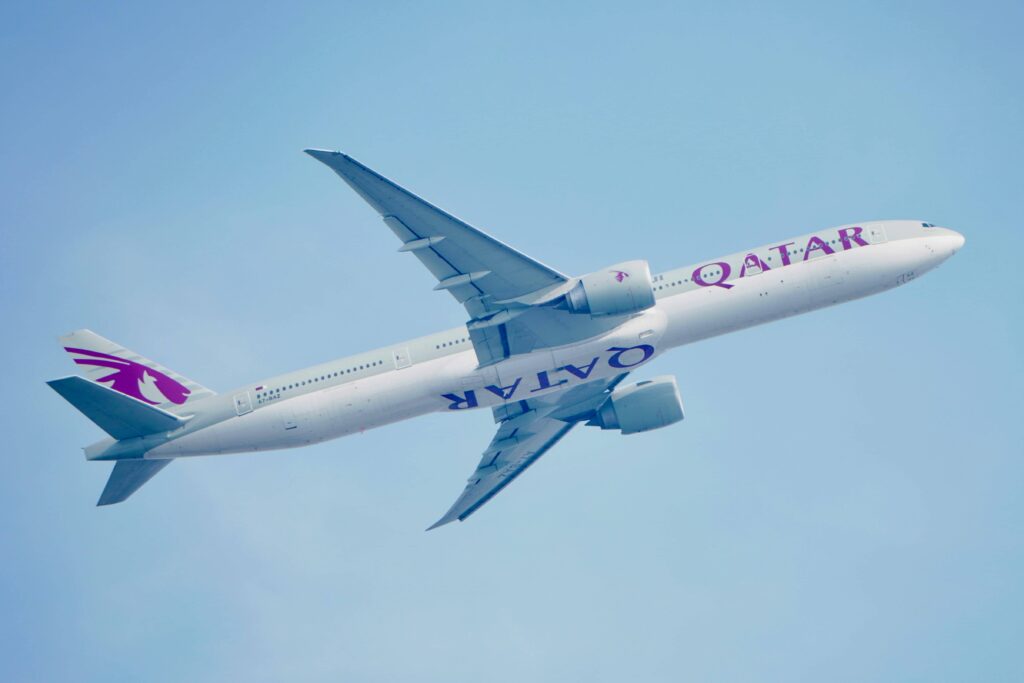 Photo by : Pham Huynh Tuan Vy / Pexels
The instinct might be to assume that the worst of the UK disruption is happening right now, while Gulf airports remain closed. And conditions have certainly been chaotic. Simple Flying reported that 15 Middle East widebody jets were grounded at Heathrow alone as of Monday, including six Qatar Airways aircraft, three from Etihad, three from Emirates, and three from other Gulf carriers. These are A380s, 777-300ERs, A350s, and 787s occupying valuable stand space at an airport that was already operating near physical capacity before the crisis began.
But the bigger operational challenge starts the moment Gulf airspace reopens. Airlines will scramble to reposition stranded aircraft, fly in crew replacements, and restart services. Passengers holding rebooking vouchers will all try to fly at once. Gulf carriers that normally feed thousands of connecting passengers per day into Heathrow will attempt to resume full schedules quickly, and the resulting surge could exceed normal slot allocation for hours or days.
This is exactly the scenario the CAA and NATS are trying to get ahead of. NATS manages en-route air traffic across UK airspace from its control centres in Swanwick and Prestwick. The challenge is not just about runway capacity, but whether sequencing, spacing, and holding patterns can absorb a sudden spike in demand without creating delays that cascade into the night hours.
If the recovery surge pushes inbound flights past 11:30 p.m. or creates a need for repositioning flights during the early morning hours, night dispensations become the only mechanism to accommodate them without forcing aircraft into costly diversions or leaving passengers stranded at terminals past midnight.
The 2022 Precedent
Night flight dispensations at Heathrow are not theoretical. The government’s own guidance document explicitly lists “outbreak of war or similar hostilities” as a historical basis for granting them, alongside examples like the 2013 aircraft fire at Heathrow that caused severe terminal disruption and the disruption from EURO 2020 football matches that pushed scheduled flights into the night quota period.
The most recent significant use came during December 2022’s US Winter Storm Elliott, which caused over 6,000 flight cancellations across the United States and sent cascading disruption through transatlantic schedules. Flights that should have departed US airports during the afternoon arrived in London hours late, pushing landing times into the night quota period. Heathrow granted dispensations to allow these delayed arrivals rather than diverting to continental European airports, which would have created even more passenger misery.
The current situation is considerably more severe. Winter Storm Elliott was a weather event lasting roughly three to four days with a clear endpoint. The Middle East airspace closure involves multiple countries, physical damage to airport infrastructure, an active military conflict with no announced ceasefire, and the grounding of three of the world’s largest long-haul carriers simultaneously. The backlog is deeper, the geographic scope is wider, and the duration remains unknown.
The Noise Politics No One Wants to Talk About
 Photo by : Anton Uniqueton / Pexels
Here is where the discussion gets uncomfortable. Night dispensations are never popular with the communities that live under Heathrow’s approach paths. Every additional flight between midnight and dawn wakes people up. Campaign groups like Stop Heathrow Expansion have pushed back even on routine nighttime operations, documenting late departures after 11:30 p.m. and calling for tighter enforcement. Local MPs have voiced concerns about any loosening of the regime.
The government acknowledged this tension in its most recent night flights consultation. The bridging regime running from October 2025 through October 2028 kept movement and noise quota limits unchanged while awaiting evidence from the ANNE study on how aviation noise affects sleep at different hours. The decision to maintain limits rather than tighten them was itself a compromise between connectivity and community health.
Granting dispensations during a genuine international crisis is easier to justify than routine overruns, but it still generates friction. The government’s guidance stipulates that dispensations must be “NET,” meaning flights scheduled for the night period but not operated due to the disruption must be offset against extra movements. Airport managers must also notify the Secretary of State within one week, and starting this year, airports must submit a seasonal letter explaining why circumstances were extraordinary.
The counterargument from the aviation industry is straightforward: the alternative is worse. Diverting inbound flights to Manchester, Birmingham, or continental airports leaves passengers far from their destination. Holding aircraft in stacks burns fuel and increases emissions. Refusing to allow repositioning flights at night prolongs the recovery, creating more missed connections and more hotel nights for displaced travelers. A few nights of additional noise, the industry argues, is a small price for restoring connectivity faster.
What Travelers Should Expect
If and when Gulf airspace reopens, the recovery at UK airports will not be instantaneous. Airlines need to reposition aircraft scattered across the globe. Crew duty regulations mean pilots and cabin crew who have been stranded cannot simply resume flying. They need mandated rest periods first.
Passengers should expect several days of irregular operations even after formal flight schedules resume. The first flights out of Dubai and Abu Dhabi are likely to prioritize passengers who were booked earliest, followed by those who accepted rebooking.
At Heathrow, the practical effect of night dispensations would be flights arriving or departing outside the normal curfew hours, potentially between midnight and 4:30 a.m. For passengers, this could mean landing at 2:00 a.m. rather than diverting to another airport and taking a bus back to London.
The CAA has reminded passengers that UK law entitles them to care during delays and cancellations, including meals and hotel accommodation. However, disruptions caused by the Middle East situation are likely classified as “extraordinary circumstances,” exempting airlines from the fixed-sum compensation that normally applies under UK261.
The Bigger Picture
 Photo by : Jimmy K / Pexels
The night dispensation discussion is really a microcosm of a larger question the UK aviation system has been grappling with for years: how do you run some of the world’s most capacity-constrained airports while maintaining strict environmental protections and still absorbing the shocks that global events throw at you?
Heathrow already operates at roughly 99 percent of its slot capacity during peak hours with two runways handling around 1,300 flights per day. There is almost no buffer for disruption on a normal day, let alone a week when the world’s busiest international aviation corridor suddenly shuts down.
The CAA and NATS are doing the right thing by planning ahead. Whether the dispensations are ultimately granted will depend on how long the Gulf closures last and how quickly airlines can restore their networks. But the planning itself signals that UK aviation authorities are treating this as a domestic operational emergency requiring a domestic response.
The lights at Heathrow may need to stay on a little later this week. For the people who live nearby, that is an unwelcome reality. For the thousands of passengers waiting to get home, it cannot come soon enough.