

The US is evacuating Americans from across the Middle East following a dramatic escalation in hostilities with Iran. The State Department says it’s been in contact with nearly 3,000 US citizens who need help getting out, while roughly 9,000 more managed to flee on their own. But the administration is facing withering criticism from lawmakers who argue officials should have warned people to leave before launching military strikes, not three days after airports started closing and Iranian missiles began raining down on US allies.
When “It Happened Very Quickly” Isn’t Good Enough
 Photo by : Dovydas Pranka / Pexels
President Trump’s explanation for why there was no evacuation plan in place? “It all happened very quickly.”
During a meeting at the White House on Tuesday, Trump told reporters the joint US-Israeli operation against Iran unfolded faster than expected. “We thought we were going to have a situation where we were going to be attacked,” he said, suggesting the strikes were essentially preemptive.
That reasoning hasn’t satisfied critics. Democratic Senator Andy Kim didn’t mince words: “Warnings to citizens to evacuate 3 days into this war, when airspace is closed, is a clear sign of ZERO strategy and planning by the Trump admin.” His colleague Chris Murphy was equally blunt, pointing out the obvious contradiction: “So the State Department is forcing everyone to immediately leave the region but is also refusing to help people leave the region.”
Even some Republicans joined the pile-on. Former Representative Marjorie Taylor Greene complained that American taxpayers fund billions in aid to Israel, yet “here is our own U.S. embassy in Jerusalem telling Americans good luck getting out, you are on your own.”
The criticism stings because it touches on a fundamental question about crisis management: Shouldn’t the most powerful nation on Earth have a plan to protect its citizens before starting a war?
The Domino Effect Nobody Planned For
What started as coordinated US-Israeli strikes on Iran last Saturday quickly spiraled into something far more chaotic. The operation, which killed Iran’s Supreme Leader Ayatollah Ali Khamenei and targeted nuclear facilities, triggered Iranian retaliation that spread like wildfire across the region.
Iranian drones hit the US Embassy compound in Riyadh. Smoke rose from near the US Embassy in Kuwait. A parking lot adjacent to the US consulate in Dubai was struck. Within 72 hours, the State Department had evacuated personnel from its embassies in Amman, Jordan, as well as facilities in Baghdad and Irbil, Iraq. Multiple embassies shut their doors entirely.
And that’s when Americans realized they were on their own.
The State Department’s assistant secretary for consular affairs, Mora Namdar, posted an urgent message on social media urging Americans to “DEPART NOW” from more than a dozen countries, including Bahrain, Egypt, Iraq, Israel, Jordan, Kuwait, Lebanon, Oman, Qatar, Saudi Arabia, Syria, the UAE, and Yemen. There was just one problem: By that point, commercial flights were already being canceled en masse. Airspace was closing. Airports were under attack.
Katie, an American stuck in Bahrain, captured the frustration perfectly: “The Department of State tells me to evacuate, but there’s no way to do so. I cannot believe there is no support for US Citizens stranded when the US started this conflict.”
The Logistics Nightmare
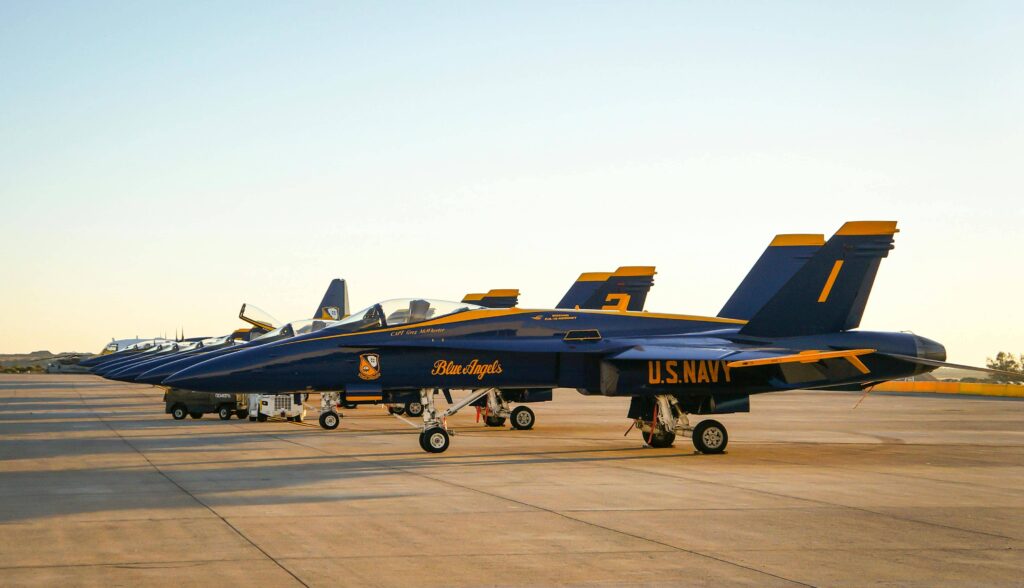 Photo by : Soly Moses / Pexels
Secretary of State Marco Rubio has been working overtime to coordinate the evacuation efforts. On Tuesday afternoon, he told reporters that roughly 1,500 Americans were actively requesting government assistance to leave, while 9,000 had already managed to get out on their own through commercial flights.
The State Department announced it’s facilitating charter flights from the UAE, Saudi Arabia, and Jordan. Military aircraft are being deployed. Ground transportation is being organized for those in countries where flying isn’t an option. And in what may be the only good news, the government says Americans won’t have to reimburse taxpayers for the evacuation costs.
But even these efforts are running into roadblocks. “We’ve had a couple instances in which we have planes in the air and on the way and, unfortunately, the airspace gets closed and they have to turn back around,” Rubio explained. “So we’re working through those challenges.”
Think about that for a second. US military and charter aircraft are literally being turned away mid-flight because war zones don’t exactly follow schedules.
The phone lines haven’t helped either. When Americans called the State Department’s emergency number for assistance, a recorded message initially told them “please do not rely on the US government for assisted departure or evacuation at this time.” That message was still playing Tuesday afternoon, even as government officials were publicly promising help. Talk about mixed signals.
The Human Cost of Poor Planning
For people like Evelyn Mushi, the bureaucratic confusion translates to genuine fear and frustration. She supports the military action against Iran, she says, but finds it “unacceptable” that the administration didn’t have solid evacuation plans in place.
“I’m just very shocked and upset that I see other nations getting their citizens out and we’re just stranded here,” Mushi said from Abu Dhabi. The UAE government has been housing and feeding her since her arrival. Her own government? Radio silence, she says, despite enrolling in the State Department’s Smart Traveler Enrollment Program.
Another American stuck in the UAE told CNN: “We decided to attack Iran, not knowing what to do with our citizens in other countries, you know, meanwhile, the UAE Government has, you know, housed and fed me since I got here and I’ve received nothing from my own government.”
The United Kingdom, for comparison, announced charter flights to evacuate British nationals almost immediately. Other countries followed suit. The US response looked reactive rather than proactive, a distinction that matters immensely when you’re the one trapped in a war zone.
The Political Fallout
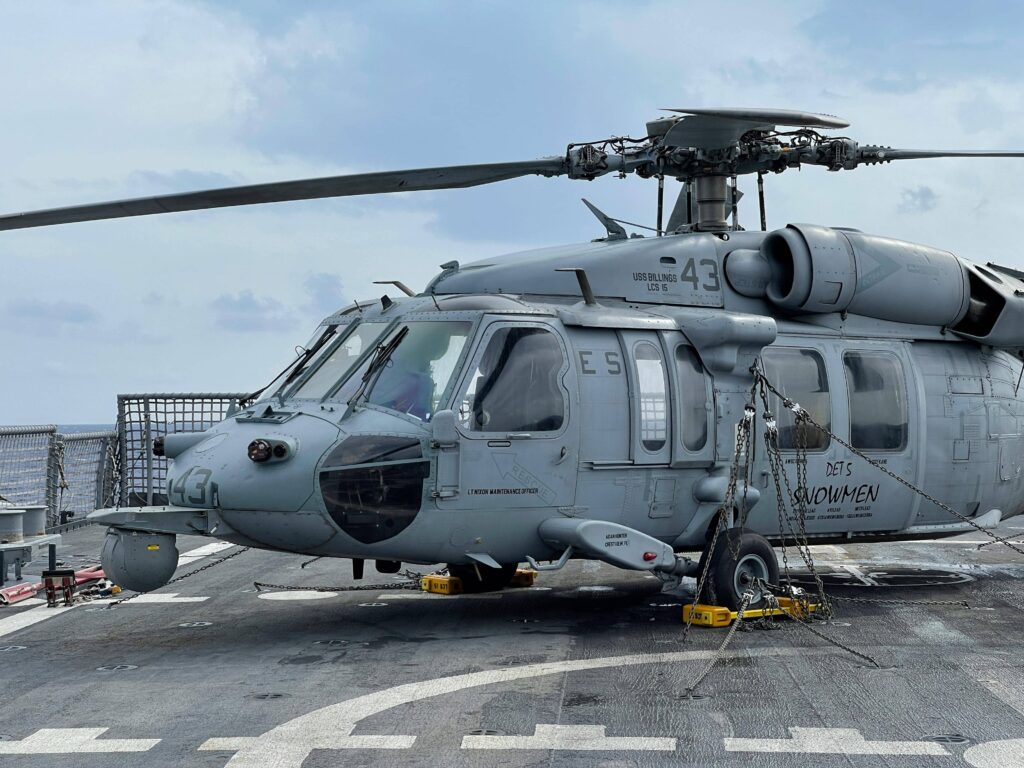 Photo by : Eli Hunter / Pexels
The evacuation debacle has become yet another flashpoint in an already divisive military operation. Trump launched the strikes without formal congressional authorization, arguing that Iran posed an imminent threat and that Israel was planning to attack with or without US support.
Some lawmakers backed the decision. Senate Majority Leader John Thune said Trump already has the authority he needs to continue operations. Representative Rick Crawford, chair of the House Intelligence Committee, expressed confidence the operation would succeed.
But others are furious. Senate Minority Leader Chuck Schumer noted the administration hasn’t provided Congress with “critical details about the scope and immediacy of the threat.” Representative Jim Himes, ranking member of the House Intelligence Committee, called it “a war of choice with no strategic endgame.”
Bipartisan war powers resolutions are in the works, sponsored by representatives like Thomas Massie and Ro Khanna in the House, and senators Tim Kaine and Rand Paul in the Senate. Whether they’ll pass is another question entirely.
What Happens Next?
The State Department has set up a 24/7 task force to help Americans navigate the chaos. They’re encouraging citizens to call +1-202-501-4444 (from abroad) or +1-888-407-4747 (from the US and Canada) for assistance. They’re also pushing people to enroll in the Smart Traveler Enrollment Program for real-time updates.
Rubio says he’s confident they’ll be able to assist every American who needs help. Trump, meanwhile, suggested Tuesday that the military operation could wrap up in “four weeks or less,” though he warned the scope and intensity of attacks would increase in the coming days.
For Americans still stuck in the region, those assurances probably feel like cold comfort. Because when you’re sheltering in a hotel room listening to explosions in the distance, wondering if the next charter flight will actually make it through before the airspace closes again, promises of “we’ll figure it out” don’t mean much.
The Bigger Picture
 Photo by : Somchai Kongkamsri / Pexels
Here’s what makes this situation particularly galling for critics: This wasn’t a surprise attack. This wasn’t a natural disaster that struck without warning. This was a planned military operation, one that intelligence officials, military strategists, and political leaders spent time deliberating.
And yet somehow, getting Americans out of harm’s way seems to have been an afterthought.
Todd Brown, a former acting assistant secretary of state for diplomatic security, put it plainly: “Certainly there should have been some notice” to Americans “about the concern over what could be looming.”
The question going forward isn’t just about how many Americans can be safely evacuated, though that obviously matters enormously. It’s about what lessons, if any, will be learned from this mess. Because the next time the US considers military action in a region where thousands of Americans live, work, or travel, this evacuation disaster should serve as a cautionary tale.
A Nuanced Take: When Speed Matters More Than Perfection
To be fair to the administration (and criticism aside, fairness matters), there’s an argument that waiting too long to strike Iran could have been catastrophic. Senior officials briefed lawmakers that if Israel had attacked Iran alone, Tehran would have immediately retaliated against US personnel and assets throughout the region. The preemptive strikes may have prevented even greater American casualties.
Speaker Mike Johnson defended the decision, saying that if the US had waited, “the consequences of inaction on our part would have been devastating.” If Iran had fired its entire missile arsenal at US installations, Johnson argued, “we would have suffered staggering losses.”
That’s a legitimate strategic consideration. Sometimes in geopolitics, you’re choosing between bad options and worse options.
But here’s the thing: Even if the military timing was right, the civilian evacuation planning clearly wasn’t. These aren’t mutually exclusive goals. You can strike Iran at 3 AM on a Saturday and still have evacuation procedures ready to roll out at 3:01 AM. That’s what contingency planning is supposed to look like.
The Bottom Line
 Photo by : Javier Leal / Pexels
Right now, US military and charter aircraft are working to evacuate Americans from across the Middle East. The State Department is in contact with roughly 3,000 citizens who need help. Thousands more have managed to flee on their own, often with help from host governments rather than their own.
The operation is complicated by closed airspace, canceled flights, and ongoing Iranian retaliation that’s making the region increasingly dangerous. But at least the evacuation is happening now, even if it’s happening later than it should have.
For the thousands of Americans in similar situations, the coming days will determine whether they get home safely or become casualties of poor planning. For US policymakers, this crisis should trigger some serious soul-searching about how to better protect citizens when launching military operations abroad.
Because “it happened very quickly” might explain the timeline, but it doesn’t excuse the lack of preparation. Not when American lives hang in the balance.